

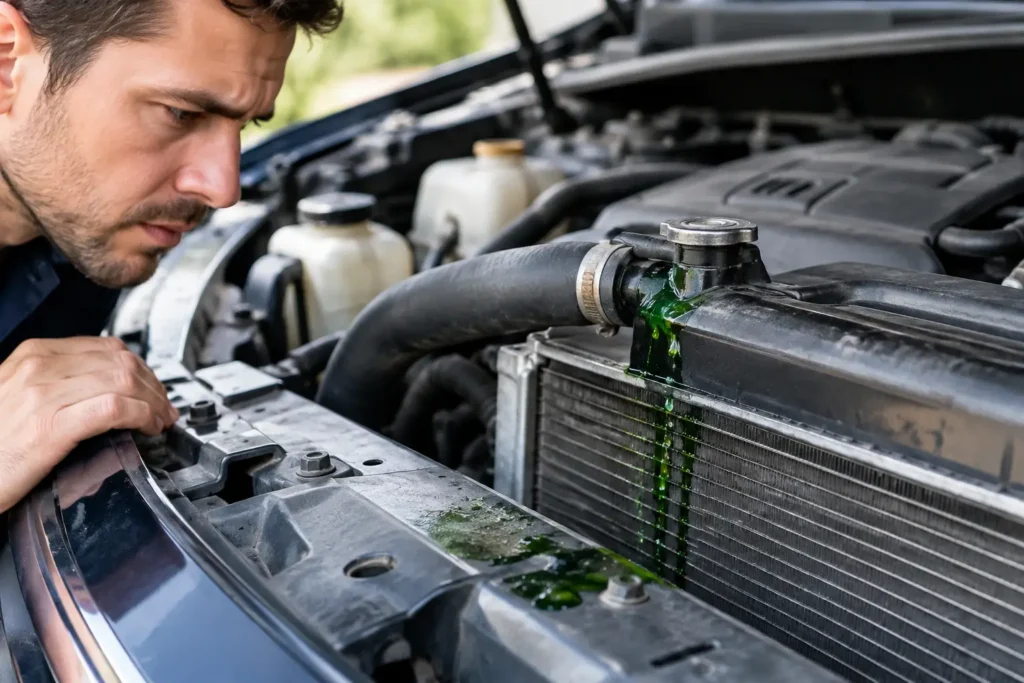
A coolant puddle under the front of your car may look minor, especially when the vehicle is still driving normally. In Dubai traffic and high temperatures, however, radiator leak symptoms can turn into an overheating problem quickly. A cooling system that is losing coolant has less protection against heat, pressure, and expensive engine damage.
The good news is that most leaks give warning signs before they become a roadside breakdown. Knowing what to look for helps you arrange an inspection early, understand what the workshop finds, and avoid paying for damage that a small repair could have prevented.
The Most Common Radiator Leak Symptoms
A visible puddle is the sign most drivers notice first. Coolant can be green, red, pink, blue, orange, or yellow depending on the vehicle and the coolant used. It often feels slightly slippery and may have a sweet smell. Look beneath the front of the vehicle after it has been parked for a few hours, particularly after a longer drive.
Do not assume every wet patch is coolant. Clear water dripping under the passenger side can simply be air-conditioning condensation, which is common in Dubai. Coolant normally has color, a distinct odor, or a sticky residue once it dries. If you are unsure, avoid touching the liquid and have it checked.
A falling coolant level in the expansion tank is another strong warning. Coolant should remain between the marked minimum and maximum levels when the engine is cold. If you need to top it up repeatedly, the system is leaking externally, losing coolant internally, or pushing coolant out because of a pressure-related fault.
Watch the temperature gauge as well. A gauge that begins climbing above its usual position, a temperature warning light, or a dashboard message about coolant level needs prompt attention. An engine may appear fine during a short drive but overheat when sitting in traffic, climbing a ramp, or running the air conditioning. That pattern can point to low coolant, but it can also involve a cooling fan, thermostat, water pump, or blocked radiator.
Other radiator leak symptoms include steam from under the hood, a sweet smell through the vents, or white and colored crust around hoses and radiator joints. Dried residue is useful evidence because it can show where coolant escaped even when the leak is not actively dripping.
Why a Small Coolant Leak Is Not Always Small
The cooling system works under pressure. As the engine reaches operating temperature, coolant circulates through the engine, radiator, hoses, heater core, and other components to carry heat away. A tiny crack may only seep when the vehicle is cold, then open further as pressure and temperature rise.
That is why a vehicle can pass a quick visual check and still lose coolant on the road. Plastic radiator tanks can split at their seams, rubber hoses can soften or crack, and clamps may loosen with age. On some German and American vehicles, coolant pipes, reservoirs, fittings, and water pumps are also common places for leaks to develop.
Low coolant leaves less capacity to control engine temperature. Continued overheating can damage a head gasket, warp cylinder head components, affect sensors, or create internal engine issues. The final repair cost depends on the vehicle and how hot it became, but the difference between replacing a leaking hose and repairing overheating damage can be substantial.
Signs You May Have a Leak Without a Puddle
Not every coolant loss reaches the ground. Coolant can collect on an undertray, evaporate on a hot engine component, or leak inside the cabin through the heater core. A damp passenger-side carpet, fogging windows with a sweet smell, or an oily film on the inside of the windshield deserves investigation.
You may also notice the cabin heater blowing cooler air than normal. The heater relies on hot coolant flowing through a small core behind the dashboard. When coolant is low or air enters the system, heat output can become inconsistent.
In less common cases, coolant loss is internal. Persistent white exhaust smoke after the engine is fully warm, milky contamination in engine oil, rough running, or unexplained pressure in the cooling system can indicate a more serious concern. These symptoms do not automatically mean a head gasket failure, but they should not be ignored or diagnosed by guesswork.
What to Do When You Notice a Coolant Leak
If the temperature warning comes on, the gauge rises into the hot range, or you see steam, pull over safely as soon as traffic conditions allow. Turn off the air conditioning, stop the engine, and let the vehicle cool. Do not remove the radiator cap or coolant reservoir cap while the engine is hot. Pressurized coolant can cause serious burns.
Once the engine is fully cool, you can visually check the coolant reservoir level and look for obvious wet hoses, stains, or puddles. Do not keep driving solely because the vehicle starts again after cooling down. Repeated overheating is where a manageable repair becomes an engine repair.
If the level is only slightly low and there is no overheating, use the coolant specification recommended for your vehicle if you need to top it up before traveling to a workshop. Mixing random coolant types is not a good long-term fix. Different formulations can be incompatible, and plain water reduces corrosion protection and can be particularly problematic in extreme heat.
For a major leak, active steam, or a vehicle that has overheated, recovery is the safer choice. It avoids the risk of being stranded and protects the engine from another high-temperature event.
How a Proper Leak Inspection Finds the Real Cause
A reliable diagnosis is more than adding coolant and checking for a drip. The technician should inspect the radiator, reservoir, cap, upper and lower hoses, clamps, thermostat housing, water pump area, heater hoses, and coolant pipes. Undertrays may need to be removed because they can hide the true source.
A pressure test is often the most effective next step. The cooling system is pressurized with the engine off so small leaks become visible without waiting for the engine to reach full temperature. For difficult cases, ultraviolet dye or further testing may be used to trace the leak.
The workshop should also identify why the leak happened. For example, a failed radiator cap can allow coolant to escape at the wrong pressure. A blocked radiator, failed fan, or stuck thermostat may raise pressure and temperature, exposing a weak hose or radiator seam. Replacing only the part that leaked without checking the system can lead to a repeat visit.
At HYATTS AUTO CARE, the goal is to explain the fault clearly before work begins, whether the repair is a hose, radiator, water pump, reservoir, or a deeper cooling-system concern. That gives you a straightforward repair recommendation rather than a vague instruction to replace parts until the problem disappears.
Can You Drive With Radiator Leak Symptoms?
It depends on the severity, but caution is the right approach. A faint dried coolant mark with a stable level and normal temperature may allow a short, carefully monitored trip to a workshop. An active leak, repeated low coolant warning, rising temperature gauge, or steam means the vehicle should not be driven further than necessary.
German vehicles with tightly packaged engine bays and sophisticated electronic monitoring can show warnings early, while other vehicles may give less notice before overheating. In either case, the dashboard temperature gauge is not something to negotiate with. Stop before the engine reaches the red zone.
Avoid relying on stop-leak products as a permanent repair. They can sometimes be considered as an emergency measure in limited circumstances, but they may clog narrow coolant passages, heater cores, or radiators. A correctly repaired cooling system is the safer and more cost-effective answer.
A coolant leak does not have to become a major repair. Pay attention to the first puddle, smell, warning light, or temperature change, and arrange an inspection while the problem is still small enough to fix on your terms.