

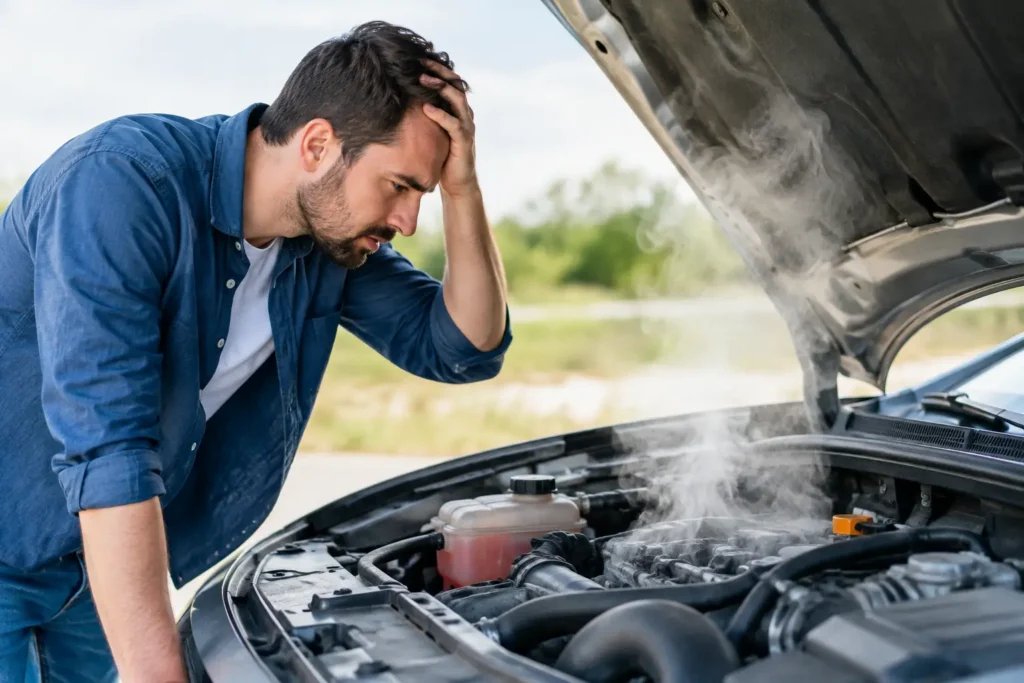
A temperature warning light in Dubai traffic is not a message to deal with after the next exit. Engine overheating danger can escalate quickly, especially when high ambient heat, stop-and-go driving, and air conditioning place extra demand on the cooling system. The right decision in the first few minutes may be the difference between replacing a hose and repairing a damaged engine.
Modern vehicles are designed to manage heat precisely. When the system cannot do that, the engine may lose power, go into reduced-performance mode, or suffer internal damage. Whether you drive a German luxury vehicle, an American SUV, or any other make, treat a rising temperature gauge as a reason to stop safely and investigate.
When Engine Overheating Danger Means Stop Immediately
Pull over as soon as it is safe if the temperature gauge moves into the red, an overheating warning appears, steam comes from under the hood, or you smell a sweet, hot odor. Turn off the air conditioning, which adds load to the cooling system. If you need a few moments to reach a safe shoulder or parking area, turning the cabin heater to maximum can help draw some heat away from the engine, but this is only a short-term measure.
Once stopped, switch off the engine if the gauge is high or steam is visible. Do not assume the problem will disappear after a few minutes of idling. An engine that is already too hot can become hotter while sitting still if its cooling fan is not operating or coolant is low.
Do not open the radiator cap or coolant reservoir while the engine is hot. Cooling systems are pressurized, and hot coolant can spray out with enough force to cause serious burns. Let the vehicle cool fully before anyone checks fluid levels. If there is a large puddle of coolant, repeated steam, or a warning that returns as soon as you restart, arrange recovery rather than driving on.
Why an Overheated Engine Can Become Expensive
Engines operate within a narrow temperature range for a reason. Coolant carries heat away from the engine, the radiator releases it, and the water pump, thermostat, fans, hoses, sensors, and pressure cap all play a part. A fault in one component can affect the rest of the system.
If overheating continues, metal parts expand beyond their intended tolerance. The cylinder head can warp, a head gasket can fail, and coolant may mix with engine oil. In severe cases, pistons, cylinders, or the engine block itself can be damaged. These are not repairs to postpone, and the final cost depends heavily on how long the vehicle was driven while hot.
There is also a safety concern beyond the engine. Coolant leaking onto hot components can create steam and strong odors, while sudden power loss in fast-moving traffic can put the driver and passengers at risk. The safest approach is never to test how far an overheating car can go.
Common Causes of Overheating in Dubai
Dubai heat does not usually cause a healthy vehicle to overheat by itself. It does, however, expose weak components sooner. A system that appears acceptable on a mild morning may struggle during afternoon traffic, while idling with the AC running, or climbing under a full passenger and luggage load.
A coolant leak is one of the most common causes. Leaks can come from a split hose, aging radiator, loose clamp, water pump seal, expansion tank, or heater hose connection. Some leaks are obvious, leaving pink, green, blue, or orange residue depending on the coolant used. Others only appear when the system reaches operating pressure.
A thermostat that sticks closed prevents coolant from circulating through the radiator. A weak water pump can reduce flow, while a damaged radiator or blocked internal passages limit the system’s ability to release heat. Electric cooling fans, fan control modules, relays, fuses, and temperature sensors can also fail. This is particularly noticeable when a vehicle overheats in traffic but cools down at highway speed.
On some vehicles, the problem is more complex. A combustion-gas leak from a failing head gasket can pressurize the cooling system, push coolant out, and cause repeat overheating. Incorrect coolant type, poor-quality repairs, trapped air after previous work, and neglected maintenance can all contribute. That is why adding water and hoping for the best is rarely a reliable fix.
What You Can Check After the Engine Cools
After the engine has cooled completely, look for clear signs without putting yourself at risk. Check the coolant reservoir level against its cold marking, inspect the ground beneath the vehicle for fresh leaks, and look around visible hoses and the radiator area for dampness or dried coolant residue.
You can also note when the issue occurred. Did the warning appear only in traffic? Did the cabin heater blow cold while the engine temperature rose? Was there a recent coolant top-up, repair, collision, or service? These details help a technician narrow down the fault faster and avoid unnecessary parts replacement.
Avoid pouring cold water over a hot engine or radiator. Rapid temperature changes can damage hot components. Avoid driving with the warning light on just because the gauge returns to normal temporarily. An intermittent fan, thermostat, or electrical fault can allow the temperature to spike again with little warning.
Why a Proper Diagnosis Matters
Cooling-system repairs should start with evidence, not guesses. A professional inspection may include a pressure test to locate leaks, a check of radiator-fan operation, thermostat and water-pump assessment, coolant condition testing, fault-code scanning, and verification of live temperature data. If internal engine damage is suspected, further testing can check for combustion gases in the coolant or signs of a head-gasket issue.
This process matters because several faults can create the same symptom. For example, low coolant may point to a simple hose leak, but it can also be the result of a pressure-cap problem or an internal leak. Replacing the thermostat without confirming the cause may get the car moving again briefly while the underlying issue remains.
At HYATTS AUTO CARE, the goal is to explain what has failed, what needs attention now, and what can reasonably wait. Clear findings and upfront repair options help owners make informed decisions without dealership-level uncertainty or pricing.
Preventing the Next Overheating Event
Cooling systems benefit from routine attention, particularly in a hot climate. Follow the vehicle maker’s coolant service schedule, use the correct coolant specification, and address even small leaks before summer driving places extra stress on the system. During regular servicing, ask for the hoses, radiator, water pump area, coolant level, fans, and drive belts to be checked.
Watch for early warnings: a temperature gauge that runs higher than usual, coolant that needs frequent topping up, a sweet smell after parking, a heater that changes temperature unexpectedly, or cooling fans that never seem to run. None of these automatically means major engine damage, but each deserves timely inspection.
A well-maintained cooling system is quiet and easy to overlook. Keep it that way by acting at the first warning, allowing the engine to cool safely, and getting a clear diagnosis before a manageable repair becomes an engine rebuild.