

A clutch that slips during acceleration or makes gear changes feel difficult can turn an ordinary Dubai drive into a costly problem. Clutch repair is not a job to postpone when the warning signs are clear. Acting early can protect related transmission components, avoid a roadside breakdown, and give you a better chance of controlling the overall repair cost.
For drivers who spend their day in traffic, travel between business districts, or regularly use major roads at higher speeds, the clutch works harder than most people realize. Heat, stop-and-go driving, aggressive launches, and normal wear all affect its lifespan. The right repair begins with an accurate diagnosis, not an assumption that every clutch issue requires the same replacement.
What Your Clutch Does and Why It Wears Out
In a manual transmission vehicle, the clutch connects the engine to the transmission. When you press the clutch pedal, it temporarily separates that connection so you can select a gear. When you release the pedal, it transfers engine power back through the drivetrain to move the car.
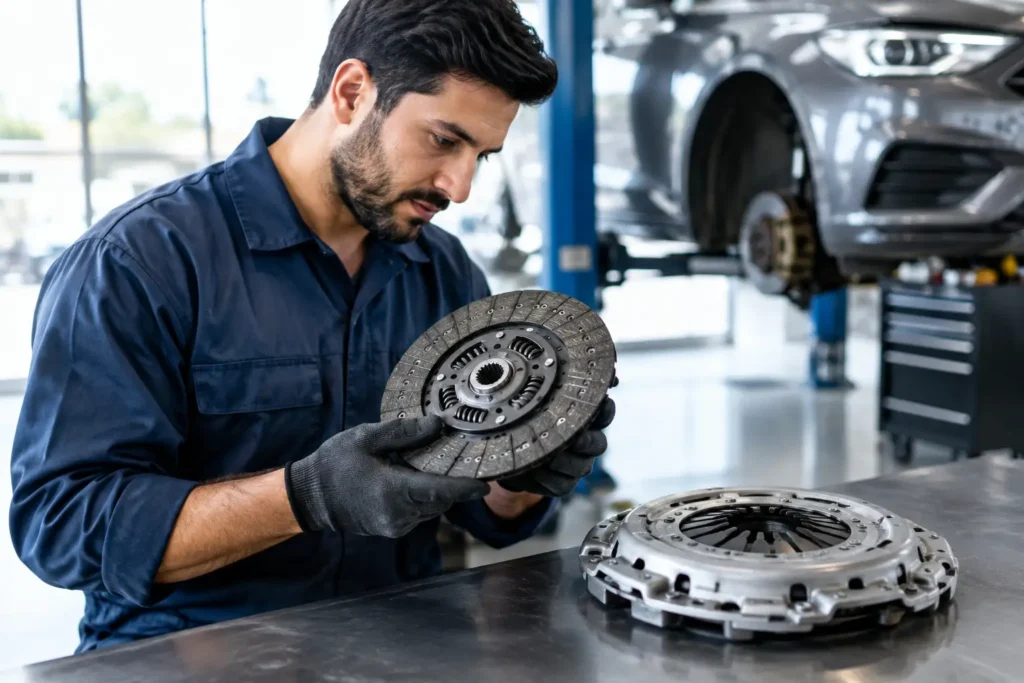
The clutch assembly includes several parts that must work together: the clutch disc, pressure plate, release bearing, flywheel, and, depending on the vehicle, hydraulic components such as the master and slave cylinders. Wear in one area can create symptoms that feel similar to a failing clutch, which is why proper inspection matters.
Clutch discs are designed to wear gradually. Their lifespan depends on the vehicle, driving style, traffic conditions, load, and whether the driver rests a foot on the clutch pedal. A vehicle used mainly on open roads may get far more life from a clutch than one driven every day through congested city traffic.
Signs You May Need Clutch Repair
The most common warning sign is clutch slip. You may notice the engine revving higher without the vehicle accelerating at the same rate, especially when overtaking, climbing an incline, or carrying passengers. This does not improve on its own. Continued driving can generate excessive heat and damage the flywheel or pressure plate.
Difficulty shifting gears is another reason to arrange an inspection. If first gear or reverse becomes hard to engage, the clutch may not be fully disengaging. The cause could be a worn clutch assembly, a hydraulic fault, incorrect adjustment on older systems, or an issue within the transmission linkage.
Pay attention to changes in pedal feel as well. A pedal that suddenly feels soft, spongy, unusually stiff, or stays close to the floor can point to a hydraulic issue. A worn release bearing may create a grinding, whirring, or squealing sound when the clutch pedal is pressed. These symptoms deserve attention before they develop into a larger repair.
A burning smell after heavy traffic, hill starts, or acceleration is also a concern. It can indicate an overheating clutch surface. One brief smell after an unusual driving situation is not always proof of failure, but repeated burning odor should never be ignored.
Why Accurate Diagnosis Comes Before Replacement
A clutch concern can feel straightforward from the driver’s seat, but several faults can produce similar behavior. Hydraulic fluid loss, a leaking cylinder, gearbox linkage wear, transmission mount problems, and even engine performance issues can affect how the vehicle moves or shifts.
A proper clutch inspection should include a road test where appropriate, pedal and engagement-point assessment, checks for leaks, and a review of transmission operation. If the transmission needs to be removed, the technician can inspect the clutch disc, pressure plate, release bearing, pilot bearing where fitted, and flywheel condition.
This approach helps prevent unnecessary parts replacement. It also gives the owner a clear explanation of what has failed, what should be replaced while the transmission is out, and what can reasonably remain in service. Transparent recommendations matter because transmission removal involves significant labor, and it is often more economical to address worn related parts at the same time.
What a Clutch Repair Typically Involves
When the clutch assembly is worn, repair commonly means replacing the clutch kit. A quality kit generally includes the clutch disc, pressure plate, and release bearing. Depending on the vehicle and inspection results, the job may also involve replacing a concentric slave cylinder, resurfacing or replacing the flywheel, and renewing worn hardware or seals.
The transmission must be removed to access these components. This is why the condition of the flywheel deserves close attention. A flywheel with heat spots, cracks, deep scoring, or excessive wear can shorten the life of a new clutch if it is reused without correction. Some flywheels can be machined within specification, while others should be replaced. Dual-mass flywheels, common on many German vehicles, require particularly careful assessment.
The right choice depends on the vehicle’s design, mileage, condition, and how it is used. Fitting the cheapest available parts may lower the immediate bill, but poor-quality components can lead to noise, harsh engagement, premature wear, or another transmission removal later. A good workshop should explain the available options clearly rather than treating every vehicle the same.
Clutch Repair for German and American Vehicles
German and American vehicles can have very different clutch designs, packaging, and parts requirements. Performance-oriented models may use heavier-duty assemblies, while some vehicles have tightly packaged drivetrains that require additional care during removal and installation. Certain systems also rely on electronic monitoring or hydraulic components that need correct setup after the mechanical work is complete.
This is where experience and the right equipment make a practical difference. A workshop should be able to inspect the complete system, follow manufacturer specifications, and confirm proper clutch operation before returning the vehicle. At HYATTS AUTO CARE, the focus is on dealership-level workmanship with straightforward communication about the work required, parts options, expected timing, and cost.
Can You Keep Driving With a Bad Clutch?
It depends on the symptom, but waiting is rarely the cost-saving choice. A vehicle with minor pedal changes may still be drivable for a short period, while a slipping clutch can deteriorate quickly under load. If the car struggles to move, will not engage gears reliably, smells strongly of burning material, or makes severe noises, it should be inspected without delay.
Driving with a clutch that is failing can leave you stranded in traffic or put added stress on the flywheel and transmission. It can also make the vehicle less predictable when merging, climbing a ramp, or moving through busy intersections. Booking an inspection early gives you more flexibility than waiting for a complete failure.
How to Help Your New Clutch Last Longer
A new clutch should feel smooth and predictable, but its lifespan still depends on driving habits. Avoid resting your foot on the clutch pedal while driving, as even light pressure can keep the release bearing under unnecessary load. At traffic lights, select neutral rather than holding the car in gear with the pedal pressed for long periods.
On hills, use the brake or parking brake to hold the vehicle instead of balancing the car on the clutch. Release the pedal smoothly instead of using excessive engine speed to pull away. These habits reduce heat and friction, which are the main reasons clutches wear early.
If you notice a change after repair, such as slipping, vibration, noise, or an unusual pedal feel, raise it promptly. Early feedback allows the workshop to check the concern before it affects the wider drivetrain.
A clutch problem does not have to become a major interruption to your week. Clear symptoms, a correct diagnosis, quality parts, and careful installation are what turn a worrying drive into a repair you can trust. If your car is slipping, shifting poorly, or showing a change in pedal feel, arrange an inspection and get a straight answer before the problem gets bigger.