

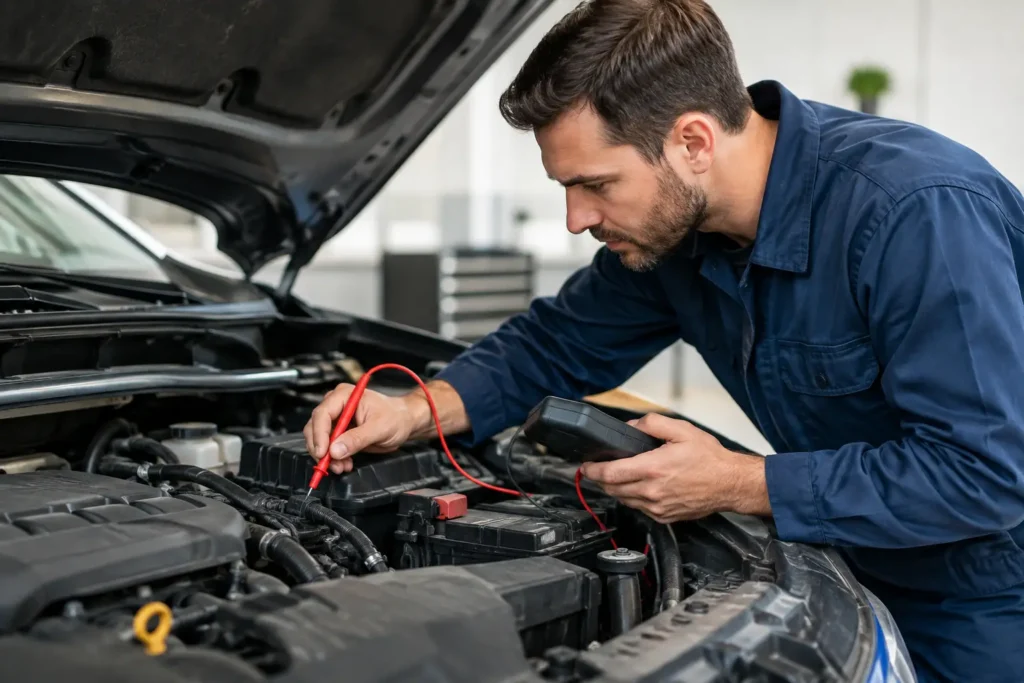
A battery light appears on the way to work. Your screen resets after starting. One headlight works, then does not. Electrical faults rarely arrive with a clear explanation, which is why an automotive electrical fault finding guide should start with a simple rule: do not replace parts based on a warning light or guesswork alone.
Modern vehicles rely on dozens of control modules, sensors, wiring circuits, fuses, relays, and grounds. A small voltage drop, loose connector, weak battery, or water-damaged wire can create symptoms that look much larger than the actual fault. A careful diagnosis protects your vehicle and your budget.
Start With the Symptom, Not the Suspected Part
The most useful detail in electrical diagnosis is often the one that seems unimportant. Does the vehicle fail to start only in the morning? Does the warning light appear after rain, while braking, or when the air conditioning is running? Does a power window stop working on one door but operate from the driver controls?
Write down what happens, when it happens, and what changes it. This gives a technician a better starting point than saying the car has an “electrical issue.” It also helps separate a constant fault from an intermittent one.
For example, a slow crank may point to a weak battery, poor battery-terminal connection, starter circuit issue, or high resistance in a ground cable. Replacing the starter without checking battery condition and voltage drop first may solve nothing.
The Automotive Electrical Fault Finding Process
Good electrical fault finding follows a sequence. Skipping steps can turn a minor repair into unnecessary parts replacement.
Check the Battery Before Anything Else
The battery is the foundation of the vehicle’s electrical system. Even newer batteries can lose charge from short trips, extreme heat, a charging-system issue, or a parasitic draw while the vehicle is parked. Dubai heat is especially demanding on batteries and can expose a battery that was already near the end of its service life.
A basic voltage reading is useful, but it is not the full story. A battery can show reasonable voltage at rest and still fail under load. Proper testing checks state of charge, cranking performance, terminal condition, and the charging voltage once the engine is running.
Look for loose terminals, corrosion, damaged cables, or a battery that moves in its tray. These are straightforward issues, but they can cause intermittent no-starts, warning lights, and electronic faults across several systems.
Inspect Fuses, Relays, and Power Supply
A blown fuse is a clue, not always the root cause. Fuses blow when a circuit draws more current than intended. Installing another fuse may restore a function temporarily, but if it blows again, the circuit needs to be tested for a short, damaged component, or wiring fault.
Relays also deserve attention. They switch higher-current circuits such as cooling fans, fuel pumps, horns, and certain lighting systems. A relay may click and still fail to carry current properly. Testing verifies whether power enters and exits the relay when it is commanded on.
Always use the correct fuse rating. A larger fuse can allow excessive current through wiring designed for less, creating heat damage and a genuine fire risk.
Scan for Fault Codes, Then Read the Data
A diagnostic scan tool is valuable, particularly on German and American vehicles with multiple interconnected modules. But a fault code is not an instruction to replace a part. It is a record of what the control module detected.
A code related to a sensor circuit might be caused by the sensor itself, but it could also result from a broken wire, corroded connector, missing power supply, weak ground, or a communication fault elsewhere in the vehicle. The next step is to inspect live data and test the circuit against the manufacturer’s specifications.
This is where dealership-level diagnostic equipment and hands-on electrical knowledge make a difference. The scan tool directs the test plan. It does not complete the diagnosis by itself.
Use a Multimeter Safely and Correctly
A multimeter can measure voltage, resistance, and continuity, but incorrect use can damage a module, blow a fuse, or create misleading readings. If you are comfortable with basic checks, keep them limited to accessible areas such as battery voltage and visible fuse condition. Avoid probing airbag wiring, hybrid or electric vehicle high-voltage components, and module connectors without the correct procedure.
Voltage testing should normally happen with the circuit operating. A wire may show 12 volts with no load but fail when the component demands current. That is why a test light, voltage-drop test, or current measurement may be more revealing than a quick continuity test.
Resistance testing is useful only on a disconnected, unpowered circuit. Measuring resistance on a live circuit can damage the meter or produce unreliable results. When in doubt, stop before unplugging or testing a connector. Modern vehicles store sensitive systems behind trim panels, under seats, and near safety restraint components.
Do Not Overlook Grounds and Voltage Drop
Ground faults cause some of the most confusing vehicle symptoms. A poor ground can make lights dim, gauges behave erratically, modules lose communication, or a vehicle crank slowly. Because the ground path is often shared by more than one circuit, the symptoms may seem unrelated.
Visual inspection matters, but it is not enough. A cable can look clean from the outside and still have corrosion inside the terminal or under the insulation. Voltage-drop testing while the circuit is loaded is the reliable way to find excessive resistance in a power or ground cable.
This is also why simply cleaning battery terminals is not always a complete repair. The main engine ground, chassis grounds, fuse-box connections, and module grounds may all need inspection depending on the symptom.
Watch for Water Damage and Previous Repairs
Water intrusion is a frequent cause of electrical faults, especially after heavy rain, vehicle washing, or leaks around a windshield, sunroof, door seal, or trunk area. Moisture can corrode connectors slowly, so the issue may appear weeks after the original leak.
Check for damp carpets, a musty smell, condensation inside lamps, green or white corrosion around connectors, and unexplained module warnings. Never ignore water under a seat or in the trunk, as some vehicles place wiring junctions or electronic modules in these areas.
Previous repairs can also leave clues. Non-factory accessories, aftermarket alarms, audio equipment, dash cameras, and poorly repaired bodywork can introduce wiring damage or parasitic battery drain. This does not mean every accessory is the cause, but it should be part of an honest inspection.
Common Electrical Symptoms and What They Can Mean
Some symptoms deserve prompt attention. A battery warning light while driving may indicate a charging-system problem, and the vehicle may eventually stall once battery power is depleted. Repeated blown fuses suggest an overloaded or shorted circuit. A burning-plastic smell, hot wiring, smoke, or flickering headlights requires the vehicle to be stopped safely and inspected before further driving.
Other faults can wait briefly but should not be ignored. A single failed power window may be a switch, motor, regulator, fuse, or broken wire in the door hinge area. Central locking problems can involve the key fob, door latch actuator, body control module, wiring, or low battery voltage. The correct repair depends on testing the affected circuit rather than choosing the most common part.
Intermittent issues are often the most difficult. If the fault disappears before the workshop sees it, photos or short videos of warning lights, display messages, and symptoms can save time. Note the outside temperature, weather conditions, fuel level, and whether the engine was cold or fully warmed up.
When Professional Diagnosis Is the Better Choice
There is value in checking an obvious loose battery terminal or replacing a confirmed failed bulb. Beyond that, electrical diagnosis can become technical quickly. This is particularly true when warning lights involve ABS, airbags, electric power steering, engine management, transmission control, or multiple systems at once.
Professional testing can identify whether the problem is in the component, wiring, power supply, ground path, or communication network. It also avoids the false economy of fitting several parts until the symptom disappears. At HYATTS AUTO CARE, electrical diagnostics are approached with clear testing, straightforward findings, and updates before repair work moves forward.
Bring any previous repair invoices, fault-code reports, and notes about when the problem began. That information can reduce diagnostic time and prevent repeated work.
A vehicle’s electrical system does not need to be mysterious. Start with the symptom, protect the basics, and let measured test results guide the repair. That approach keeps small faults from becoming expensive surprises and gives you a clearer answer before you approve any work.