

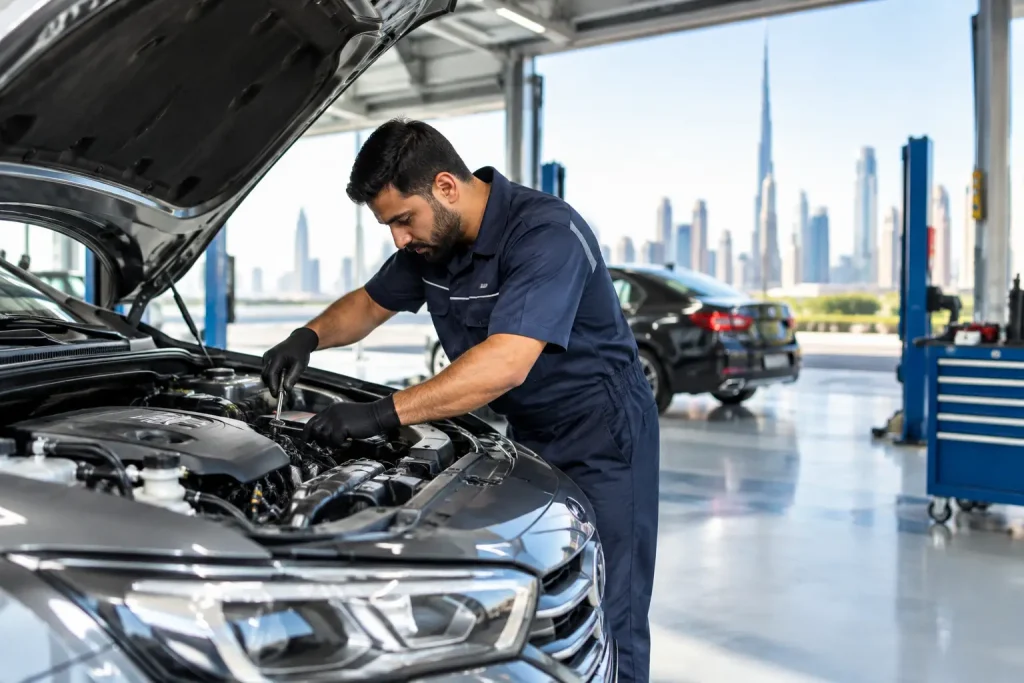
A warning light, weak air conditioning, a vibration at highway speed – small concerns can become expensive problems quickly in Dubai. Car servicing Dubai drivers choose should do more than replace oil and filters. It should identify wear early, account for the heat and traffic your vehicle faces, and give you a clear picture of what needs attention now versus what can wait.
For many owners, the difficult part is not booking a service. It is knowing whether the recommendation is necessary, whether the price is fair, and whether the car will be ready when promised. A good independent workshop answers those questions plainly and keeps you informed from inspection to handover.
Why Dubai puts extra pressure on your car
Dubai driving is demanding in ways that are easy to overlook. Summer temperatures place sustained load on the cooling system, battery, tires, engine oil, and air-conditioning components. Stop-start traffic raises operating temperatures, while long highway journeys expose existing wheel alignment, suspension, and tire issues.
Dust is another factor. It can clog engine and cabin filters sooner than expected, reduce air-conditioning performance, and contribute to brake noise when debris collects around moving components. Cars that sit unused for long periods are not exempt either. Batteries can weaken, tires can lose pressure, and seals may begin to dry out.
This does not mean every car needs major work at every visit. It does mean that factory service schedules should be considered alongside mileage, vehicle age, how often it is driven, and the symptoms you notice. A low-mileage vehicle that spends most of its time in traffic may need different attention than one used mainly for highway commuting.
What proper car servicing in Dubai should include
Routine servicing begins with the basics: correct engine oil and filter replacement, fluid checks, brake inspection, tire condition and pressure checks, and a review of belts, hoses, lights, and wipers. But the value is in the inspection around those jobs, not simply the parts replaced.
A workshop should check for leaks, unusual noises, uneven tire wear, battery health, and signs of overheating or poor air-conditioning performance. If a dashboard warning light is present, diagnostic equipment should be used to identify the underlying fault code and confirm the actual cause. Clearing a code without repairing the problem only delays the next warning.
For German and American vehicles in particular, accurate diagnostics matter. Modern cars rely on connected control modules, sensors, electronic steering systems, and complex cooling and fuel systems. A fault may look like a simple battery or sensor issue but have a different root cause. Proper testing helps avoid replacing parts based on guesswork.
A useful service visit also includes an honest conversation about priorities. Safety-related concerns such as worn brake pads, damaged tires, overheating risks, or steering issues should be addressed promptly. Other items may be preventative recommendations that can be planned for a later visit. You deserve to know the difference before authorizing work.
Know the difference between a minor and major service
The terms “minor service” and “major service” are widely used, but they are not identical for every make or workshop. The exact work should be based on your manufacturer schedule and your vehicle’s condition, not a one-size-fits-all package.
A minor service generally focuses on engine oil, an oil filter, basic fluid checks, and a visual inspection of key mechanical and safety items. It is suitable at shorter intervals when the vehicle has no specific concerns and previous maintenance is up to date.
A major service is more comprehensive. Depending on the vehicle, it may include air and cabin filters, spark plugs, brake fluid, transmission or differential fluid checks, cooling-system inspection, a more detailed underbody review, and diagnostic scanning. Timing-belt replacement, coolant replacement, or transmission service may also be due at manufacturer-set mileage or age intervals.
The trade-off is straightforward. Skipping scheduled maintenance may lower today’s bill, but it can increase the chance of a costly breakdown later. On the other hand, paying for work that is not due or not supported by inspection findings is not good value either. Ask for the service items, the reason they are recommended, and the condition found during the inspection.
Signs you should not wait for the next service
Some issues should be booked in as soon as possible rather than added to your next routine appointment. If the temperature gauge rises, coolant is leaking, or you notice a sweet smell from the engine bay, stop driving if it is safe to do so. Continuing with an overheating engine can cause serious damage.
Brake warnings, a soft pedal, grinding sounds, or a vehicle that pulls under braking also need prompt attention. The same applies to steering that feels heavy, noisy, or inconsistent. Electric power steering faults can affect both comfort and control, so accurate assessment is essential.
Do not ignore persistent vibrations, especially at speed. They can come from tire damage, wheel balance, alignment, worn suspension parts, or braking components. A check-engine light deserves diagnosis too, even when the car still feels normal. The issue could be minor, but only testing can tell you whether it is safe to continue driving.
Air conditioning is often treated as a comfort issue, yet weak cooling can point to a refrigerant leak, a failing compressor, a blocked filter, or an electrical fault. Getting it checked before peak summer is usually easier than waiting until the system stops working completely.
How to choose a workshop with confidence
Price matters, but the cheapest quote is not always the lowest-cost decision. A workshop that fits incorrect parts, misses the source of a fault, or gives no warranty conversation can cost more in repeat visits and lost time. The better question is whether the workshop explains the work clearly and has the equipment and experience to carry it out properly.
Look for a written estimate before work starts and ask whether diagnostics, labor, parts, and VAT are included. If additional faults are discovered during the job, the workshop should contact you for approval rather than adding work without discussion. Clear updates are especially valuable when parts availability affects turnaround time.
It is also worth asking about the parts being used. Genuine, OEM, and quality aftermarket parts each have a place, depending on the vehicle, repair, budget, and warranty expectations. There is no single right answer for every job. What matters is that the options are explained honestly and the choice is yours.
A full-service garage can be particularly useful when a mechanical issue overlaps with electrical, body, paint, or restoration work. Instead of moving the vehicle between multiple providers, you have one team coordinating the repair and one point of contact for updates.
A practical routine between workshop visits
You do not need to be a technician to protect your vehicle. Check tire pressures regularly, including the spare if your vehicle has one, and inspect tires for cuts, bulges, or uneven wear. Pay attention to changes in braking, steering, starting, fuel use, and air-conditioning performance. Your everyday observations give a technician valuable information.
Keep an eye on dashboard messages and do not rely on them disappearing by themselves. Check coolant only when the engine is cold, watch for fluid spots where you park, and avoid delaying service once the maintenance reminder appears. Keeping service records also helps technicians understand what has already been replaced and what may be due next.
At HYATTS AUTO CARE, the goal is simple: dealership-level workmanship without dealership-level pricing, with clear communication at every stage. Whether you drive a German sedan, an American SUV, or any other make, the right service plan should suit your car, your driving habits, and your budget.
Your car does not need vague advice or unnecessary repairs. It needs careful inspection, skilled work, fair pricing, and a workshop that treats your time as seriously as your vehicle.