

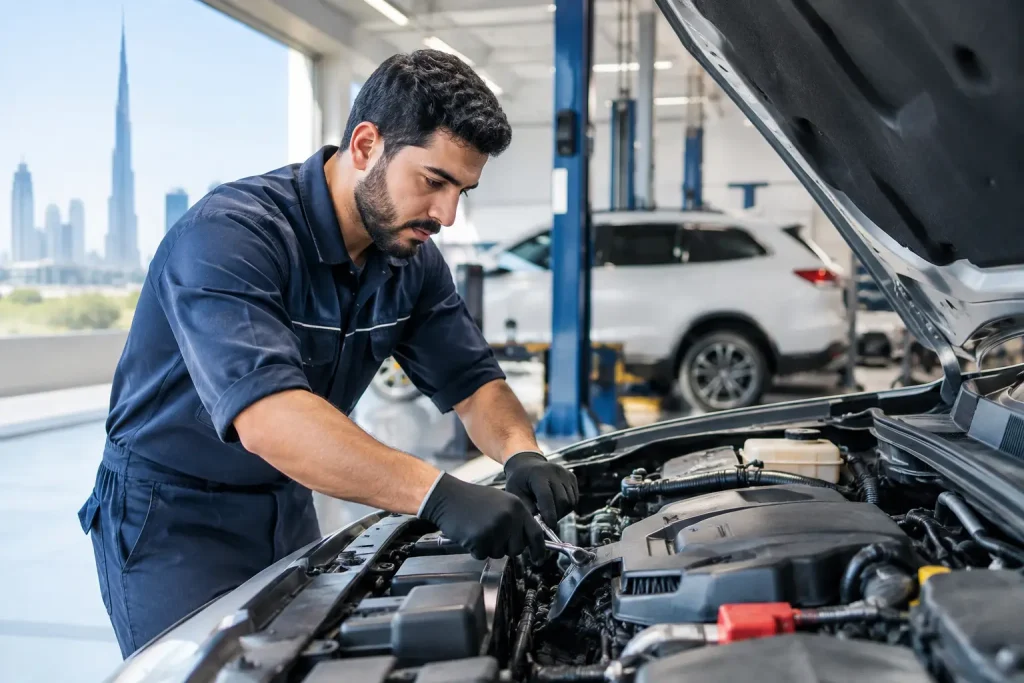
A warning light appears on the way to work. Your steering feels heavier than usual. The AC stops cooling during a Dubai afternoon. In those moments, finding a car mechanic Dubai drivers can rely on is not simply about getting the car running again. It is about knowing what is wrong, what it will cost, and when you can expect your vehicle back.
A good workshop should make that process easier. You should not have to chase updates, agree to vague repair recommendations, or feel pressured into replacing parts without a clear explanation. Whether you drive a German sedan, an American SUV, or any other make, the standard should be the same: skilled work, honest advice, fair pricing, and clear communication.
What to Expect From a Car Mechanic Dubai Drivers Trust
The best repair experience starts before any work begins. A technician should listen to the symptoms you have noticed, inspect the vehicle properly, and explain the likely cause in plain language. Some issues are obvious, such as worn brake pads or a leaking hose. Others need more time and equipment to trace, especially electrical faults, intermittent warning lights, charging problems, or steering concerns.
That difference matters. A workshop that rushes into a repair without testing can replace a part that was never faulty. Proper diagnostics may take longer at the start, but they often prevent unnecessary expense and repeat visits later.
Once the problem is identified, you should receive a clear estimate. This should separate the work required to make the car safe and reliable from items that can reasonably wait. Not every advisory note needs immediate action. For example, a small cosmetic scuff does not carry the same urgency as a brake fluid leak, a weak battery, or an overheating engine.
Honest advice also includes explaining the trade-offs. Original equipment parts can be the right choice for certain repairs, particularly on complex German and American vehicles. Quality aftermarket options may be sensible for other jobs when they meet the required standard and help control the cost. A reliable mechanic will discuss those options instead of treating every repair as one-size-fits-all.
Diagnostics Should Come Before Parts
Modern cars depend on sensors, control modules, wiring, software, and mechanical systems working together. That is why a dashboard message alone is not a diagnosis. A fault code points a technician toward an area of concern, but it does not always identify the failed component.
Take a check-engine light as an example. It could relate to an ignition issue, an air leak, a fuel delivery problem, a sensor reading, or something else entirely. Replacing parts based only on the code can become expensive quickly. The right approach is to scan the system, inspect the relevant components, test readings where needed, and confirm the cause before recommending a repair.
The same applies to electrical concerns. A dead battery may be caused by an old battery, but it could also be linked to an alternator fault, poor wiring connection, or an electrical drain while the car is parked. Good electrical diagnosis protects you from paying for a temporary fix that leaves the real issue unresolved.
Specialized Knowledge Matters for German and American Cars
German and American vehicles are built differently, and their repair needs can vary significantly. German cars often require advanced diagnostic equipment, model-specific service procedures, and careful calibration after certain repairs. American vehicles can have their own common electrical, transmission, suspension, and cooling system requirements.
This does not mean every job needs a dealership. It means the workshop needs the right tools, practical experience, and access to correct repair information. An independent garage with genuine technical capability can deliver dealership-level workmanship while offering a more personal conversation about the work and the cost.
At HYATTS AUTO CARE, that focus extends to German and American vehicles as well as all makes and models, covering mechanical repair, electrical diagnosis, steering refurbishment, bodywork, paint, and full cosmetic restoration.
Routine Service Is Not Just an Oil Change
Dubai driving puts added pressure on a vehicle. High temperatures, heavy traffic, dust, frequent short journeys, and long highway runs can all affect fluids, filters, tires, batteries, cooling systems, and AC performance. Routine servicing is the practical way to spot developing problems before they interrupt your week.
A useful service should follow your vehicle’s maintenance requirements while accounting for its actual condition and mileage. It should include more than replacing oil and a filter. A technician should also check fluid levels, brakes, tires, belts, hoses, battery health, cooling performance, and visible leaks. The exact work depends on the vehicle and its service schedule, but the inspection should have a purpose.
Ask for straightforward feedback after the service. You should know what was completed, what is in good condition, and what may need attention soon. That allows you to plan rather than being surprised by a larger repair later.
Signs You Should Not Ignore
Some car issues can wait for a scheduled appointment. Others need prompt attention because they can affect safety, reliability, or cause further damage. Book an inspection quickly if you notice:
- A warning light that remains on or flashes
- Grinding, squealing, knocking, or vibration while driving
- A burning smell, fuel smell, smoke, or visible fluid leak
- Heavy steering, poor braking response, or the vehicle pulling to one side
- Engine overheating, weak AC, hard starting, or repeated battery failure
Do not assume a problem will disappear because the car still drives. Intermittent faults can be particularly misleading. A warning light that comes and goes, an occasional misfire, or steering that only feels heavy at low speed may still point to a problem worth diagnosing early.
Clear Updates Are Part of the Repair
Vehicle repairs create uncertainty. You may need the car for work, school runs, meetings, or travel across the city. That is why communication matters as much as the work on the lift.
A professional workshop should contact you if inspection reveals additional work beyond the original request. You should understand why it is recommended, how urgent it is, and how it affects the estimate and completion time. No one wants a surprise invoice after collecting the car.
Fast turnaround is valuable, but speed should never mean skipping checks or installing unsuitable parts. Sometimes a repair is completed the same day. Other times, the correct part must be sourced or further testing is needed. The key is being kept informed every step of the way, with realistic timing instead of promises that cannot be met.
Mechanical Repairs, Bodywork, and Restoration Under One Roof
It is convenient when one workshop can handle more than one type of vehicle need. Mechanical repairs and diagnostics keep the car dependable, while dent repair, painting, and cosmetic restoration help protect its appearance and resale value.
For example, a minor collision may leave more than a visible bumper mark. It can affect parking sensors, lights, brackets, wheel alignment, or paint protection. A thorough repair considers both appearance and function. Similarly, a vehicle facelift should be planned carefully so that exterior upgrades, paintwork, trim fitment, and electrical components work together properly.
There is a trade-off to consider with cosmetic work. The cheapest quote is not always the best value if color matching is poor, preparation is rushed, or paint begins to fade prematurely. Ask what work is included and whether the shop has inspected damage beyond the surface.
How to Choose the Right Workshop
Start with practical questions. Does the workshop work regularly on your vehicle’s make? Can it diagnose electrical and mechanical problems rather than simply replace parts? Will it provide an estimate before beginning major work? Is it willing to explain the repair without hiding behind technical language?
Location also matters. A workshop in Al Quoz can be particularly convenient for drivers moving between central Dubai business areas, residential communities, and major road routes. But convenience should support quality, not replace it. The goal is to find a garage you can return to for routine servicing, urgent faults, and cosmetic work with the same confidence.
Customer reviews can help, especially when they mention clear communication, pricing, turnaround time, and repeat visits. Still, speak directly with the workshop when possible. The way a team handles your first questions often tells you how it will handle your car.
Your vehicle does not need vague answers or unnecessary repairs. Choose a mechanic who takes the time to find the cause, gives you clear options, and treats your time and budget with respect. That is the kind of workshop relationship that makes every future service visit easier.