

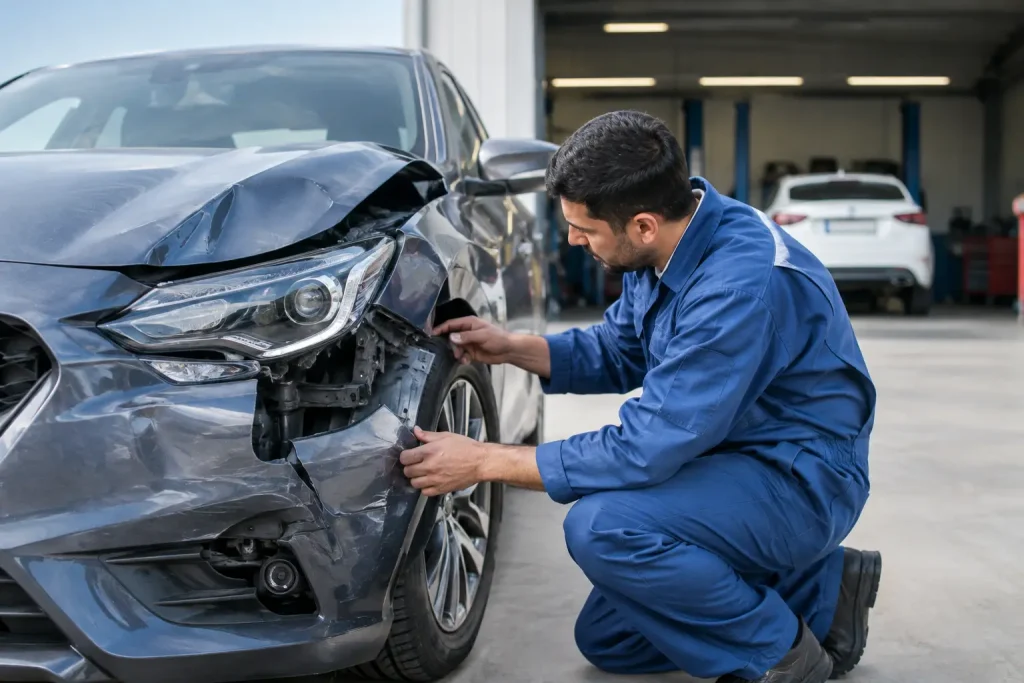
A collision can leave more damage than a cracked bumper or scratched door. Modern vehicles hide sensors, wiring, cooling components, steering parts, and safety systems behind exterior panels. That is why car accident repair Dubai drivers choose should start with a proper inspection, not a quick estimate based only on what can be seen in the parking lot.
In Dubai, where daily driving often means high-speed highways, heavy traffic, and intense heat, a repair needs to restore more than appearance. It should return the vehicle to safe, dependable operation while protecting its resale value. The right workshop will explain what is damaged, what must be repaired or replaced, how insurance approval affects the timeline, and when the car is genuinely ready to collect.
Start With Safety, Documentation, and a Clear Inspection
After an accident, move the vehicle only if it is safe and permitted to do so. Follow the required police reporting process, keep the report and any claim details available, and take clear photos of the damage before repairs begin. Even small impacts deserve documentation. A low-speed rear impact, for example, can damage bumper reinforcements, parking sensors, clips, exhaust mounts, or the trunk floor without leaving dramatic exterior evidence.
Once the vehicle reaches the workshop, the first job is to assess its condition properly. A quality inspection looks beyond the visible panel damage. The technician should check panel gaps, wheel alignment, suspension condition, lights, wiring, fluid leaks, cooling components, and warning messages on the dashboard. On newer German and American vehicles, diagnostic scanning is especially important because radar sensors, cameras, airbag modules, and driver-assistance features can be affected by an impact.
This stage may uncover additional work after panels are removed. That does not automatically mean the estimate was wrong. Hidden damage is common. What matters is how the workshop handles it: clear photographs, a straightforward explanation, and approval before extra work begins. Honest communication prevents the unpleasant surprise of a bill that grows without warning.
What a Complete Car Accident Repair in Dubai Should Include
Accident repair is not one service. It is a sequence of connected jobs, and the right sequence makes a major difference to the final result. Mechanical concerns should be addressed before cosmetic finishing. There is little value in a perfectly painted bumper if a damaged bracket, misaligned headlight, or unresolved fault code remains behind it.
Structural and mechanical checks
The workshop should inspect the parts that keep the car driving straight, stopping predictably, and protecting occupants. Depending on the impact, this can include steering components, suspension arms, wheel bearings, brakes, tires, subframe mounts, radiator supports, and the exhaust system.
A vehicle that pulls to one side, vibrates at speed, makes a new knocking noise, or shows an uneven steering wheel after an accident needs attention before it returns to regular use. Wheel alignment alone is not always the answer. If a suspension component is bent, an alignment adjustment may only mask the underlying issue temporarily.
Electrical diagnostics and safety systems
Electrical faults can be delayed after an accident. A parking sensor may fail days later, a headlight may develop condensation, or a battery management warning may appear after wiring or a connector has been disturbed. Modern vehicles rely on multiple control modules, so diagnostic equipment and experienced fault tracing are essential.
Airbag and seat belt systems require particular care. If an airbag warning light appears, do not treat it as a cosmetic dashboard issue. The system needs proper diagnosis and repair using the correct procedures. A repair should never involve shortcuts that leave safety equipment unable to respond when it is needed.
Denting, panel repair, and paintwork
Good bodywork is about more than making a dent less visible. Panels must be repaired or replaced correctly, fitted with even gaps, and prepared thoroughly before paint is applied. Poor preparation often reveals itself later through uneven texture, paint lifting, visible sanding marks, or a mismatch that looks different in sunlight.
Dubai’s strong sun makes paint quality easy to judge. Color matching needs to account for the existing finish, paint fade, metallic flakes, and the angle at which light hits the panel. In some cases, blending color into adjacent panels produces a more natural result than painting only the damaged area. It depends on the vehicle color, the location of the repair, and the condition of the surrounding paint.
Repair or Replace? The Decision Should Be Practical
Owners often ask whether a damaged panel can be repaired rather than replaced. The answer depends on the material, location, severity of the impact, and whether the part has a safety role. Repairing a minor dent can be cost-effective and preserve the original panel. Replacing a cracked bumper cover, broken headlight, distorted reinforcement bar, or damaged sensor mounting point may be the safer choice.
The same applies to parts selection. Genuine, original-equipment, and high-quality aftermarket parts can each have a place, depending on the vehicle, insurer requirements, availability, and budget. The important point is that the customer understands what is being fitted and why. A reputable independent workshop should not make part choices vague.
For premium German vehicles and American cars, using the correct components and calibration methods can matter greatly. A replacement bumper may look identical, yet require sensor brackets, radar alignment, or module coding before the vehicle’s systems operate as intended. Saving money on the wrong part or an incomplete repair can create a larger expense later.
Insurance Approval Should Not Mean Losing Visibility
Insurance-supported repairs can introduce extra steps, including inspections, estimates, approvals, and parts authorization. These processes can affect turnaround time, especially when hidden damage is discovered or parts are not immediately available. A workshop cannot always control approval timing, but it can control how clearly it communicates with you.
Ask for a plain explanation of the repair scope, expected parts lead time, and any likely changes to the estimate. You should also know whether the insurer has approved repairs, whether there is an excess payment, and what work remains outside the approved scope. Clear updates reduce stress and help you plan transport, work commitments, and collection.
At HYATTS AUTO CARE, the approach is to keep customers informed every step of the way, from the initial inspection through mechanical checks, bodywork, paint, and final handover. That direct communication matters when your car is part of your daily routine, not simply a project waiting in a garage.
Questions Worth Asking Before You Authorize Repairs
Before leaving your vehicle, ask how the damage will be assessed and whether diagnostics are included. Ask whether the quote covers parts, labor, paint materials, scanning, and calibration where applicable. You should also ask what happens if hidden damage is found after dismantling.
It is reasonable to ask about the type of parts proposed, paint matching, expected completion timing, and final quality checks. A workshop that welcomes these questions is more likely to be accountable for the outcome. Be cautious of a quote that is dramatically lower than others without a clear breakdown. Low pricing can sometimes reflect missed inspection steps, inferior materials, or work excluded from the original estimate.
Speed matters, but rushing the process is not the same as efficient repair. Fast turnaround comes from organized diagnosis, reliable parts sourcing, skilled technicians, and prompt communication, not from skipping preparation or returning a car before every system has been checked.
Check the Vehicle Carefully at Handover
Collection day is your opportunity to review the work with the workshop. Inspect repaired areas in daylight where possible. Look along the vehicle’s sides for straight panel lines, check that doors, hood, trunk, and fuel flap open and close properly, and compare paint finish across adjacent panels.
Inside the vehicle, confirm that warning lights are off and that features affected by the repair work as expected. Check headlights, indicators, parking sensors, cameras, windows, central locking, air conditioning, and steering feel. If the car had an alignment or suspension repair, pay attention to whether it tracks straight on the road.
A professional workshop should be prepared to walk you through the completed work and answer questions. Keep the repair documents, invoices, and any parts information for your records. They can be useful for warranty discussions, insurance files, and future resale.
A good accident repair should leave you with more than a car that looks presentable from a distance. It should give you confidence when you merge onto Sheikh Zayed Road, brake in traffic, or hand the keys to a family member. Choose a workshop that treats the hidden details with the same care as the visible finish.