

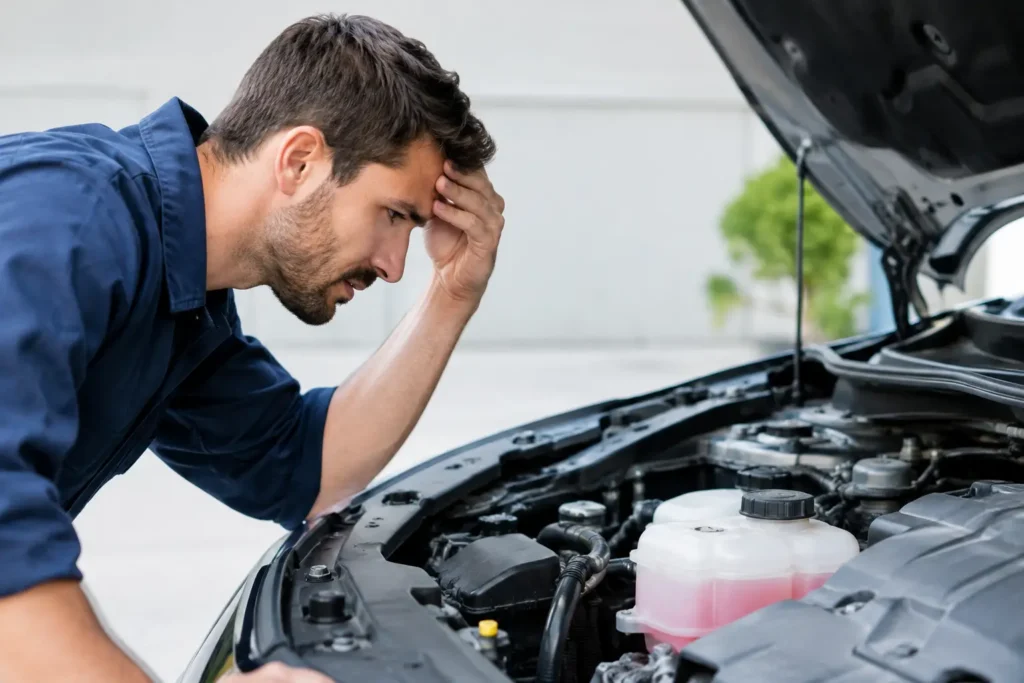
A temperature gauge that suddenly climbs in Dubai traffic is not a warning to watch until you get home. It is a reason to act. The top signs of cooling failure can begin with something as small as a sweet smell or a low coolant level, then quickly turn into overheating, engine damage, and an expensive repair.
Your vehicle’s cooling system has one job that cannot be delayed: keep engine temperature within a safe operating range. Coolant carries heat away from the engine, the radiator releases that heat, and components such as the water pump, thermostat, hoses, fans, and pressure cap keep the process moving. When one part stops doing its job, heat builds fast, especially in high ambient temperatures and stop-and-go driving.
Top Signs of Cooling Failure to Watch For
The temperature gauge reads hotter than normal
The clearest warning is a temperature gauge moving above its usual position. Some vehicles use a digital temperature display instead of a traditional gauge, while others show a red temperature warning light. Either way, do not assume the issue will correct itself once the road opens up.
A gauge that rises only when idling can point toward a radiator fan, fan control module, relay, or electrical issue. A gauge that rises under load, while climbing or accelerating, may indicate low coolant, restricted radiator flow, a weak water pump, or a thermostat that is not opening correctly. The exact cause depends on the vehicle, which is why proper diagnosis matters more than replacing parts based on a guess.
If the gauge enters the red zone or a temperature warning appears, safely pull over as soon as possible. Turn off the air conditioning, switch off the engine once parked, and let it cool completely. Never open the radiator cap or coolant reservoir cap on a hot engine. Pressurized coolant can cause serious burns.
Coolant keeps disappearing
Coolant should not need frequent topping up. A small change in level between a cold and warm engine can be normal, but repeatedly adding coolant is a sign that it is leaking externally, being pushed out under pressure, or entering the engine internally.
Look for wet spots, dried residue, or puddles beneath the vehicle. Coolant can be green, pink, orange, blue, or another color depending on the specification, so color alone is not a reliable diagnosis. You may also notice a sweet, chemical smell around the front of the car or inside the cabin.
Common external leak points include hoses, hose connections, the radiator, water pump, thermostat housing, expansion tank, heater hoses, and the radiator cap. On some German and American vehicles, plastic cooling components become brittle over time and may crack only once the system reaches operating pressure. A pressure test can locate leaks that are not obvious during a quick visual check.
Steam or an unusual smell comes from under the hood
Steam from under the hood is never a minor symptom. It can mean coolant is leaking onto a hot engine component, or the engine is overheating badly enough for coolant to boil. Stop driving safely and do not continue after the steam disappears. The vehicle may simply have run low on coolant, but it may also have a failed fan, burst hose, stuck thermostat, or loss of system pressure.
A sweet coolant smell deserves attention even before you see steam. Inside the cabin, it can also suggest a heater core leak. You might notice fogging on the windshield, damp carpet near the front footwells, or weak heater performance. These issues can worsen gradually, but they still affect the same cooling system that protects your engine.
The air conditioning is weak in traffic
Weak air conditioning does not always mean a cooling-system failure, but it can be a useful clue. Many vehicles use the same radiator fan assembly to help airflow across both the radiator and A/C condenser. If the fan is not operating correctly, the air conditioning may blow warmer while idling or crawling through traffic, then improve at highway speed.
This is particularly relevant in Dubai, where air conditioning works hard for much of the year. If warm A/C is paired with a rising engine temperature, treat the combination seriously. An electrical diagnostic check can confirm whether the fan, control unit, wiring, sensor, relay, or another component is at fault.
You see coolant residue or swollen hoses
Not every cooling problem produces a large puddle. Small leaks often leave crusty deposits around hose joints, the radiator seam, water pump area, or coolant reservoir. A split hose may only open when hot and pressurized, then appear normal after the engine cools.
Check hoses only when the engine is cold. They should not feel rock hard, collapsed, badly swollen, or cracked. A damaged hose can fail without much warning, and a loose clamp can allow coolant loss that becomes much worse under pressure. Replacing an aging hose or cap early is usually far less costly than repairing an overheated engine.
The heater blows cold air when the engine is warm
The cabin heater uses hot engine coolant. When the engine is fully warmed up but the heater suddenly blows cold, low coolant or trapped air in the cooling system may be the reason. It can also happen when coolant is not circulating properly because of a water pump, thermostat, or blockage issue.
This sign needs context. If the temperature gauge remains normal and the climate-control system has a known fault, the cause may be unrelated. But a cold heater combined with overheating is a strong indication that coolant flow is compromised. Do not use the heater symptom as a reason to keep driving while the gauge rises.
The engine runs rough, produces white exhaust, or has milky oil
These are the more serious warning signs. Persistent white exhaust with a sweet smell, unexplained coolant loss, rough running after startup, or a creamy substance on the oil cap can indicate that coolant is entering areas where it does not belong. A damaged head gasket, cracked cylinder head, or other internal engine problem may be involved.
There are other explanations for some of these symptoms. Light white vapor on a cold morning, for example, can be normal condensation. The point is not to diagnose an internal failure from one sign alone. It is to arrange an inspection promptly before a manageable cooling fault develops into major engine work.
What to Do When Your Car Starts Overheating
Your first priority is preventing further damage. Do not keep driving simply because the car still moves. A few minutes of severe overheating can warp cylinder heads, damage gaskets, and affect engine components that were not originally at fault.
If it is safe to do so, pull over, turn off the A/C, and stop the engine. Do not pour cold water over a hot engine, remove a hot cap, or continue topping up coolant without finding out why it is low. Once the engine is fully cool, a visual check may reveal an obvious leak, but it cannot confirm the condition of the thermostat, pump, fan circuit, radiator flow, or combustion gases in the coolant.
A proper workshop inspection should include checking coolant condition and level, pressure-testing the system, verifying radiator fan operation, testing thermostat behavior, inspecting belts and hoses, and using diagnostic equipment where required. If internal leakage is suspected, further tests can check for combustion gases and cylinder-related problems.
Why Quick Diagnosis Saves More Than the Engine
Cooling repairs range from straightforward hose, cap, sensor, or fan issues to more involved radiator, water pump, or internal engine repairs. The difference often comes down to how early the fault is caught. Ignoring a small leak because the car still drives normally is where many costly overheating stories begin.
At HYATTS AUTO CARE, the approach is to identify the actual cause, explain the findings clearly, and discuss the repair before work begins. That matters because cooling faults can look similar from the driver’s seat, while the right repair depends on accurate testing and the vehicle’s specific design.
If your temperature gauge changes, coolant level drops, or A/C performance falls off in traffic, book the inspection before the next long drive. A cooling system is easiest to repair when it is warning you, not after it has left you stranded.