

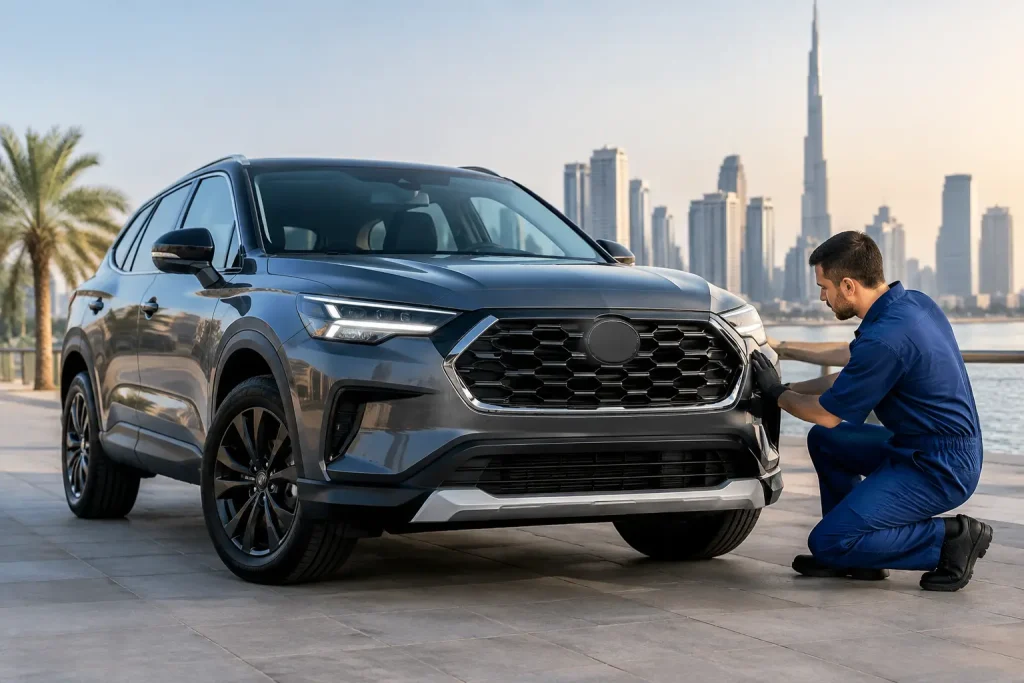
A vehicle facelift service Dubai drivers can trust is about more than making an older car look newer. It is a considered upgrade to the areas people notice first: faded paint, damaged bumpers, tired headlights, worn trim, dented panels, and an interior that no longer matches the way you maintain the rest of the vehicle. Done properly, a facelift protects your car’s value while giving you the confidence of driving something that looks cared for again.
For many Dubai owners, the need is practical. Intense sun, heat, road debris, parking dents, sand exposure, and daily traffic can age a vehicle faster than expected. A facelift can be tailored to a single damaged area or planned as a complete exterior and cosmetic restoration. The right scope depends on your car’s condition, your budget, and how long you plan to keep it.
What a Vehicle Facelift Service in Dubai Can Include
A vehicle facelift is not one fixed job. It can range from restoring a front bumper and headlights to refreshing the entire exterior, correcting body damage, repainting panels, and updating worn details. The goal is to make the vehicle look consistent, not simply to cover the most obvious marks.
For a newer car with minor cosmetic wear, paint correction, dent removal, bumper repair, and headlight restoration may be enough. For an older German or American vehicle, the work may involve more detailed attention to cracked trims, damaged grilles, faded badges, peeling clear coat, wheel scuffs, or misaligned panels. If there is hidden damage behind the bumper or a warning light connected to a sensor, cosmetic work should be coordinated with proper electrical diagnostics and repair.
A complete facelift often includes bodywork and denting, panel preparation, paintwork, bumper repair or replacement, trim restoration, headlight or taillight refurbishment, and interior cosmetic repairs where needed. Some vehicles also benefit from replacing worn exterior parts with updated OEM-style components. The important point is that every change should fit the vehicle correctly and preserve its original character.
Start With Condition, Not a Parts List
It is easy to arrive at a workshop with a list of parts you want replaced. But the better starting point is a full condition assessment. A bumper that appears scratched may also have broken mounting points. A headlight that looks cloudy may have moisture inside. A panel that seems dull may need repainting rather than polishing because the clear coat has failed.
A professional inspection helps separate repairable issues from parts that genuinely need replacement. This matters because replacing everything is not always the best value, while repairing the wrong way can lead to repeat work. Honest recommendations should explain what is necessary for safety and durability, what will improve appearance, and what can wait.
Paint matching deserves particular attention. Dubai’s strong sunlight makes even small variations in shade noticeable, especially on white, silver, gray, black, and metallic finishes. Proper preparation, color matching, and blending are what prevent a repaired panel from looking different from the rest of the vehicle. Fast work is useful, but rushing prep or curing time can affect the finish long after the car leaves the workshop.
Repair, Replace, or Refresh?
The answer depends on damage, availability, and your expectations. Light dents and scratches can often be repaired without replacing a panel. A cracked bumper may be repairable if the damage is limited and its structure remains sound. Severely damaged plastic, broken mounts, rusted metal, or distorted panels are usually better replaced or rebuilt correctly.
Refreshing is often the most cost-effective choice when the foundation is still good. Headlight restoration, paint correction, trim treatment, wheel refurbishment, and targeted touch-ups can make a major visual difference without committing to a full repaint. This approach suits owners preparing a car for sale, returning a leased vehicle, or improving a well-maintained daily driver.
Replacement can make more sense when poor previous repairs, extensive cracking, or repeated paint failure would make restoration short-lived. A trustworthy workshop should be clear about that trade-off before work begins.
Cosmetic Work Should Not Ignore Mechanical Health
A car can look excellent and still have issues that need attention. During a facelift, it is sensible to inspect items around the areas being repaired. Bumper removal may reveal damaged undertrays, loose brackets, broken parking sensors, or headlight wiring concerns. Worn suspension components can also affect panel alignment and tire appearance, while steering issues may contribute to uneven tire wear that takes away from the vehicle’s finished look.
This does not mean every cosmetic job should become a large mechanical repair bill. It means the workshop should identify related concerns, explain them clearly, and let you decide. Owners deserve to know whether an issue is urgent, whether it affects the quality of the facelift, or whether it can be scheduled later.
At HYATTS AUTO CARE, the advantage of a full-service workshop is that bodywork, paintwork, mechanical repair, and electrical diagnostics can be considered together. That is especially useful for German and American vehicles, where lighting systems, parking sensors, cameras, modules, and electronic steering components may need careful handling during exterior repairs.
Choosing the Right Scope for Your Budget
A good facelift plan should not be based on guesswork. Before approving work, ask for a clear breakdown of the proposed repairs, replacement parts, paintwork, and expected turnaround time. You should also know whether parts are original, aftermarket, refurbished, or used, where appropriate. Each option has a different cost and finish expectation.
Original parts can offer the closest factory fit, but they may increase the cost and lead time. Quality aftermarket parts can be a sensible option for certain bumpers, grilles, trims, and cosmetic items, provided fitment is checked carefully. Refurbishing original components is often worthwhile when replacement is expensive or the original part has better fit than an alternative.
The best value is not always the lowest quote. A low initial price can become expensive if paint begins peeling, panels do not align, sensor faults appear after reassembly, or the workshop adds unexpected charges without approval. Look for direct communication, visible workmanship, and a plan that matches the actual condition of your vehicle.
Questions Worth Asking Before Work Begins
You do not need to be a bodywork expert to make an informed decision. Ask whether the workshop has found underlying damage, how paint matching will be handled, whether any electronic systems need calibration or testing, and what parts are being used. It is also reasonable to ask for progress updates if the job involves multiple stages.
Clear answers are a good sign. A workshop should be able to explain the job in straightforward language, show you the areas of concern when possible, and contact you before carrying out additional work. That level of communication reduces surprises and helps keep the project on budget.
Maintaining the Finish After Your Facelift
Once the work is complete, regular care will protect the result. Avoid harsh washing methods, especially immediately after fresh paintwork. Use appropriate car-cleaning products, remove bird droppings and fuel spills promptly, and park under cover when possible. In Dubai, dust and sun are unavoidable, but consistent washing and paint protection can slow down fading and surface damage.
Pay attention to small issues before they grow. A new bumper scrape, a loose trim piece, moisture in a lamp, or a stone chip in fresh paint is easier and less expensive to address early. If your car is parked outdoors or driven daily through busy areas, a periodic cosmetic inspection is a practical part of ownership.
Your vehicle does not need a complete rebuild to feel new again. A well-planned facelift can focus on the areas that affect appearance, reliability, and resale value most, with honest advice guiding every decision. The right workshop will help you choose work that makes sense for your car, rather than selling work your car does not need.