

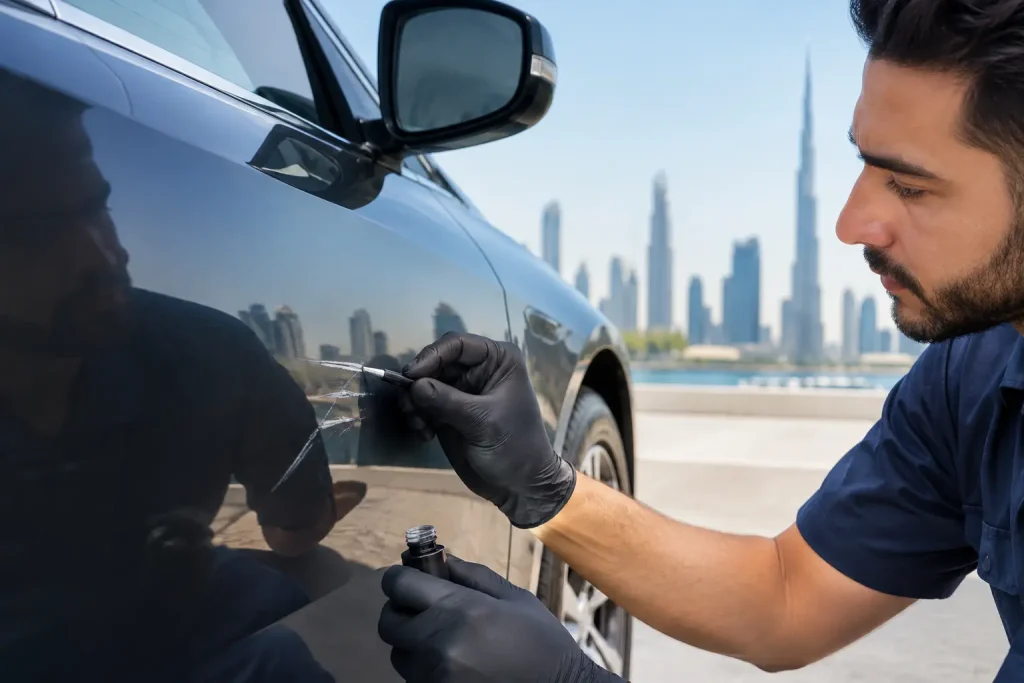
A scratch on a Dubai car rarely stays just a scratch. Fine marks can become more visible under strong sunlight, while deeper damage can expose the body panel to dust, moisture, and eventual corrosion. The right car scratch repair Dubai service starts with an honest assessment of the damage, not a quick promise that every mark can simply be polished away.
For most owners, the concern is practical: Will the repair be noticeable? How long will it take? And are you paying for a full panel repaint when a smaller repair would do? The answer depends on how far the damage has gone through the paint and where it sits on the vehicle.
Not Every Scratch Needs Paintwork
Modern vehicle paint is built in layers. On top is a clear protective coat, followed by the color coat, primer, and then the metal or plastic panel itself. A scratch that only affects the clear coat may look alarming, especially on dark colors, but it can often be corrected without repainting.
Light swirl marks, surface scuffs, and paint transfer from a wall or another vehicle may respond well to professional machine polishing. This carefully removes a very thin amount of damaged clear coat and levels the surface so light reflects evenly again. It is a correction process, not a cover-up, and it needs to be carried out with the right products and paint-depth awareness.
Once a scratch catches your fingernail, it may have gone through the clear coat. If you can see a different color underneath, primer, bare metal, or raw bumper plastic, polishing alone will not restore it. A touch-up may reduce the appearance of a small chip, but a clean, lasting result often requires localized paint repair or refinishing of the affected panel.
Car Scratch Repair Dubai: Matching the Repair to the Damage
The best repair is the least invasive option that still gives a durable, presentable result. That means the workshop should inspect the panel in good lighting, identify the paint layers affected, and explain the options before work begins.
A minor parking scuff on a bumper may be repaired through sanding, preparation, color application, and clear coating in the damaged area. A longer key scratch across a door may require repainting and blending the adjacent area to make the color transition disappear. Metallic, pearl, and tri-coat paints demand extra care because their finish changes depending on spray direction, light, and viewing angle.
There is a trade-off between a low-cost cosmetic improvement and a near-factory finish. A small touch-up is quicker and more affordable, but it can remain visible at close range. Panel refinishing costs more and takes longer, yet it is usually the better option for deep, highly visible damage on a newer vehicle, a premium vehicle, or a car being prepared for sale.
A good workshop will not push the most expensive route by default. It should tell you when polishing is enough, when paintless dent repair should happen before paintwork, and when a panel needs proper refinishing to protect the surface and restore its appearance.
Why Dubai Conditions Make Prompt Repairs Sensible
Dubai roads create plenty of opportunities for cosmetic damage. Tight parking spaces, shopping center ramps, curbside stops, sand carried by the wind, and heavy traffic all take their toll. A small bumper scrape is common. So are door-edge chips, scratches from careless parking, and paint marks from low concrete barriers.
Heat and sun do not create a deep scratch, but they can make neglected paintwork look worse. Dust settles into damaged areas, and repeated washing with harsh brushes can enlarge fine marks around the repair zone. On steel panels, a scratch that reaches bare metal should not be ignored for months. While Dubai is dry for much of the year, humidity, coastal air, and occasional rain can still allow corrosion to begin.
Plastic bumpers will not rust, but exposed or flaking paint can spread and make the vehicle look poorly maintained. This matters when returning a leased car, selling a vehicle, or simply keeping a German or American vehicle looking as well cared for as it drives.
What a Proper Scratch Repair Process Looks Like
Quality results come from preparation more than speed. The visible paint application is only one part of the job. First, the damaged panel must be cleaned and inspected to determine whether there is also a dent, cracked bumper material, loose paint, or hidden damage near the scratch.
For a repair requiring paint, the technician removes damaged material, feathers the surrounding edge, and uses filler only where necessary. The surface is then primed and sanded to create a stable base. Color is mixed or matched to the vehicle’s paint code, but the code alone is not always enough. Paint can age differently from panel to panel, particularly on vehicles exposed to strong sun, so an experienced painter checks the match against the actual vehicle.
The color coat and clear coat must be applied in a controlled environment, then cured properly before final polishing and inspection. Rushing this stage can lead to poor adhesion, texture differences, overspray, or a mismatch that becomes obvious outside the workshop.
For scratch repairs involving a bumper or door, masking and panel protection matter just as much. The goal is to repair the affected area without creating new marks on trim, glass, neighboring panels, or sensors.
Avoid These Common DIY Mistakes
A basic wash and a good-quality scratch remover can help with very light surface marks. Beyond that, DIY products can create more work for the painter later. Scratch pens, for example, may be useful for preventing a tiny chip from being left bare, but they rarely produce an invisible repair. The color may not match, and excess paint can leave a raised line.
Avoid aggressive rubbing compounds, household solvents, and rough sponges. These can haze the clear coat or remove paint around the original scratch. Also be careful with online repair kits that claim to remove every scratch in minutes. If the damage has reached primer or metal, no polish can replace the missing paint.
If you are unsure, wash the panel, dry it completely, and inspect it in daylight. Take clear photos before visiting a workshop. This helps the advisor understand whether you are dealing with paint transfer, a superficial scuff, or deeper damage that needs bodywork.
Choosing a Workshop for Paint and Cosmetic Repairs
Price matters, but a quote should explain what is included. Ask whether the estimate covers dent repair, panel preparation, paint blending, clear coating, polishing, and any required trim removal. A low price may reflect a quick spot repair that is suitable for an older daily driver, or it may leave out steps that affect durability and appearance.
Turnaround also depends on the repair. A light polish may be completed quickly, while a full panel repair needs adequate preparation, paint curing, and quality checks. Be cautious of anyone who promises every repair within a few hours without seeing the vehicle first.
At HYATTS AUTO CARE, the focus is on explaining the condition of the damage and recommending the repair that makes sense for your car and budget. Whether you drive a BMW, Mercedes-Benz, Ford, Chevrolet, or another make, clear communication helps you decide between a cosmetic improvement and a full refinishing repair.
When to Repair a Scratch Before Selling or Returning a Lease
Cosmetic repairs can make a real difference before a sale because buyers often judge a vehicle’s care by the first things they see: bumpers, doors, wheels, headlights, and paint condition. A few visible scratches may lead a buyer to assume there are larger maintenance issues, even when the vehicle has been serviced properly.
For lease returns, review the condition standards early rather than waiting until the final week. Small scuffs may be accepted, while deep scratches, cracked paint, and bumper damage can result in charges that are higher than arranging a local repair yourself. The right approach is to repair obvious damage properly without spending unnecessarily on panels that do not need attention.
A clear estimate, a realistic timeline, and a repair matched to the depth of the scratch will protect both the look and long-term condition of your vehicle. If a mark has been bothering you every time you walk up to the car, having it assessed is usually the simplest next step.