

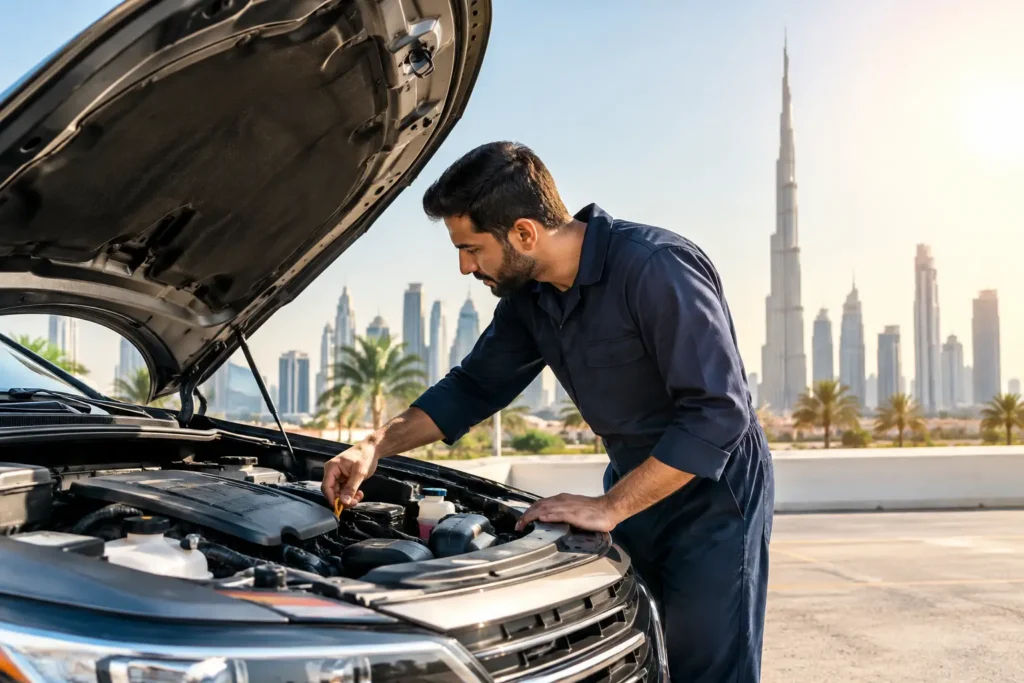
A car that felt perfectly normal in April can quickly reveal weak points once Dubai temperatures rise. Summer car preparation is not about adding unnecessary work to your schedule. It is about catching small issues before they become an overheated engine, weak air conditioning, a flat battery, or a roadside breakdown when the heat is at its worst.
For drivers who rely on their vehicle for daily commutes through Al Quoz, Sheikh Zayed Road, school runs, and weekend travel, a focused inspection before peak summer is money well spent. German and American vehicles can be especially sensitive to cooling, electrical, and air conditioning faults when high ambient temperatures put every system under greater load.
Start Summer Car Preparation With the Cooling System
Your cooling system has one clear job: keep the engine within its safe operating temperature. In Dubai summer conditions, it has very little room to compensate for a low coolant level, aging hose, weak radiator cap, or cooling fan problem.
Check the coolant level only when the engine is fully cold. The reservoir should sit between its minimum and maximum markings, and the coolant should look clean rather than rusty, oily, or filled with debris. A repeated drop in coolant is not something to top up and ignore. It may point to a leak from a hose, radiator, water pump, expansion tank, or another component that needs proper diagnosis.
The type of coolant matters as much as the level. Many European vehicles require coolant that meets a specific manufacturer specification. Mixing random products can reduce corrosion protection and create deposits inside the cooling system. A workshop can pressure-test the system, inspect for leaks, confirm the correct coolant, and check whether the radiator fan activates as it should.
Keep an eye on the temperature gauge while driving. If it climbs above its usual position, reduce the load on the engine, turn off the AC if necessary, and stop safely as soon as possible. Never open a hot radiator or coolant reservoir cap. Pressurized coolant can cause serious burns.
Make Sure the AC Is Ready for Real Heat
Air conditioning that is merely cool in mild weather may not be capable of handling a July afternoon. If cabin cooling takes too long, air is warm at idle, airflow is weak, or there is an unusual smell from the vents, arrange an inspection before the problem gets worse.
AC performance depends on more than refrigerant gas. A restricted cabin filter, weak compressor, failing condenser fan, electrical fault, leaking line, or blocked condenser can all affect cooling. Simply adding refrigerant without identifying the cause of a low charge can offer only a short-term fix.
Ask for the full system to be checked, including vent temperature, compressor operation, refrigerant pressure, cabin filter condition, and visible leaks. This is particularly useful on vehicles with rear climate control or automatic multi-zone systems, where one weak component can cause uneven cooling between seats.
Do not overlook the cabin filter. In dusty conditions, it can clog quickly and reduce airflow even when the AC system itself is healthy. Replacing it can improve comfort, reduce window fogging, and help keep dust out of the cabin.
Check Tires Before Hot Roads Check Them for You
Heat raises tire pressure, while worn tread and damaged sidewalls make tires more vulnerable during long, high-speed drives. Check tire pressure when the tires are cold and use the pressure listed on the vehicle’s door-jamb label, not the maximum pressure printed on the tire sidewall.
Look closely for uneven wear, cracks, bulges, embedded objects, and tread that is close to its legal or safe limit. Uneven wear can be a sign of poor alignment, worn suspension parts, or incorrect tire pressure. Replacing only one tire may be possible in some cases, but on many all-wheel-drive vehicles, differences in tire circumference can place extra strain on drivetrain components. The right choice depends on the vehicle and the condition of the remaining tires.
The spare tire deserves the same attention. A spare with low pressure or dry cracking will not help much on a hot roadside. Confirm that the jack, wheel wrench, locking wheel-nut key, and tire repair kit are present and usable.
Test the Battery and Charging System
Dubai heat is hard on batteries. High temperatures accelerate internal chemical wear, and a battery that starts the car reliably today can fail with little warning after repeated heat exposure.
Watch for slow cranking, dim lights, warning messages, electrical glitches, or start-stop systems that no longer operate normally. These can be battery-related, but they can also point to charging-system or electrical faults. A proper battery and alternator test gives a clearer answer than guessing based on age alone.
Inspect battery terminals for corrosion and ensure they are secure. On some modern German vehicles, replacement batteries may need registration or coding so the charging system can manage the new battery correctly. Skipping that step can shorten battery life or cause avoidable warning lights.
Do Not Ignore Fluids, Brakes, and Belts
Summer puts more demand on engine oil, brake fluid, transmission fluid, and power steering systems. Follow the service interval recommended for your vehicle, but also consider how you drive. Heavy traffic, frequent short journeys, desert dust, towing, and high temperatures can justify more frequent checks than a simple mileage number suggests.
Engine oil should be at the correct level and free from obvious contamination. Brake fluid should not be allowed to fall below the minimum mark, although a low level may indicate worn brake pads or a leak rather than a need for a casual top-up. If the brake pedal feels soft, the vehicle pulls under braking, or you hear grinding or persistent squealing, have it inspected promptly.
Look under the hood for cracked belts, swollen hoses, fluid stains, and signs of oil leaks. A small leak can become more noticeable in high heat, while a worn belt can leave you without charging, cooling, or power steering assistance depending on the vehicle.
Protect Visibility, Paint, and the Interior
Bright sun and airborne dust affect more than comfort. They can compromise visibility and speed up cosmetic wear. Replace wiper blades that streak, split, or chatter. Keep washer fluid topped up with a suitable product, because dust on the windshield can quickly turn into glare when driving toward the sun.
A quality exterior wash and protective treatment can help reduce the effect of UV exposure, dust, and road contamination on paintwork. This does not make a car immune to sun damage, but regular cleaning prevents abrasive dust from being rubbed into the finish. If your paint is dull, scratched, or showing early clear-coat damage, addressing it sooner is usually more cost-effective than waiting for extensive restoration work.
Inside the car, use a sunshade when parked and avoid leaving electronics, aerosol cans, lighters, medication, or plastic items in direct sunlight. Leather and dashboard surfaces benefit from suitable UV protection, especially in vehicles parked outdoors for long periods.
Keep a Practical Heat-Season Kit
A summer kit does not need to take up the trunk. Keep drinking water, a phone charging cable or power bank, a flashlight, basic first-aid supplies, and roadside-assistance details available. For longer trips, add tire-inflation equipment and make sure your phone is charged before leaving.
If you are traveling outside the city, tell someone your route and avoid starting with a known warning light, questionable tire, or cooling issue. Heat turns manageable inconveniences into more serious problems quickly.
Book an Inspection Before the Rush
A pre-summer inspection is most useful when it is specific. Rather than asking for a vague checkup, ask for the cooling system, AC performance, battery and charging system, tires, brakes, fluid levels, and visible belts and hoses to be assessed. You should receive a clear explanation of what needs attention now, what can be monitored, and what the likely cost will be.
At HYATTS AUTO CARE, that means dealership-level diagnostic care with straightforward recommendations, honest pricing, and updates before work moves ahead. The goal is not to replace parts on speculation. It is to identify the condition of the vehicle and repair what it genuinely needs.
The best time to prepare is before your car gives you a reason to stop. A short visit now can make every hot commute quieter, cooler, and far less stressful.