

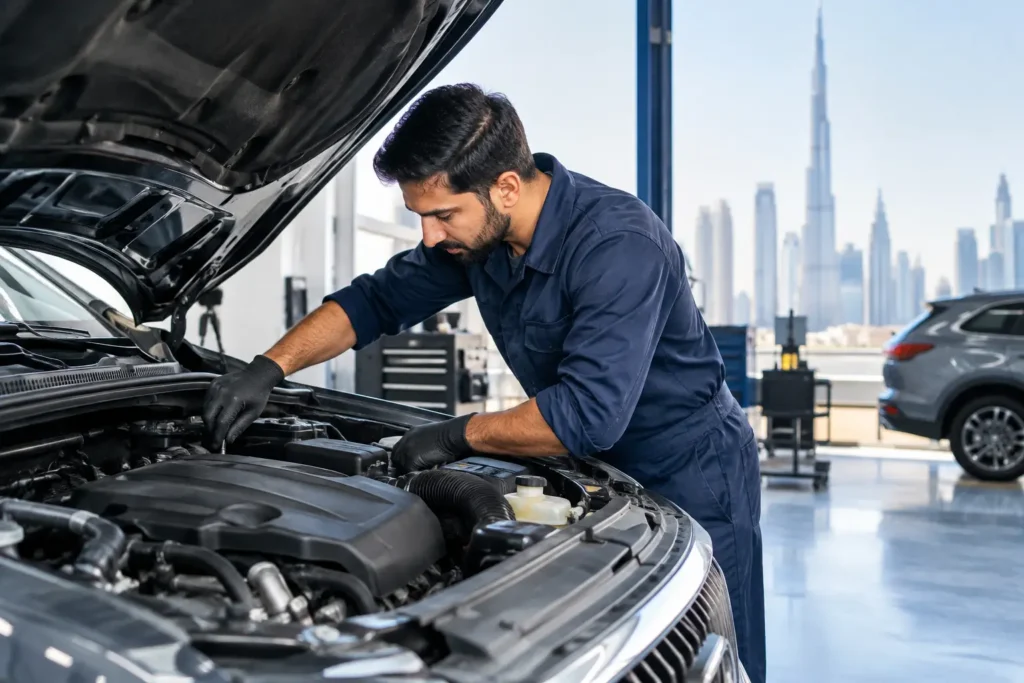
A small engine noise can become a major repair bill faster than most drivers expect. In Dubai, high temperatures, heavy traffic, and long highway drives place constant pressure on cooling systems, oil circulation, belts, sensors, and internal engine components. Prompt engine repair is not just about restoring performance. It is about preventing a manageable fault from damaging the parts around it.
If your vehicle is running rough, losing power, overheating, producing smoke, or showing a check engine light, it deserves proper attention. Continuing to drive may feel convenient in the moment, but it can turn a sensor issue, coolant leak, or ignition fault into serious engine damage.
Warning Signs Your Engine Needs Attention
An engine rarely fails without giving some indication first. The challenge is knowing which signs can wait for a scheduled inspection and which require immediate action.
A check engine light is the most familiar warning, but it is not a diagnosis on its own. The light may relate to a loose fuel cap, a misfiring cylinder, a faulty oxygen sensor, or a more significant fault affecting fuel delivery or emissions. If the light is flashing, stop driving as soon as it is safe to do so. A flashing light can indicate an active misfire that may damage the catalytic converter.
Overheating is another issue that should never be ignored. A rising temperature gauge, steam from under the hood, a coolant warning, or a sweet smell inside or around the vehicle can point to a coolant leak, failed water pump, thermostat problem, radiator fault, or cooling fan issue. Pull over safely and allow the vehicle to cool. Do not open the radiator cap while the engine is hot.
Listen closely to new sounds. Knocking, tapping, ticking, grinding, squealing, or a loud exhaust note can each come from different systems. Some sounds are relatively simple to fix, such as a worn belt or loose heat shield. Others, including deep knocking from the engine, can signal internal wear that needs urgent inspection.
Other signs worth booking in quickly include rough idling, poor acceleration, excessive fuel use, hard starting, oil leaks, blue or white exhaust smoke, and a noticeable loss of power. These symptoms do not automatically mean the engine needs replacement. They do mean the vehicle needs accurate diagnostics before the problem gets worse.
Dubai Heat Makes Small Faults More Serious
Heat is hard on every vehicle, especially when air conditioning is working at full load and traffic is moving slowly. Cooling components, hoses, seals, batteries, and fluids all work harder in these conditions. A small coolant leak that seems harmless during a short drive can become a major issue during a long commute.
Regular oil changes also matter more than many drivers realize. Engine oil lubricates moving components, helps manage heat, and carries contaminants toward the filter. Old, low, or incorrect oil can accelerate wear inside the engine. For German and American vehicles in particular, using the correct oil specification and service procedure is essential, not optional.
Engine Repair Starts With Proper Diagnostics
Replacing parts without identifying the cause is expensive and frustrating. A professional engine inspection should begin with a conversation about what you have noticed: when the warning started, whether it happens while cold or warm, and whether performance changes under acceleration, braking, or air conditioning load.
From there, a technician may use diagnostic scanning equipment to read fault codes and live operating data. The codes provide a starting point, but they are not the final answer. A code may identify a misfire on one cylinder, for example, while the actual cause could be a spark plug, ignition coil, injector, wiring issue, vacuum leak, or low compression.
Further testing can include a visual inspection for leaks, battery and charging checks, cooling-system pressure testing, ignition testing, fuel-pressure checks, compression testing, and inspection of belts, hoses, and engine mounts. The right tests depend on the symptom. This is why transparent communication matters: you should know what is being checked, what has been found, and what work is genuinely necessary.
At HYATTS AUTO CARE, the focus is on clear diagnostics and straightforward recommendations, so customers can make repair decisions with confidence rather than guesswork.
What Engine Repairs May Involve
Engine repair covers a wide range of work. In many cases, the solution is not an internal engine rebuild. Modern vehicles rely on connected mechanical and electrical systems, so a performance problem may be resolved by repairing the supporting component that is causing it.
Common repairs include replacing worn spark plugs and ignition coils, repairing fuel injectors, replacing damaged hoses, resolving vacuum leaks, repairing oil leaks, replacing belts or tensioners, servicing cooling-system components, and correcting faulty sensors or wiring. These repairs can restore smooth running, power, fuel efficiency, and reliability when completed correctly.
More involved work may be needed when testing reveals internal wear or damage. This can include timing chain or timing belt repairs, cylinder head work, valve repairs, gasket replacement, piston or bearing issues, and turbocharger-related faults. The appropriate approach depends on the vehicle’s age, mileage, condition, service history, and the total cost of repair compared with the vehicle’s value.
A trustworthy workshop should explain the difference between an urgent repair and a recommended preventive item. For example, an active coolant leak requires prompt action because it risks overheating. A slightly worn engine mount may be safe to monitor for a period, depending on its condition and the symptoms it causes. Not every finding needs to be repaired on the same day, but customers should understand the risk of waiting.
Repair, Rebuild, or Replace?
When internal engine damage is confirmed, there is no single answer that suits every vehicle. Repairing a specific component can be the most sensible option when the rest of the engine is in good condition. A rebuild may be worthwhile for a well-maintained vehicle with strong value, a desirable model, or an engine with limited but repairable wear.
An engine replacement can make more sense when damage is extensive, parts and labor for a rebuild become too costly, or a reliable replacement engine is available. The key is receiving an honest comparison of the options, including expected costs, likely turnaround time, and any related parts that should be addressed at the same time.
What Affects Engine Repair Cost?
The cost of engine repair depends on the fault, not just the make of vehicle. A simple sensor replacement and diagnosis will be very different from repairing a timing system or addressing overheating damage. Labor access, parts availability, the level of diagnostic work required, and whether additional damage is found can all affect the final estimate.
German and American vehicles can require specialized tools, software, and parts knowledge, but that should not mean unclear pricing. Ask for a written explanation of the fault, the recommended repair, the parts involved, and the expected labor. If additional work becomes necessary after disassembly, the workshop should contact you before proceeding.
The lowest initial quote is not always the best value. Skipping diagnosis, using unsuitable parts, or delaying a necessary repair can lead to repeat visits and greater costs later. Quality service means fixing the cause where possible, not simply clearing a warning light or replacing parts at random.
How to Protect Your Engine Between Visits
Check fluid levels periodically, especially engine oil and coolant, and watch for fresh leaks where you park. Follow the recommended service schedule for your vehicle, but also respond to changes in how it drives. A vehicle that starts differently, sounds louder, vibrates at idle, or consumes more fuel is telling you something.
Avoid driving through deep standing water, do not ignore an overheating warning, and never keep topping up oil or coolant without finding out why the level is dropping. These habits can help preserve the engine and give a technician better information when a problem does appear.
Your car does not need to break down before it earns attention. Booking an inspection at the first clear warning gives you more choices, protects your budget, and helps keep your vehicle ready for the roads you rely on every day.