

A sudden knock, thick exhaust smoke, low oil pressure, or a warning light that will not stay away can turn a normal drive into a serious concern. When a technician raises the subject of engine rebuild replacement, the real question is not simply how much it will cost. It is whether rebuilding your current engine or fitting a replacement engine gives your vehicle the safest, most sensible path forward.
For Dubai drivers, that decision deserves careful diagnosis. High temperatures, demanding traffic, long commutes, missed oil services, and cooling-system faults can all accelerate engine wear. A proper answer starts with evidence, not guesses or a quick recommendation to replace expensive parts.
What Engine Rebuild Replacement Actually Means
The phrase engine rebuild replacement is often used as if both jobs are the same. They are not.
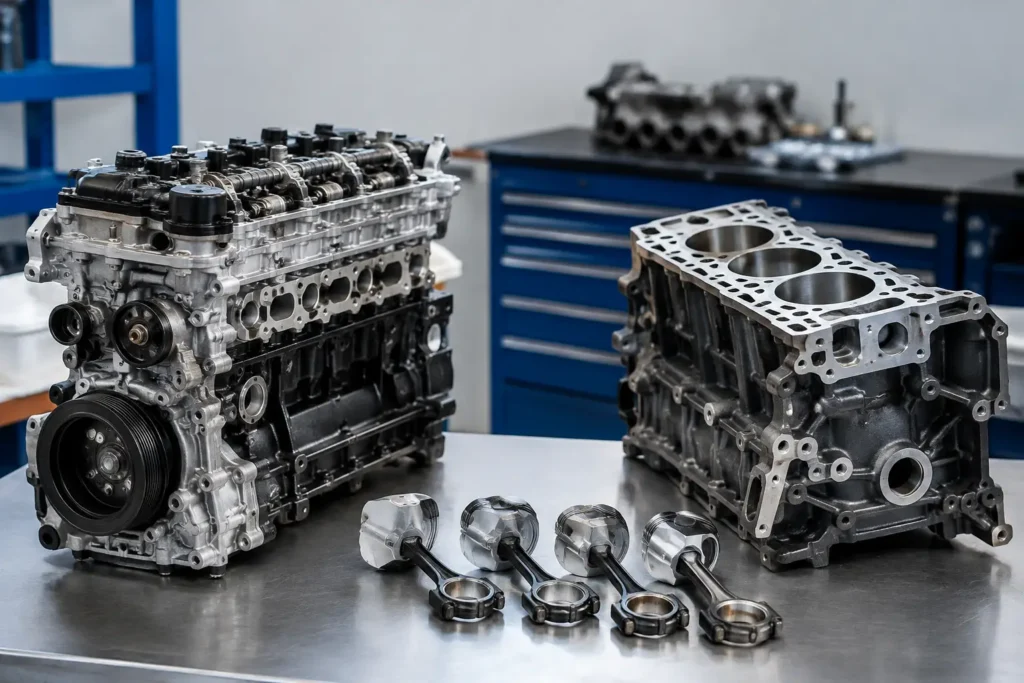
An engine rebuild involves removing, dismantling, inspecting, cleaning, measuring, and repairing the existing engine. Depending on the fault, the work may include machining the cylinder head or engine block, replacing worn bearings, piston rings, gaskets, seals, timing components, valves, or oil-pump components. The aim is to return the engine to reliable operating condition while retaining its original unit.
An engine replacement means removing the failed engine and installing another unit. That replacement may be a used engine, a reconditioned engine, or a new engine supplied through the manufacturer. The correct option depends on the vehicle, parts availability, the condition of the original engine, and the quality and history of the replacement unit.
Neither route is automatically better. A rebuild can preserve an engine whose core components are still sound. Replacement can be more practical when damage is widespread or when rebuilding would require too many major parts and machining operations.
Signs Your Engine Needs More Than a Routine Repair
Not every engine noise or warning light means the engine needs to come out. Ignition faults, turbocharger issues, injector problems, oil leaks, cooling-system failures, and electrical faults can produce symptoms that feel serious but have a more straightforward repair.
That is why accurate diagnostics come first. A workshop should assess fault codes alongside compression or leak-down test results, oil condition, oil pressure, cooling-system behavior, and the sound of the engine under different operating conditions. Where needed, the oil filter or sump may be inspected for metallic debris, which can indicate internal bearing or component damage.
Major internal work becomes more likely when there is persistent bottom-end knocking, severe low compression, metal in the oil, repeated overheating, a cracked block or cylinder head, or heavy oil consumption combined with blue smoke. A timing chain or belt failure can also cause serious valve damage on many engines.
German and American vehicles can each have engine-specific patterns of failure. The right repair plan should reflect the exact engine code and the evidence found during inspection, not a broad assumption based on the vehicle badge.
When an Engine Rebuild Is the Better Choice
A rebuild is often worth considering when the engine block and cylinder head are repairable, the vehicle has been well maintained, and the internal damage is limited enough to correct properly. It can be a strong option for an owner who knows the vehicle’s history and plans to keep it.
The biggest advantage is control. During a quality rebuild, the technician can see the condition of the internal components, measure clearances, identify the root cause of failure, and replace the parts required to prevent a repeat problem. If an overheating event damaged the head gasket, for example, the repair should also address why the engine overheated in the first place. Ignoring a weak water pump, blocked radiator, failed thermostat, or cooling fan can damage a newly rebuilt engine.
A rebuild also makes sense for certain older, specialist, or restoration vehicles where sourcing a correct replacement engine is difficult. Keeping the original engine may help preserve the vehicle’s character and value.
However, rebuild quality matters more than the word “rebuild” itself. An engine cannot be restored reliably by replacing a few visible parts while skipping measurement, machining, cleaning, and cause-of-failure checks. The lowest quote is not always the lowest long-term cost.
When Replacement Makes More Sense
Replacement may be the wiser route if the original engine has a cracked block, extensive cylinder damage, severe crankshaft damage, or widespread contamination after a major internal failure. In these cases, the machining and parts required for a complete rebuild can become uneconomical.
A replacement engine can also reduce downtime if a suitable, verified unit is available. That is helpful for drivers who depend on one vehicle for daily work, family travel, or regular long-distance commuting.
Still, a replacement engine should never be treated as a simple swap. A used engine may have unknown service history, hidden wear, or poor compression. Before fitting one, the workshop should verify the engine code, compatibility, compression where practical, visible condition, and the coverage provided by the supplier. Supporting items such as seals, fluids, filters, hoses, mounts, spark plugs, and timing components may need attention before installation.
The cause of the original failure must be repaired too. A replacement engine will not solve a faulty oil cooler, blocked catalytic converter, injector fault, wiring issue, or defective cooling system. It may simply inherit the same problem.
Cost Depends on More Than the Engine
Owners often ask for one price before the vehicle has been inspected. That is understandable, but engine work has variables that cannot be judged from symptoms alone.
The final cost can be affected by the engine design, access required to remove it, extent of internal damage, machining needs, parts quality, availability of replacement engines, and related repairs discovered during disassembly. Luxury German models may have tightly packaged engine bays and specialized components. American vehicles may have different parts availability and engine configurations. Both can require careful planning.
A transparent estimate should explain what is included: diagnosis, removal and installation, machine-shop work where required, major parts, fluids, filters, programming or adaptation if applicable, and post-repair testing. It should also explain what could change if hidden damage is discovered after the engine is opened.
Ask whether the quote is based on a confirmed diagnosis or an early estimate. That distinction protects you from surprises and helps you compare repair options fairly.
Questions to Ask Before Approving Major Engine Work
Before choosing rebuild or replacement, ask the workshop what failed and how that conclusion was reached. Request a clear explanation of compression results, oil findings, overheating evidence, and any fault codes that support the diagnosis.
You should also ask whether the engine block and cylinder head are repairable, what replacement-engine options are available, what parts will be renewed, and what work is being done to prevent the same failure from returning. Clarify expected turnaround time and the warranty terms for both parts and labor.
A reliable workshop will not pressure you into a decision before explaining the options. It will show you the condition of removed parts where possible and keep you informed if the scope changes. That level of communication matters because engine work is a major investment, not a routine service item.
Protecting the Engine After Repair
Once the repair is complete, the first few services matter. Follow the workshop’s advice on oil-change timing, break-in procedure if applicable, coolant checks, and driving habits during the early period. Use the correct oil specification, especially on turbocharged, performance, German, and American engines with precise lubrication requirements.
Pay attention to coolant temperature, oil-level warnings, new leaks, unusual noises, or smoke. Addressing a small concern early can prevent another large repair later. Regular servicing is not just about checking a schedule box. It is how oil quality, cooling performance, belts, hoses, and early leaks are monitored before they become engine-damaging faults.
At HYATTS AUTO CARE, the goal is to give Dubai vehicle owners a clear recommendation backed by proper inspection, honest pricing, and workmanship that puts long-term reliability first. If your engine is showing serious symptoms, arrange a diagnosis before choosing between a rebuild and replacement. The right next step is the one supported by the condition of your vehicle, your driving needs, and a repair plan you fully understand.