

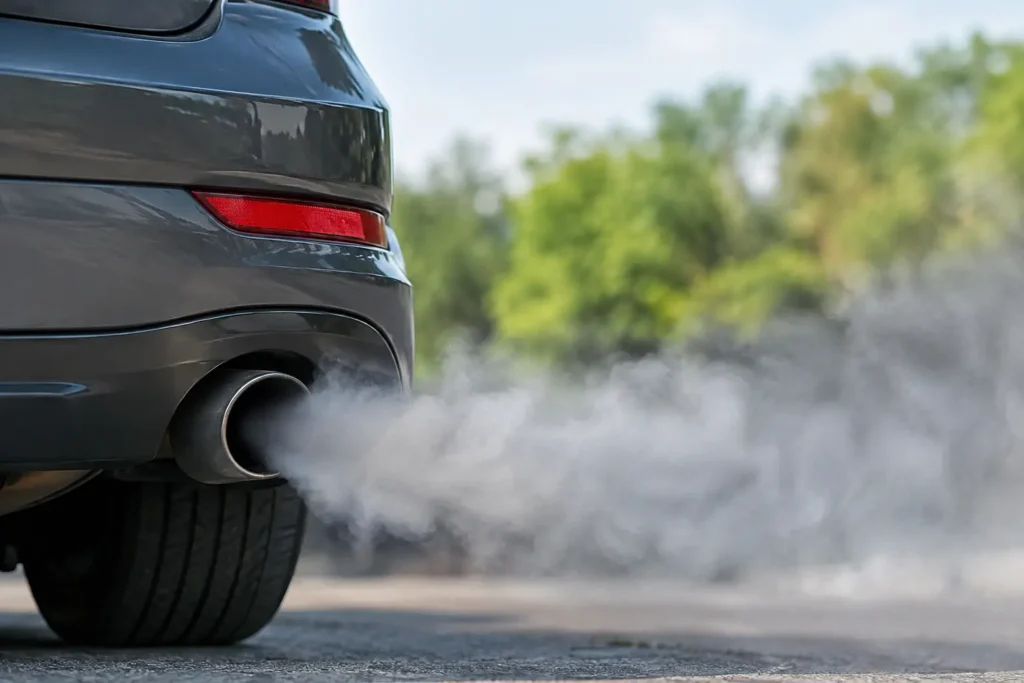
A brief puff from the tailpipe on a cool morning is usually nothing to worry about. But persistent smoke, a sharp smell, or smoke that appears while driving is your car asking for attention. Exhaust smoke causes can range from normal condensation to overheating, oil consumption, fuel-system faults, or internal engine damage.
The color, timing, and smell of the smoke matter. A clear diagnosis starts with those details, then confirms the cause through proper inspection and testing. Replacing parts based on guesswork can become expensive quickly, especially on German and American vehicles with complex fuel, turbocharging, and emissions systems.
What exhaust smoke color can tell you
Exhaust is not always completely invisible. Water vapor can be visible for a few minutes after startup, particularly in cooler or humid conditions. The concern begins when the smoke is thick, continues after the engine warms up, or comes with warning lights, rough running, low coolant, or falling oil levels.
White smoke: condensation, coolant, or unburned fuel
Thin white vapor that disappears as the engine reaches operating temperature is normally condensation in the exhaust system. This is common after short trips, when moisture has not had time to evaporate from the pipes and muffler.
Thick white smoke that continues after warm-up is different. If it has a sweet smell and the coolant level is dropping, coolant may be entering the combustion chamber. A failed head gasket is one possible cause, but it is not the only one. A cracked cylinder head, damaged engine block, failed intake gasket, or fault in an oil cooler or turbocharger can also allow coolant where it does not belong.
On diesel vehicles, white or light gray smoke can also point to unburned fuel. Faulty glow plugs, injector issues, incorrect injection timing, low compression, or a cold-start problem may be involved. The correct repair depends on test results, not the color alone.
Do not keep driving a vehicle that is producing heavy white smoke and losing coolant. Overheating can turn a repairable problem into major engine damage.
Blue smoke: engine oil is burning
Blue or blue-gray exhaust smoke usually means oil is entering the combustion process. You may notice it most clearly when accelerating after idling, driving downhill, or starting the engine after it has been parked for several hours.
Common causes include worn valve stem seals, piston rings, cylinder wear, a blocked crankcase ventilation system, or a failing turbocharger seal. On turbocharged German and American vehicles, turbo inspection is particularly important because an oil leak on either side of the turbo can create smoke and affect performance.
The amount of smoke matters. A light puff at startup may be related to valve seals, while continuous blue smoke under acceleration can suggest a more serious oil-control issue. Check the oil level regularly, but avoid simply topping it up and carrying on. Burning oil can damage spark plugs, oxygen sensors, catalytic converters, and diesel particulate filters over time.
Black smoke: too much fuel or not enough air
Black smoke means the engine is running rich, with too much fuel entering the combustion process or too little air available to burn it properly. It is often accompanied by poor fuel economy, hesitation, reduced power, a fuel smell, or a check engine light.
On gasoline engines, likely areas to inspect include fuel injectors, mass airflow sensors, oxygen sensors, fuel pressure control, ignition components, and intake leaks. A dirty air filter can contribute, although it is rarely the full explanation for heavy black smoke on a modern vehicle.
For diesel engines, black smoke may be linked to clogged air filters, faulty injectors, turbocharger or boost leaks, EGR system problems, or a restricted diesel particulate filter. Aggressive acceleration can produce a brief dark puff in some older diesels, but frequent or heavy black smoke should not be treated as normal.
Gray smoke: a warning that needs testing
Gray smoke can be harder to identify because it may look blue in some light and white in others. It can indicate oil burning, an automatic transmission fluid leak into the engine through a failed vacuum modulator on certain older vehicles, or a fuel-related issue.
A gray cloud combined with a burnt smell, rough idle, or transmission symptoms should be checked promptly. This is where a workshop inspection is more useful than visual diagnosis from the driver’s seat.
Exhaust smoke causes that need urgent attention
Some smoke symptoms should move your repair from “book it soon” to “stop and inspect it now.” Pull over safely and switch off the engine if the vehicle is overheating, the coolant warning appears, the oil-pressure warning comes on, or the exhaust becomes suddenly thick and continuous.
You should also avoid driving if smoke enters the cabin, if there is a strong fuel smell, or if the car loses power significantly. Exhaust fumes can contain carbon monoxide, and fuel leaks create a fire risk. A flashing check engine light is another urgent sign because it often indicates an active misfire that can quickly damage the catalytic converter.
If the smoke is coming from under the hood rather than the tailpipe, the cause may be an oil leak dripping onto hot exhaust components, a coolant leak, an electrical fault, or an overheating component. The distinction matters, but neither situation should be ignored.
Why smoke often appears after a specific driving condition
A good technician will ask when you see the smoke because that clue narrows the diagnosis. Smoke at startup, for example, can point toward valve seals or condensation. Smoke during hard acceleration may suggest turbocharger problems, worn piston rings, or excess fueling. Smoke after long idling can indicate oil entering through valve seals or a crankcase ventilation fault.
If the problem appears only after the vehicle has been driven hard in Dubai traffic, heat may be exposing a weak cooling-system component, an electrical connection, or an oil leak. If it happens after refueling, contaminated fuel or an evaporative emissions issue may deserve attention. There is no one-size-fits-all answer, which is why a proper road test and inspection save time.
What a proper diagnosis should include
Smoke is a symptom, not a repair instruction. Before approving major engine work, ask for a clear explanation of the findings and the tests that support them. A reliable diagnosis may involve checking fault codes and live sensor data, inspecting fluid levels and condition, pressure-testing the cooling system, testing for combustion gases in coolant, and checking for intake or boost leaks.
For oil-related smoke, technicians may inspect the turbocharger, crankcase ventilation system, spark plugs, and intake piping. Compression and leak-down testing can help identify internal engine wear when needed. Fuel-system testing, injector evaluation, and air-flow checks are useful when black or white smoke suggests a combustion issue.
Not every test is necessary for every vehicle. The right approach is to start with the most likely and least invasive checks, then explain the next step before costs increase. That is how unnecessary parts replacement is avoided.
Can you prevent exhaust smoke problems?
Regular servicing will not prevent every failure, but it reduces the risk of smoke caused by neglected oil, clogged filters, damaged hoses, and missed cooling-system leaks. Use the correct engine oil specification, especially for turbocharged and European vehicles. The wrong oil can affect lubrication, emissions equipment, and long-term engine wear.
Pay attention to changes between services. Needing frequent oil top-ups, seeing coolant levels fall, noticing reduced fuel economy, or smelling fuel are all useful early warnings. Short trips can also allow moisture to remain in the exhaust, so occasional longer drives may help the system reach full temperature when the vehicle is otherwise operating normally.
Avoid additives or stop-leak products as a first response to smoke. They may temporarily mask a symptom, but they can also contaminate cooling passages, sensors, or emissions components. Find the source before trying a shortcut.
At HYATTS AUTO CARE, the focus is on identifying why the smoke is happening, explaining the repair in straightforward terms, and keeping you informed before work moves forward. If your exhaust smoke has changed in color, smell, or frequency, have it inspected while the evidence is still clear. A timely diagnosis can protect your engine, your budget, and your confidence behind the wheel.