

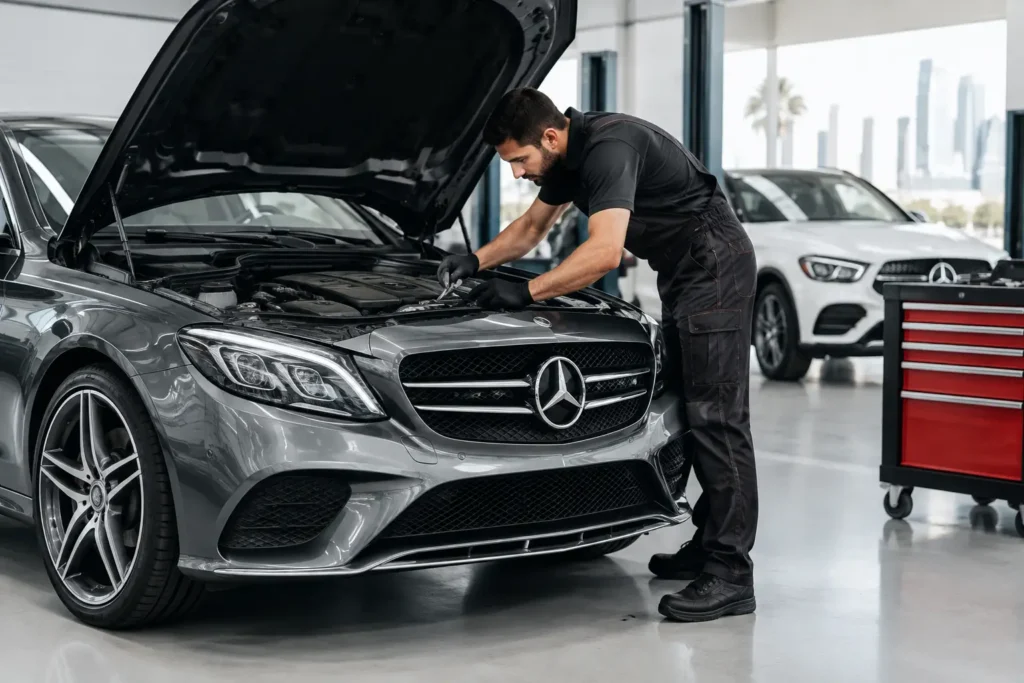
A warning light on a BMW, a rough gear change in a Mercedes, or an electrical fault in an Audi can quickly turn a normal drive into a stressful one. German car repair Dubai owners need is not just about replacing a part. It starts with finding the real cause, explaining the repair clearly, and completing the work to a standard that protects the vehicle.
German vehicles are engineered with close tolerances, interconnected electronics, and model-specific service requirements. That does not mean every repair must lead to a dealership bill. It does mean the workshop needs the right diagnostic approach, experienced technicians, and the discipline to avoid guesswork.
Why German Cars Need a Different Repair Approach
BMW, Mercedes-Benz, Audi, Porsche, Volkswagen, and other German brands are built around sophisticated mechanical and electronic systems. A fault in one area can affect another. For example, a battery issue may trigger multiple dashboard warnings, while a sensor fault can resemble a transmission or engine problem.
Replacing components before confirming the fault is expensive and frustrating. A proper inspection should begin with a diagnostic scan, but it should not end there. Fault codes point technicians in a direction. Physical testing, wiring checks, fluid inspections, road tests, and service-history review are often what confirm the actual repair needed.
This is especially relevant in Dubai. High temperatures, stop-and-go traffic, dust, and long periods of air-conditioning use place added pressure on cooling systems, batteries, seals, suspension components, and electrical connections. A car that performs perfectly in mild weather can reveal weak parts quickly during a Dubai summer.
Common German Car Repairs in Dubai
The right repair plan depends on the model, mileage, maintenance history, and how the vehicle is driven. Still, several issues appear regularly in German vehicles operating in the UAE.
Electrical Diagnostics and Battery Issues
Modern German cars rely heavily on control modules, sensors, and communication networks. A weak battery can cause more than a slow start. It may lead to parking sensor errors, steering warnings, transmission messages, or intermittent no-start conditions.
The answer is not always a new battery. A technician should check charging voltage, battery condition, parasitic draw, wiring, and related modules before recommending a replacement. On many models, a newly fitted battery also needs to be registered or programmed correctly so the vehicle can manage charging properly.
Cooling System Repairs
Cooling problems deserve quick attention in Dubai. Water pumps, thermostats, radiator hoses, expansion tanks, fans, and coolant leaks should be addressed before the engine overheats. Ignoring a rising temperature gauge or low-coolant message can turn a manageable repair into major engine damage.
Some leaks are easy to spot, while others only appear under pressure or after the engine reaches operating temperature. A careful pressure test and inspection are far more useful than simply topping up coolant and hoping the issue disappears.
Engine, Transmission, and Oil Leaks
Oil leaks, rough idling, reduced power, smoke, and delayed shifting should not be dismissed as normal aging. German engines often have specific common wear points, but each vehicle still needs a proper diagnosis. A minor gasket leak may only require monitoring, while an oil leak near hot components or a low-oil warning requires prompt action.
Transmission concerns also vary. Some symptoms may be related to fluid condition, a sensor, software adaptation, engine misfiring, or drivetrain components rather than internal transmission failure. The difference matters because it affects both repair time and cost.
Suspension, Steering, and Brakes
Dubai roads are generally smooth, but speed bumps, construction zones, heat, and daily commuting still take a toll. Worn bushings, control arms, engine mounts, shocks, and steering components can create knocking sounds, vibration, uneven tire wear, or an unstable feel at speed.
Electric power steering faults need specialist attention. These systems combine mechanical components, electric motors, control units, and calibration requirements. Repairing the correct part can be a sensible alternative to replacing an entire assembly when refurbishment is appropriate.
Choosing a German Car Repair Workshop in Dubai
A workshop should make the process easier, not more confusing. Before approving work, ask how the fault was diagnosed, what parts are required, whether there are alternative repair options, and what the estimated timeline will be. Clear answers are a good sign. Vague statements such as “many things may be wrong” are not a repair plan.
Price matters, but the lowest quote is not always the best value. A low estimate may exclude diagnostics, fluids, programming, seals, labor time, or parts that are needed to complete the job correctly. On the other hand, replacing every related component without evidence is unnecessary. Honest pricing means explaining what is essential now, what can be monitored, and why.
Parts choice also depends on the repair. Genuine parts, OEM-equivalent parts, and quality aftermarket options can each have a place. For safety-critical repairs, electronic components, cooling parts, and items requiring exact fitment, quality and compatibility should come first. A good workshop will discuss the trade-off rather than push one option without explanation.
At HYATTS AUTO CARE in Al Quoz Industrial Area 4, German and American vehicle owners can access electrical diagnostics, mechanical repair, routine servicing, steering refurbishment, denting, painting, and restoration work in one practical location. The focus is dealership-level workmanship without dealership-level pricing, with clear updates throughout the repair.
When to Book German Car Repair Dubai Service
Waiting until a vehicle breaks down often makes repairs more disruptive and more expensive. Book an inspection when you notice recurring warning lights, coolant loss, oil spots under the car, unusual noises, steering heaviness, vibrations, poor air-conditioning performance, or a change in starting behavior.
Do not ignore a dashboard warning simply because it disappears after restarting the car. Intermittent faults can be harder to trace, but they are still recorded in many cases and may point to an early-stage issue. Bringing the car in while the symptoms are fresh gives technicians a better chance of reproducing and diagnosing the concern.
Routine servicing is just as valuable. Oil and filter changes, brake checks, fluid inspections, battery testing, tire condition, and cooling-system checks help identify wear before it becomes a roadside problem. The correct interval may differ from a generic schedule depending on your driving pattern, mileage, model, and Dubai conditions.
How to Get More From Every Repair Visit
Give the workshop useful details. Explain when the problem occurs, whether it happens when the engine is cold or warm, what warning messages appear, and whether any recent work was completed. If the issue is intermittent, a photo or video can be helpful.
Ask for an estimate before work begins and request an update if additional repairs are found. This keeps you in control of the decision. It also allows the workshop to prioritize work if you need the car back quickly or have a specific budget to manage.
For cosmetic damage, do not assume a panel must be replaced. Depending on the dent location, paint condition, and panel material, repair and refinishing may restore the appearance effectively. In other cases, replacement is the more durable choice. A proper assessment should explain the difference.
Your German car should feel precise, safe, and dependable every time you drive it. When something changes, address it early with a workshop that tests carefully, communicates honestly, and treats your time and budget with respect.