

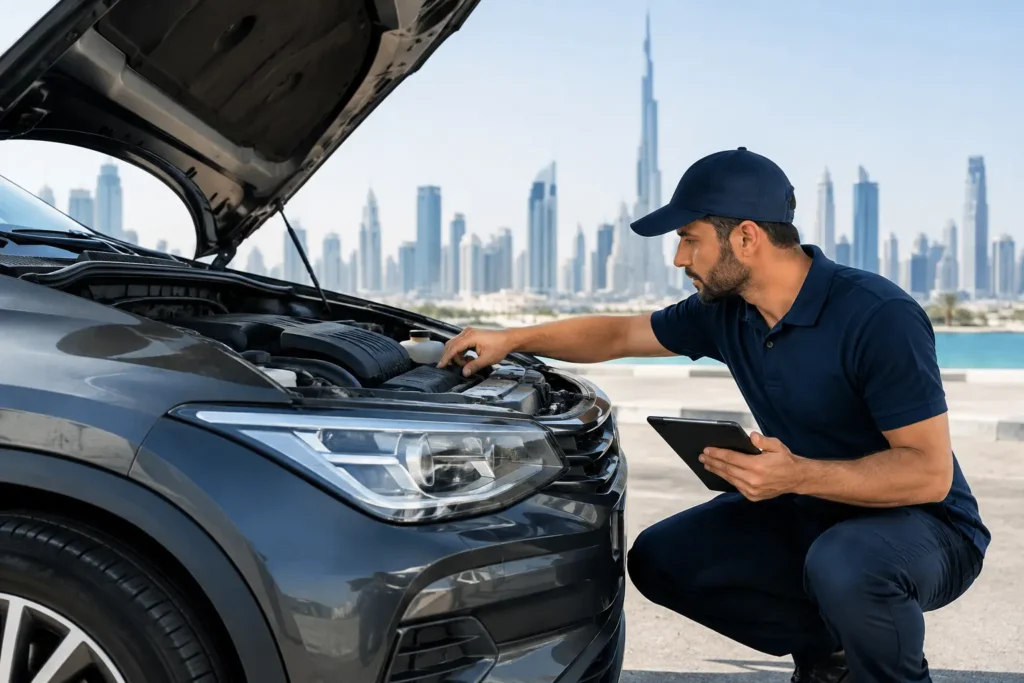
A used car can look spotless under showroom lights, drive smoothly for ten minutes, and still be hiding an oil leak, accident damage, or an expensive electrical fault. That is why essential pre purchase inspection checks should happen before you transfer money, not after the first warning light appears on your drive home.
For Dubai buyers, the stakes can be higher. Heat, heavy traffic, sand exposure, and long highway miles place real strain on cooling systems, air conditioning, suspension components, batteries, and electronics. A proper inspection gives you a clear picture of the vehicle’s condition, likely repair needs, and whether the asking price makes sense.
Why Essential Pre Purchase Inspection Checks Matter
A seller may genuinely believe the vehicle is in good shape. They may also have no idea that a small coolant leak, worn control arm bushing, or intermittent transmission fault is developing. A pre-purchase inspection is not about accusing anyone of hiding a problem. It is about replacing guesswork with facts.
The inspection can also improve your negotiating position. If a car needs tires, brake work, a battery, and an air-conditioning repair soon, those costs should be reflected in the price. In some cases, the best outcome is deciding not to buy the car at all. Walking away from the wrong vehicle is far less expensive than owning it.
This matters especially with German and American vehicles, where sophisticated electronics and performance systems need the right diagnostic equipment and experience. A basic visual check alone may miss fault codes, module communication errors, or early signs of costly mechanical wear.
Start With the Vehicle’s History and Identity
Before a technician raises the vehicle, confirm that its paperwork and physical details match. Check the VIN on the registration documents against the VIN displayed on the car. Look for signs that VIN plates, labels, or fasteners have been disturbed.
Ask for available service records and review them with the vehicle’s mileage in mind. Regular servicing is a positive sign, but receipts matter more than a verbal assurance that the car has been “maintained.” For higher-mileage cars, look for evidence of major scheduled work, such as transmission service, spark plugs, cooling-system repairs, belts or chains where applicable, and suspension replacement.
Vehicle history also needs context. An accident does not automatically make a car a bad purchase. Quality repairs to minor damage can be perfectly acceptable. The concern is structural damage, poor panel alignment, uneven paintwork, water intrusion, or repairs that affect safety systems. A professional inspection helps separate a well-repaired vehicle from one with ongoing problems.
Check the Body, Paint, Tires, and Underside
Walk around the vehicle in natural light if possible. Look along the sides of the body for waves in the panels, mismatched paint shades, overspray on rubber trim, and inconsistent gaps around the hood, trunk, doors, and lights. These can point to previous repairs. They are not final proof of a serious issue, but they deserve closer attention.
Tires tell a useful story. Check their age, tread depth, brand consistency, and wear pattern. A vehicle with four different tires or severely uneven wear may have been maintained on a tight budget. Inner-edge tire wear can indicate alignment or suspension concerns that are easy to miss while standing beside the car.
Underneath, inspect for fluid leaks, damaged undertrays, rust, bent suspension parts, exhaust damage, and evidence of impact. Surface corrosion can be normal on certain components, but extensive rust is a concern, particularly on vehicles imported from colder climates. Dubai’s dry conditions do not erase damage that happened before the car arrived here.
Inspect the Engine, Cooling System, and Fluids
The engine bay should be checked when the engine is cold whenever possible. A seller who has warmed up the car before your arrival may be trying to hide a cold-start rattle, smoke, rough idle, or delayed warning light.
A technician should examine the engine for oil leaks, coolant residue, damaged hoses, weak mounts, and signs of nonstandard repairs. Fluid levels and condition matter too. Burnt-smelling transmission fluid, contaminated coolant, or unusually low oil can point to neglected maintenance or a developing fault.
Cooling-system condition deserves special attention in Dubai. A car that manages a short test drive may still overheat in peak summer traffic. The radiator, expansion tank, water pump area, cooling fans, thermostat operation, and hoses should all be assessed. Any unexplained coolant loss needs an answer before purchase.
Run Full Electronic Diagnostics
Modern cars store information that cannot be found with the hood open. A full scan of the vehicle’s systems can reveal active and stored fault codes affecting the engine, transmission, ABS, airbags, parking sensors, cameras, steering, climate control, and other modules.
Do not accept a simple statement that there are “no warning lights.” Warning lights can be cleared shortly before a viewing, and some faults do not trigger a dashboard warning immediately. Diagnostic results need interpretation. A historic code with no recurrence may be minor. Repeated misfire codes, transmission communication faults, or airbag-system errors require proper investigation.
For German vehicles in particular, specialist-level diagnostic access is valuable. These cars often have multiple control modules, adaptive systems, and manufacturer-specific data that generic scanning may not fully explain.
Test the Brakes, Suspension, Steering, and Drivetrain
A road test should be more than a quick trip around the block. The car should be driven long enough to reach operating temperature and tested across normal city speeds, braking conditions, turns, and, where safe, highway speeds.
Listen for knocks over bumps, squeaks while turning, vibration through the steering wheel, wheel-bearing noise, and clunks when changing direction. Notice whether the car pulls under braking or drifts on a straight road. These symptoms can come from tires, alignment, brakes, steering, or worn suspension components, so they should be diagnosed rather than guessed at.
The transmission should shift smoothly and predictably. A hard shift, hesitation when selecting drive or reverse, slipping under acceleration, or a delayed response can indicate anything from a service need to a major repair. On an all-wheel-drive or performance vehicle, the drivetrain and differential operation deserve the same attention.
Do Not Overlook Air Conditioning and Interior Functions
In Dubai, air conditioning is not a convenience feature. It is essential. Test the system at idle and while driving, checking vent temperature, fan speeds, air direction controls, and unusual compressor noise. Weak cooling can have a relatively simple cause, but it can also involve leaks, a compressor problem, blend-door faults, or electrical issues.
Inside the vehicle, test the windows, mirrors, central locking, seat adjustments, sunroof, infotainment, cameras, parking sensors, lights, horn, wipers, and charging ports. Make sure the instrument cluster completes its normal startup check and that no safety warnings remain illuminated.
Pay attention to damp carpets, musty smells, condensation in lights, and malfunctioning electronics. These may signal water entry, which can lead to difficult and expensive electrical repairs later.
Use the Findings to Make a Better Decision
Not every fault should end the purchase. A worn tire set or a minor oil seepage may be fair for a used vehicle if the price reflects it. The key is knowing the likely cost, urgency, and risk before you commit.
Ask for the inspection findings in clear language. You should understand what needs immediate attention, what can wait, and what could become expensive. A trustworthy workshop will explain the issue without pressure and help you judge the car on its actual condition.
At HYATTS AUTO CARE, a thorough pre-purchase inspection is approached with the same focus we bring to repair work: clear diagnostics, honest pricing, and practical advice. Bring the vehicle in before you buy, and give yourself the confidence to make a decision based on more than a clean exterior and a seller’s promise.