

A door dent from a parking lot, bumper scuffs from city traffic, or damage after a collision can make a good vehicle feel neglected fast. The best body repair methods are not always the biggest or most expensive repairs. The right choice depends on where the damage is, whether the paint and metal are intact, and whether any safety-related structure has been affected.
For Dubai drivers, bodywork also has to stand up to heat, dust, frequent washing, and daily highway use. A repair that looks acceptable when the car leaves the workshop but fades, cracks, or rusts later is not a quality repair. Here is how professional body repair should be assessed and why the repair method matters as much as the final appearance.
Start With a Proper Damage Assessment
A quality repair begins before sanding, pulling, or painting. The technician needs to identify whether the damage is cosmetic, structural, or connected to another system behind the panel. A cracked bumper may hide damaged mounting points, parking sensors, radar hardware, wiring, or a broken reinforcement bar. A dented fender may be straightforward, while a similar-looking impact near a door opening can affect panel alignment.
This is especially relevant for German and American vehicles, where cameras, sensors, active safety systems, and complex bumper assemblies are common. Replacing or repairing visible parts without checking the systems behind them can leave warning lights, poor fitment, or safety features that no longer work as intended.
A clear estimate should explain what is damaged, what can be repaired, what needs replacement, and why. If additional damage is found after dismantling, you should be informed before the work moves forward. Honest communication prevents the frustration of unexpected charges at collection time.
Paintless Dent Repair for Minor Dents
Paintless dent repair, often called PDR, is one of the best body repair methods when the paint surface has not been broken. A trained technician carefully massages the metal back into shape from behind the panel or uses controlled pulling tools from the exterior. The original paint remains in place, so there is no filler, repainting, or risk of a color mismatch.
PDR works well for shallow dents caused by car doors, shopping carts, small impacts, and some hail damage. It is often faster than conventional bodywork and can preserve the vehicle’s factory finish and resale value.
There are limits. A deep crease, stretched metal, sharp impact point, or dent located on a panel edge may not return perfectly with paintless repair. It is also not the right option if the paint is chipped, cracked, or already failing. A trustworthy workshop will explain whether PDR can produce a clean result rather than promising a perfect repair where one is not realistic.
Conventional Dent Repair and Panel Straightening
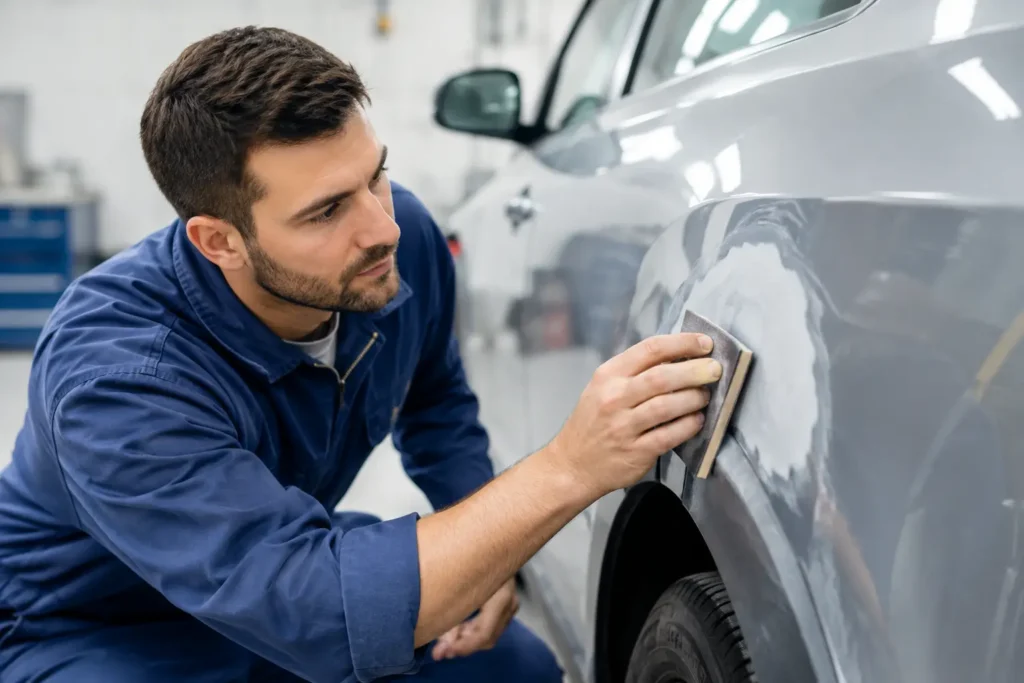
When the metal is creased, stretched, or damaged through the paint, conventional dent repair is usually the better route. This process may involve pulling the panel into shape, carefully straightening the metal, applying a minimal amount of body filler where needed, sanding, priming, and repainting.
The goal should not be to cover damage with excessive filler. Proper bodywork restores the panel’s shape as closely as possible before finishing begins. Too much filler can crack over time, particularly in Dubai’s extreme heat, and may reveal itself through uneven reflections or poor panel contours.
For larger damage, a technician may use panel-pulling equipment and precise measuring methods to restore alignment. Doors should close properly, hood and trunk gaps should be even, and adjacent panels should sit flush. Appearance matters, but fitment is a strong sign of whether the underlying repair was completed carefully.
Plastic Bumper Repair or Replacement
Modern bumpers are designed to absorb minor impacts, which means scuffs, scratches, cracks, and distortion are common. Many bumper covers can be repaired if the damage is limited to the outer plastic and the mounting points remain sound. Plastic welding, reshaping, sanding, and refinishing can restore a bumper at a lower cost than replacement.
Replacement is the safer choice when a bumper is badly torn, heavily distorted, missing mounting tabs, or damaged around sensor locations. If the impact has affected the reinforcement bar, absorber, brackets, or sensor mounts, those components need inspection as well. A freshly painted bumper that fits poorly or causes parking sensor errors is not a finished repair.
Color matching is another important factor. White, silver, gray, and metallic finishes can show differences quickly under Dubai sunlight. Professional refinishing may require blending color into adjacent panels to create a natural transition, especially on older paint that has changed slightly over time.
Scratch Repair Depends on Depth
Not every scratch requires a full repaint. Surface marks that only affect the clear coat can sometimes be corrected through machine polishing. This is often the most cost-effective choice for light scuffs, swirl marks, and paint transfer from another vehicle.
If the scratch has cut through the color layer or exposed primer or metal, polishing will not solve it. The damaged area must be prepared and refinished to protect the panel. Bare metal should never be left untreated, even if the scratch seems small. Moisture can reach the exposed area and begin corrosion beneath the paint.
Touch-up paint can be useful for very small stone chips, but it is not a substitute for professional refinishing on visible areas. It may reduce the appearance of a chip, yet it rarely matches the smoothness and texture of a sprayed finish.
When Panel Replacement Is the Better Repair
Repairing a panel is not always the best value. A badly crushed hood, deeply buckled door, torn fender, or damaged trunk lid may cost more to restore properly than replacing it. Replacement can also be preferable when a repair would compromise the panel’s shape, corrosion protection, or safe operation.
The key is choosing the right-quality replacement part and fitting it correctly. A low-cost aftermarket panel may need extensive adjustment and still have inconsistent gaps or weak corrosion resistance. Depending on the vehicle, an original equipment part, a high-quality equivalent, or a carefully sourced used panel may make sense.
A good workshop should discuss these options in plain language. The cheapest part is not automatically the best choice, but neither is replacing every damaged part without considering a sound repair.
Structural Repairs Need Specialized Equipment
Damage to chassis rails, pillars, floor sections, suspension mounting points, or crumple zones requires more than cosmetic bodywork. These areas influence how the vehicle handles and how it absorbs energy in a future impact. Structural work should be measured and repaired with the correct equipment, not judged only by whether the exterior panels look straight.
After a significant collision, wheel alignment, suspension condition, steering behavior, lights, cameras, and driver-assistance systems may all need checking. In some cases, calibration is required after bumper, windshield, camera, or radar-related repairs. Skipping these steps may save time initially but can create safety and drivability problems later.
What a Quality Paint Repair Should Include
Painting is where rushed bodywork becomes visible. Proper refinishing involves careful preparation, correct primer, color matching, basecoat application, clear coat, curing, and final polishing. Clean preparation is essential because dust, silicone contamination, poor sanding, or moisture can cause defects that show up after the car has left the workshop.
Ask how the workshop will approach color matching and whether adjacent panels may need blending. Also ask whether damaged trims, moldings, lights, and handles will be removed or masked. Removal usually takes more time, but it often produces cleaner paint edges and a more factory-like result.
At HYATTS AUTO CARE, the focus is on choosing the repair that makes sense for the damage rather than selling unnecessary replacement work. Customers should know what is being repaired, what is being painted, and what result to expect before authorizing the job.
Choosing the Best Body Repair Method for Your Car
The best option comes down to the damage, vehicle age, paint condition, and your expectations for finish and resale value. Paintless dent repair is ideal for intact paint and minor dents. Conventional repair is suitable for deeper metal damage. Plastic repair can save a bumper that is structurally sound, while replacement is wiser when mounting points or safety-related parts are compromised.
Before approving work, ask to see the damage, request a written explanation of the repair process, and confirm whether sensors or safety systems need testing afterward. You should also check the completed work in natural light, looking at panel gaps, paint reflections, trim fitment, and the operation of lights, cameras, and parking sensors.
Your vehicle does not need a dealership price tag to receive careful bodywork. It needs the right repair plan, skilled hands, quality materials, and a workshop willing to keep you informed from inspection through handover.