

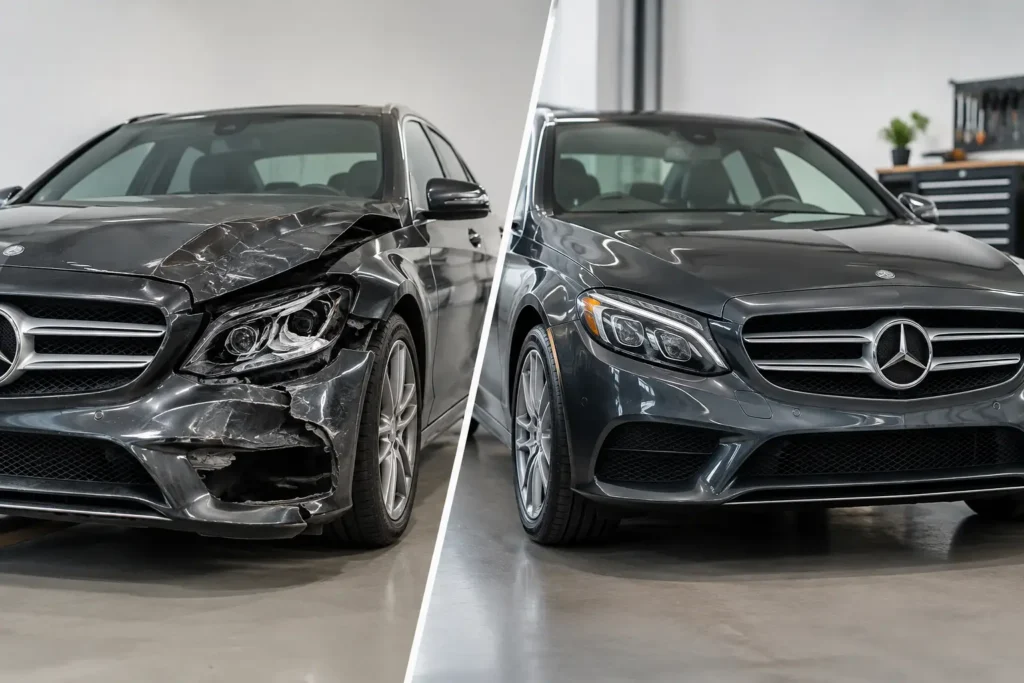
A Mercedes can still drive perfectly while looking tired from parking dents, sun-faded paint, bumper scuffs, and damaged trim. The best Mercedes bodywork restoration examples are not simply about making a car look newer. They show how careful repair decisions protect the vehicle’s value, preserve factory lines, and prevent small cosmetic issues from becoming larger problems.
For Dubai owners, bodywork often takes more abuse than expected. Tight parking spaces, highway stone chips, intense heat, sand, and frequent washing all leave their mark. A proper restoration starts with an honest inspection of the damage, followed by a repair plan that suits the car, its age, and the owner’s budget.
Mercedes Bodywork Restoration Examples by Damage Type
Parking dents on doors and quarter panels
A shallow dent on the door of a C-Class, E-Class, or GLC may appear simple, but the repair quality depends on where it sits. Damage near a body crease, door edge, or character line needs more than a quick pull and filler. Mercedes panels have defined contours that can look wrong even when the dent is technically gone.
For a small dent with intact paint, paintless dent repair may be the right answer. It keeps the original factory paint and can be faster than conventional bodywork. If the paint has cracked or the panel is stretched, the better approach is controlled panel shaping, minimal filler where necessary, primer, and color-matched refinishing.
The difference is visible in reflections. A properly restored panel should not show a wave, flat spot, or broken body line when viewed in daylight.
Bumper scuffs, cracks, and missing finish
Front and rear bumpers take the most regular cosmetic damage in city driving. A low-speed impact may leave paint transfer and scratches only, while a deeper hit can crack the plastic, distort mounting points, or damage lower grille sections and parking sensors.
A quality bumper restoration begins by removing and inspecting the bumper rather than painting over the visible damage. The workshop should check mounting tabs, sensor locations, absorber condition, and the alignment between the bumper, headlights, hood, and fenders. On newer Mercedes models, this matters because driver-assistance sensors and cameras can be affected by poor repair or incorrect reinstallation.
Minor scuffs can often be sanded, repaired, primed, and refinished. A split bumper may be repairable if the plastic is structurally sound and the damage is limited. If tabs are broken across several mounting points or the bumper has severe distortion, replacement may give a more reliable result. Repair is often more cost-effective, but replacement is sometimes the honest choice.
Scratched paint and panel blending
Key marks, shopping-cart scratches, stone chips, and contact with walls can cut through the clear coat and paint layer. The main question is whether the scratch has reached the primer or bare metal. If it has, leaving it exposed risks corrosion, particularly around wheel arches, hood edges, and door bottoms.
A good paint repair is about more than finding the paint code. Factory colors can change slightly over time due to sun exposure and previous repairs. Metallic silver, pearl white, gray, and deep black can show a mismatch immediately if the color is sprayed only on the damaged panel.
This is where blending is useful. Rather than repainting more of the vehicle than needed, the painter feathers the color into adjacent panels so the transition is difficult to detect. The correct approach depends on the color, location, and condition of surrounding paint. It should be discussed before work starts, along with whether a full-panel repaint will provide a cleaner finish.
Rust repair on older Mercedes models
Not every Mercedes bodywork restoration project is caused by a recent accident. Older vehicles can develop corrosion around arches, lower doors, trunk edges, roof gutters, and underbody areas. Rust that bubbles beneath paint is rarely just a surface issue. It means moisture has already reached the metal and must be removed properly.
A lasting repair requires the affected area to be stripped back to sound metal. The technician may need to cut out weakened material, weld in a shaped repair section, treat surrounding metal, seal the repair, and then complete the paint process. Simply sanding the bubble and applying paint may look acceptable for a short time, but it does not stop corrosion underneath.
The trade-off is cost versus longevity. For a daily driver with isolated corrosion, targeted repair can make sense. For a classic Mercedes or a vehicle being kept long term, a more extensive restoration is often better value because it addresses the cause rather than hiding the symptom.
Accident damage and panel alignment
A fender, hood, or door can look almost normal after a minor impact while the gaps around it tell a different story. Uneven spacing between the hood and fender, a headlight that sits too far back, or a door that needs extra force to close can indicate damaged brackets, shifted panels, or hidden structural concerns.
Cosmetic restoration after an accident should include alignment checks before paintwork begins. Panels should be test-fitted, gaps measured, lights and trim checked, and the hood or trunk operated several times. Paint can be polished to a high shine, but it cannot hide poor panel alignment from an owner who knows their car.
For heavier impacts, the repair plan may include mechanical inspection, suspension checks, wheel alignment, electrical diagnosis, and calibration of relevant safety systems. Bodywork and mechanical repair are connected more often than people think.
What a Proper Mercedes Restoration Process Looks Like
The strongest results come from preparation, not a fast coat of paint. First, the vehicle is inspected under proper lighting and the visible damage is documented. The workshop should explain which panels will be repaired, which may need replacement, and whether there is any risk of hidden damage once parts are removed.
Next comes panel repair and preparation. This includes dent pulling or metal shaping, plastic repair where appropriate, sanding, priming, and sealing. Each stage affects the final finish. Rushing the preparation can lead to sinkage, rough texture, peeling, or visible sanding marks after the paint has cured.
Color matching and paint application follow, with attention to the paint system and finish level. Finally, the car is reassembled, polished where needed, and checked for panel fit, paint consistency, trim condition, lights, sensors, and clean operation of doors, hoods, and trunk lids.
At HYATTS AUTO CARE, the focus is on giving customers a clear repair scope before work begins and updates while it is in progress. That matters when a small scratch turns out to involve broken clips, damaged mounts, or a panel that needs additional preparation to meet the expected standard.
When a Facelift Makes More Sense Than a Single Repair
Sometimes one damaged panel is the reason to address the rest of the car’s appearance. A Mercedes with a freshly painted bumper but faded headlights, dull paint, damaged wheels, and worn exterior trim may still look unfinished. A cosmetic facelift can combine dent repair, bumper restoration, paint correction, wheel refinishing, headlight restoration, and replacement of worn badges or trim.
This approach is particularly useful before selling a vehicle, after buying a used Mercedes, or when an owner wants to keep a trusted car for several more years. It does not mean every item must be replaced. The right plan separates work that improves safety or prevents damage from work that is purely cosmetic, then prioritizes the repairs that make the greatest difference.
What Changes the Price of Mercedes Bodywork Repair?
There is no honest one-price answer for bodywork. Cost depends on the size and depth of the damage, the number of panels involved, paint type, access behind the panel, required parts, and whether sensors or trim must be removed. A small door dent may be straightforward, while a similar-looking dent across a sharp crease can take significantly more time.
The cheapest estimate is not always the best value if it skips removal, uses excessive filler, avoids blending where it is needed, or leaves poor panel gaps. On the other hand, not every scratch requires a large repaint or replacement panel. A transparent inspection should identify the most sensible repair, explain the alternatives, and let the owner decide with confidence.
A Mercedes should not come back from bodywork looking merely acceptable from a distance. It should look right when you walk up to it, open the door, see it in direct sun, and drive it home with confidence.