

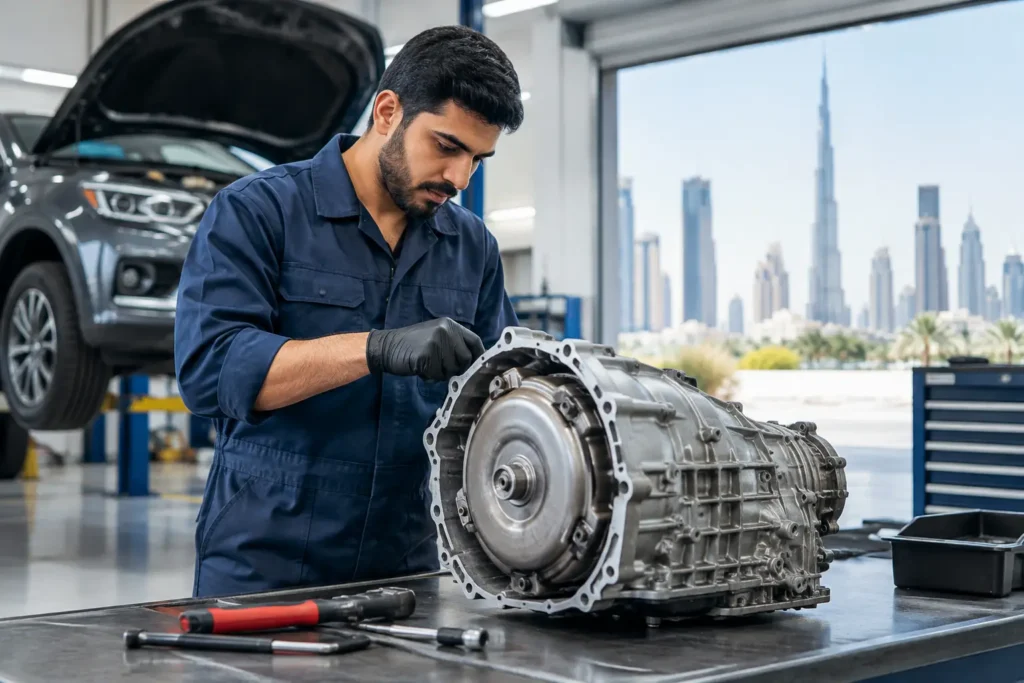
A transmission problem rarely starts with a dramatic breakdown. More often, it begins with a delayed shift leaving a parking lot, a warning light during the drive home, or a small vibration that was not there last week. This transmission repair cost guide gives Dubai drivers realistic price expectations and, more importantly, explains what should happen before anyone recommends a major repair.
The right repair is not automatically the cheapest option. It is the repair that correctly identifies the fault, protects the rest of the transmission, and is explained clearly before work begins. On German and American vehicles especially, proper diagnostics can be the difference between replacing one failed component and paying for work the vehicle never needed.
What Does Transmission Repair Usually Cost?
Transmission repair costs in Dubai vary widely because a transmission is not one part. It is a system of mechanical components, hydraulics, electronics, fluids, sensors, and control modules. A fault in any one of those areas can produce similar symptoms, from harsh shifting to a vehicle that will not move.
As a general guide, drivers can expect these approximate ranges in AED:
- Diagnostic testing may cost AED 200 to AED 500, depending on the vehicle and depth of testing required.
- A transmission fluid and filter service can range from AED 450 to AED 1,200.
- Sensor, wiring, or solenoid repairs often fall between AED 1,000 and AED 3,500.
- Valve body repair or replacement may range from AED 2,500 to AED 7,000.
- Manual transmission clutch-related repairs commonly start around AED 2,500 and can exceed AED 7,000.
- A full automatic transmission rebuild can range from AED 7,000 to AED 20,000 or more.
- Replacement with a new, remanufactured, or used transmission can range from AED 10,000 to AED 35,000+, particularly for premium German SUVs, performance models, and American trucks.
These figures are planning ranges, not fixed quotes. A compact sedan with a straightforward sensor fault is very different from a dual-clutch German vehicle with internal wear, software faults, and mechatronic issues. The vehicle’s make, model, mileage, parts availability, and the true source of the problem all affect the final cost.
Why Accurate Diagnosis Comes Before a Price
A low initial quote can sound attractive, but it has little value if the workshop has not identified the actual fault. Transmission behavior can be affected by the engine, battery voltage, wheel-speed sensors, wiring, cooling system, or transmission control unit. Replacing a transmission because of a weak electrical signal is costly and unnecessary.
A proper inspection should include a fault-code scan, live data review, road test where safe, visual checks for leaks, and an assessment of transmission fluid condition. Depending on the vehicle, a technician may also check adaptation values, hydraulic pressure, shift quality, and related electrical circuits.
This process takes time, but it gives you a clearer repair path. Ask the workshop to explain what was found, what repair they recommend, and whether there are alternatives. Honest pricing starts with evidence, not guesswork.
Diagnostic Fees Can Save Money
Drivers sometimes hesitate to approve diagnostics because they want the repair price first. In reality, diagnostic work often prevents a much larger bill. If a workshop can confirm that the issue is a connector, solenoid, valve body, or software adaptation before removing the transmission, you avoid paying for unnecessary labor and parts.
At HYATTS AUTO CARE, the goal is to keep customers informed every step of the way, especially when a fault needs further testing before a final recommendation can be made. A clear diagnosis gives you control over the decision instead of leaving you with a vague estimate.
Transmission Repair Cost Guide: What Changes the Bill?
The largest cost factor is the type of transmission. Traditional automatic transmissions, continuously variable transmissions (CVTs), dual-clutch transmissions, and manual gearboxes each have different failure points, parts costs, and repair procedures.
A manual transmission may have an issue with the clutch, flywheel, hydraulic master cylinder, or internal gears. In many cases, the transmission itself does not need rebuilding. An automatic unit may require work on the valve body, torque converter, internal clutch packs, or electronic control system. Dual-clutch and CVT units can be particularly sensitive to correct fluid specifications, calibration, and specialist diagnostic equipment.
Vehicle brand also matters. Parts for BMW, Mercedes-Benz, Audi, Porsche, Jeep, Cadillac, Ford, Chevrolet, and other German and American vehicles can vary significantly in price and availability. Premium models may require specialized fluids, programming, or components that are not interchangeable with lower-cost alternatives.
Labor is another factor. Accessing the transmission can require removing exhaust components, subframes, driveshafts, or surrounding systems. Four-wheel-drive vehicles and larger SUVs may require more labor than front-wheel-drive sedans. If the vehicle has suffered overheating, contaminated fluid, or internal damage, related components such as coolers and mounts may also need attention.
Repair, Rebuild, or Replace?
A transmission repair means addressing the failed area without fully dismantling the unit. This may involve replacing a sensor, repairing wiring, resealing a leak, servicing fluid, replacing solenoids, or repairing the valve body. It is usually the most cost-effective route when the internal mechanical components are still in good condition.
A rebuild involves removing and disassembling the transmission, replacing worn internal parts, and reassembling it to specification. It can be a sensible choice when the transmission has internal wear but the casing and key hard parts remain usable. A rebuild should come with a clear explanation of what failed and which components are being renewed.
Replacement may be appropriate when there is severe internal damage, a cracked housing, unavailable parts, or a more economical complete unit available. A used transmission can reduce the initial bill, but its condition and warranty matter. A new or remanufactured unit may offer more reassurance, though it usually costs more.
There is no universal answer. The best option depends on the vehicle’s condition, age, market value, and how long you plan to keep it. For a well-maintained vehicle you intend to drive for years, a quality rebuild or warranted replacement can be a better long-term decision than a temporary fix.
Signs You Should Not Ignore
Transmission faults tend to become more expensive when drivers continue using the vehicle after symptoms appear. Book an inspection promptly if you notice repeated warning signs, such as:
- Delayed engagement when shifting into Drive or Reverse
- Slipping, harsh shifts, shuddering, or unexpected changes in engine RPM
- Transmission warning lights or a vehicle entering reduced-power mode
- Burnt-smelling fluid, visible leaks, or unusual whining and grinding noises
A single rough shift does not always mean major damage. Heat, low fluid, battery voltage, or a temporary electronic fault can affect shift behavior. But repeated symptoms deserve attention before a small repair becomes internal damage.
How to Avoid Unnecessary Transmission Costs
Follow the manufacturer’s service schedule, but also consider how Dubai conditions affect your vehicle. High temperatures, heavy traffic, frequent short trips, towing, and spirited driving can place extra stress on transmission fluid and cooling systems. Fluid that looks dark, smells burnt, or contains debris needs professional assessment rather than a quick top-up.
Avoid approving a transmission flush or additive treatment without knowing why it is being recommended. Some transmissions require a specific service procedure, fluid level setting temperature, and adaptation process. Using the wrong fluid or an incorrect filling method can create new shift problems.
Before authorizing major work, ask for a written estimate that separates diagnostics, labor, parts, fluids, programming, and any additional work that may be required. You should also ask about parts quality, warranty coverage, expected turnaround time, and whether the quote could change after disassembly. Transparent answers are a good sign that the workshop is focused on the repair, not just the invoice.
A transmission concern is stressful, but it does not automatically mean replacement. Get the fault checked early, insist on a clear explanation, and choose a workshop that treats your vehicle and your budget with the same care.