

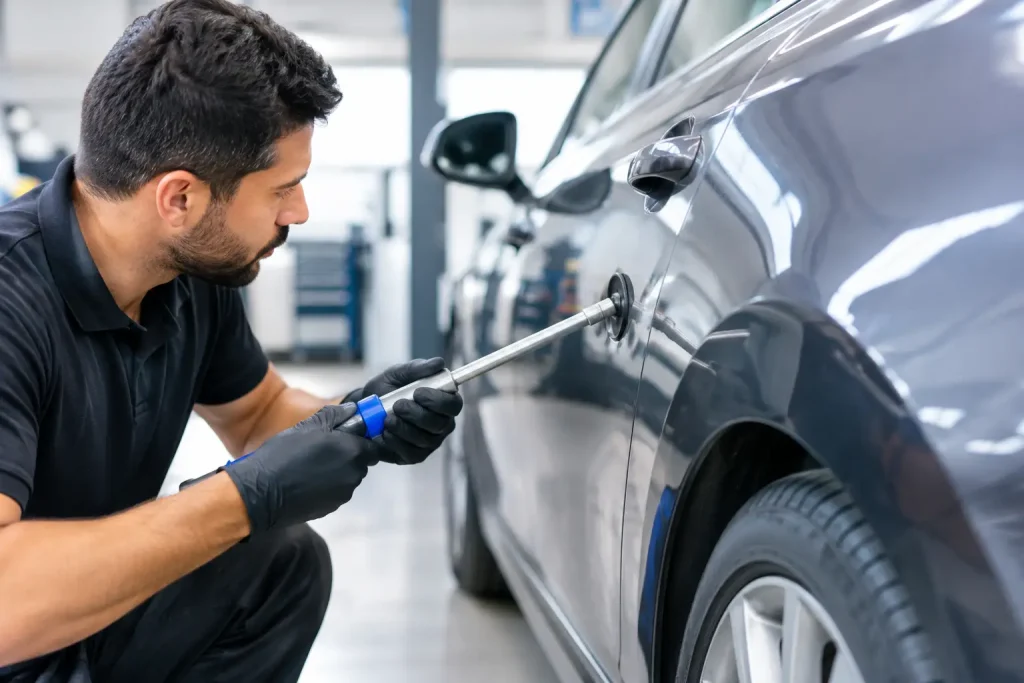
A shopping cart tap in a mall parking lot, a tight-space scrape, or a door opened too far can leave a dent that is hard to ignore. In Dubai, where a clean exterior often affects both driving confidence and resale appeal, car dent removal Dubai services need to do more than push metal back into place. The repair must protect the paint, restore the panel’s shape, and blend naturally with the rest of the vehicle.
The right repair depends on the dent itself. Size matters, but it is not the only factor. The panel location, depth, paint condition, bodyline placement, and whether the metal has stretched all affect the result. A reliable workshop will assess the damage before promising a method, a price, or a completion time.
What Determines the Right Dent Repair Method?
A shallow dent with intact paint may be a good candidate for paintless dent repair, often called PDR. Using purpose-made tools, a technician carefully massages the panel from behind or uses controlled pulling techniques from the outside. When done properly, PDR preserves the factory paint and avoids the need for filler and repainting.
This is often the preferred option for small parking dents on doors, fenders, and quarter panels. It can be quicker and more cost-effective than conventional bodywork. However, it is not a magic solution for every dent. A sharp crease, an impact on a bodyline, aluminum panel damage, or paint that has cracked can require more involved work.
When paint is broken or the panel is stretched, conventional dent repair is usually the better choice. The technician reshapes the metal, uses only the necessary amount of finishing material, prepares the surface, and refinishes the affected area. This process takes longer, but it is the correct way to prevent a visible repair, uneven texture, or future paint failure.
Paintless Dent Repair: When It Makes Sense
PDR works best when the original paint remains flexible and undamaged. It is particularly useful for minor dents caused by door impacts, light hail damage, and low-speed parking incidents. Since there is no repainting, there is no concern about color matching or blending into adjacent panels.
Access is a major consideration. Some panels have reinforcement bars, wiring, sound insulation, or limited access behind them. Modern vehicles also place sensors, cameras, and safety equipment in bumpers and doors. A technician must know what sits behind the panel before applying pressure or removing trim.
For German and American vehicles, panel construction can vary significantly by model and year. High-strength steel and aluminum body panels need the correct repair approach. Trying to force a dent out without the right tools can leave high spots, distort a bodyline, or damage the paint from underneath.
Conventional Denting and Painting: When It Is Necessary
If a dent includes chipped paint, exposed metal, a crease, or collision damage, proper refinishing protects more than appearance. Exposed metal can begin to corrode, especially after moisture reaches the damaged area. The heat and dust common in Dubai can also make neglected cosmetic damage look worse over time.
A quality conventional repair follows a disciplined sequence: panel assessment, metal shaping, surface preparation, primer, color application, and clear coat. Color matching is not simply about finding the manufacturer paint code. Paint fades and changes over time, and metallic or pearl finishes can look different depending on spray technique and lighting.
For that reason, the lowest estimate is not always the best value. A quick repair with poor preparation may initially look acceptable, then reveal sanding marks, mismatched color, edge lifting, or uneven gloss later. Good bodywork is careful work, even when the damage seems minor.
Car Dent Removal Dubai: What a Proper Estimate Should Cover
A transparent estimate should explain what will be repaired, which method is recommended, and whether painting is required. You should also know if the quote includes removing and reinstalling trim, polishing adjacent areas, or blending paint into a neighboring panel where needed.
Ask the workshop to point out any hidden risk before work begins. A dent near a door edge, bumper mounting point, wheel arch, or sensor may reveal more damage once parts are removed. This does not mean every repair will become expensive, but clear communication prevents surprises.
It is also reasonable to ask whether the workshop has experience with your vehicle type. Luxury vehicles, performance models, and newer cars often have complex paint finishes and electronics close to damaged body panels. The work should be handled by people who understand both cosmetic repair and the systems around it.
At HYATTS AUTO CARE, the focus is on recommending the repair that suits the damage, not adding unnecessary work. That means clear updates, honest pricing, and dealership-level attention to finish without the dealership-level bill.
Common Mistakes That Make Dent Damage Worse
A dent can look simple enough to fix at home, but improvised repairs often create a larger problem. Heat guns, suction cups, glue-pulling kits, and forceful pushing can work in limited situations, yet they can also crack paint or stretch metal. Once that happens, paintless repair may no longer be possible.
Be cautious with these common shortcuts:
- Pushing hard from behind the panel without knowing where braces, wiring, or airbags are located.
- Using excessive heat on a painted surface, which can weaken the clear coat or alter the finish.
- Accepting a repair that skips proper preparation before paint is applied.
- Delaying repair when paint is chipped and bare metal is exposed.
The goal is not simply to make the dent less noticeable from a few feet away. It is to restore the panel so it looks right in direct sun, under parking-garage lights, and after washing the vehicle.
How Long Does Dent Removal Take?
A small, accessible paintless dent may be completed the same day. Conventional dent repair and paintwork usually need more time because each coating must cure correctly before the next stage begins. The exact timing depends on the damage, panel type, color, and whether parts must be removed.
Fast turnaround matters, especially when you rely on your vehicle for work or family travel. But speed should not come at the expense of preparation and finish quality. A workshop should give you a realistic timeframe rather than a rushed promise that leads to a poor result.
If the damage is tied to a larger accident repair, the vehicle may also need an alignment check, bumper inspection, sensor scan, or mechanical assessment. A dent in a fender, for example, can sometimes hide damage to mounting brackets or inner liners. One garage that can inspect cosmetic, electrical, and mechanical concerns can make the process simpler and more accountable.
Protecting Your Car’s Finish After Repair
Once the panel has been restored, regular washing helps prevent road grime and contaminants from dulling the finish. Avoid aggressive polishing on fresh paint until the workshop advises that it has fully cured. If you use ceramic coating, paint protection film, or regular detailing, ask when it is safe to reapply protection to the repaired area.
Parking habits also make a difference. Choose wider spaces when possible, leave room from vehicles with large doors, and be cautious around loading areas and building entrances. Not every dent is avoidable, but protecting clean bodywork is easier than arranging another repair.
A good repair should leave you comfortable looking at your car from every angle, not wondering whether the dent was merely covered up. Get the damage assessed early, ask direct questions, and choose workmanship that treats your vehicle like it is worth keeping in its best condition.