

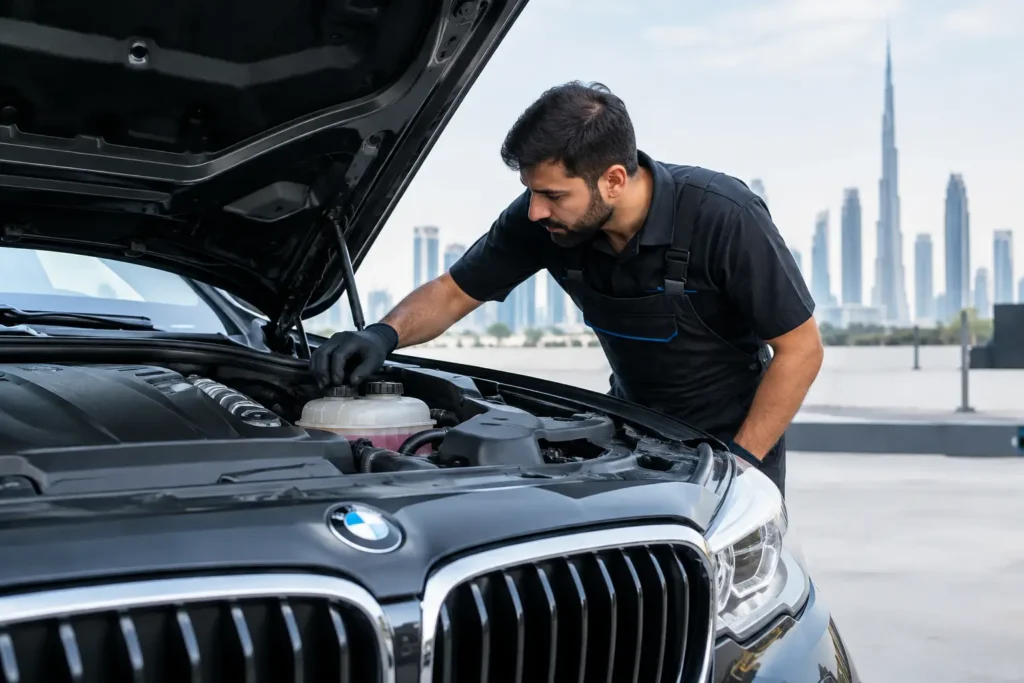
A BMW sitting in Dubai traffic with the A/C running is working under far more heat than it would during a short highway drive. When the temperature warning appears, coolant drops repeatedly, or steam comes from under the hood, BMW cooling repair should not be delayed. What begins as a small leak or weak component can become an overheating event that risks major engine damage.
BMW cooling systems are designed for precise temperature control, but many parts operate under heat and pressure every day. Age, mileage, driving conditions, and previous repair quality all affect how long those parts last. The right response is not simply adding coolant and hoping for the best. It is finding the source of the problem, repairing it correctly, and confirming the system can hold pressure and maintain operating temperature.
Why BMW Cooling Problems Need a Proper Diagnosis
On many BMW models, the cooling system is more than a radiator, hoses, and a mechanical water pump. It may include an electric water pump, electronically controlled thermostat, expansion tank, radiator fan, coolant level sensor, auxiliary cooling circuits, and multiple plastic connections. These components must work together, especially in high outside temperatures.
A dashboard warning may point to overheating, but it does not identify the failed part. Low coolant can result from an external leak, a cracked expansion tank, a loose connection, a leaking water pump, or an internal engine issue. A car can also overheat with a full coolant reservoir if the water pump is not circulating coolant, the thermostat is stuck, or the radiator fan is not operating as it should.
This is why a parts-swapping approach often costs more. Replacing the most obvious component without pressure testing, scanning fault codes, checking fan operation, and inspecting the cooling circuit can leave the real issue behind. A good diagnosis protects both your vehicle and your budget.
BMW Cooling Repair Warning Signs
BMWs often provide early warnings before a full overheating situation develops. Paying attention to them can make the difference between a straightforward repair and extensive engine work.
Look out for these signs:
- A coolant warning light or a message asking you to add coolant
- The temperature gauge rising higher than normal or an overheating alert
- A sweet coolant smell after driving, especially near the front of the vehicle
- Puddles, drips, or dried white or blue-green residue under the engine bay
- Steam from under the hood or coolant spilling from the reservoir area
- A radiator fan that runs loudly for a long time, or does not run when the engine is hot
A coolant warning is not always an emergency, but it should never be treated as routine. If the engine temperature rises or an overheating message appears, pull over safely, switch off the engine, and allow it to cool. Do not open the coolant cap while the engine is hot. Pressurized coolant can cause serious burns.
Driving a short distance after an overheating warning can be risky. It depends on how severe the warning is, how long the engine has run hot, and whether coolant is still circulating. The safest option is to arrange inspection rather than trying to reach your destination with an overheating engine.
Common Causes of BMW Cooling System Failures
Cooling system failures can vary by BMW generation and engine, but certain issues appear regularly in workshop inspections. Plastic components are common on modern cooling systems because they are lightweight and efficient, but repeated heat cycles can make them brittle over time.
Expansion Tank and Coolant Hoses
The expansion tank holds coolant and manages pressure changes as the engine heats and cools. Cracks around the seams, cap area, or hose connections can cause slow coolant loss that may not leave a large puddle. Hoses and quick-connect fittings can also weaken, swell, or leak at their seals.
A small leak may only show up when the system is hot and pressurized. That is why visual inspection alone is not always enough. A pressure test can reveal leaks that remain hidden when the engine is cold.
Water Pump and Thermostat
Many BMW engines use electric water pumps. When a pump begins to fail, coolant circulation may become inconsistent or stop completely. The vehicle may log fault codes, enter reduced-power mode, or overheat suddenly. A thermostat that remains closed can create similar symptoms by restricting coolant flow through the radiator.
Because the pump and thermostat often have related service access and lifespans, replacing both may be sensible when diagnosis confirms a pump failure. However, this should be based on the vehicle’s condition and model-specific repair requirements, not a blanket recommendation.
Radiator, Fan, and Electrical Control Issues
A radiator can leak from end tanks, seams, or damage caused by road debris. Restricted airflow through the radiator or condenser can also reduce cooling performance, particularly during slow Dubai traffic.
The cooling fan is equally important when the vehicle is stationary or moving slowly. A failed fan motor, control module, relay, wiring fault, or sensor issue can allow temperatures to rise even though the radiator itself is in good condition. Electrical diagnostics matter here. Replacing a fan without confirming its power supply, command signal, and fault codes can create unnecessary expense.
Oil Filter Housing and Internal Coolant Loss
Some BMW engines can develop coolant leaks around the oil filter housing area or related gaskets. These leaks can be difficult to spot because fluid may travel across the engine before dripping. In less common but more serious cases, coolant loss may be internal. Signs can include persistent overheating, contaminated oil, white exhaust smoke, or pressure building unusually quickly in the cooling system.
Internal concerns need careful testing before major repairs are approved. The goal is clear evidence, not assumptions.
What a Professional Cooling System Inspection Should Include
A reliable BMW cooling repair begins with checking the complete system, not only the visible leak. The technician should review the warning messages and stored diagnostic faults, inspect coolant condition and level, and look for signs of dried coolant around common leak points.
Pressure testing is one of the most useful steps because it simulates operating pressure while the engine is safely off. Depending on the symptoms, additional checks may include testing the reservoir cap, monitoring live temperature data, activating the electric fan through diagnostics, checking water-pump operation, and inspecting for combustion gases in the coolant.
After repairs, the system needs to be filled with the correct coolant specification and properly bled. Air trapped in a BMW cooling system can cause poor heater performance, irregular temperatures, warnings, and repeat overheating. Many BMW models have an electronic bleeding procedure, so the process should follow the correct method for the vehicle.
Repair Choices That Affect Cost and Reliability
Cooling repair pricing depends on the failed part, labor access, engine layout, and whether multiple age-related components should be addressed together. A minor hose seal leak is very different from replacing an electric water pump, radiator, or damaged engine components after severe overheating.
The least expensive estimate is not always the best value if it skips diagnostics, uses poor-quality parts, or does not include correct bleeding and final checks. At the same time, replacing every cooling component just because one part has failed may not be necessary. A transparent workshop should explain what has failed, what is recommended now, what can be monitored, and why.
Quality replacement parts are particularly important for pressurized cooling systems. The correct part choice depends on the BMW model, repair location, and available manufacturer-quality options. What matters is that the repair is compatible, properly installed, and backed by testing rather than guesswork.
Preventing Repeat Cooling Issues in Dubai
No cooling system is maintenance-free, but consistent servicing helps catch concerns earlier. Check the coolant level only when the engine is cold, and investigate any repeated drop in level. Do not mix random coolant types or use tap water as a long-term solution. Incorrect coolant can reduce corrosion protection and affect the system over time.
Keep an eye on warning messages, unusual fan noise, and changes in A/C performance during idling. If the cabin heater suddenly blows cold while the engine temperature rises, stop driving as soon as it is safe. That combination can indicate low coolant or circulation trouble.
For BMW owners in Al Quoz and across Dubai, HYATTS AUTO CARE approaches cooling faults with the same standard applied to any mechanical or electrical repair: clear diagnosis, honest pricing, and updates before work moves forward. A cooling concern is easier to manage when you know exactly what failed and why.
If your BMW has lost coolant, shown a temperature warning, or started running hotter than normal, arrange an inspection before a small fault turns a regular drive into an engine repair bill.