

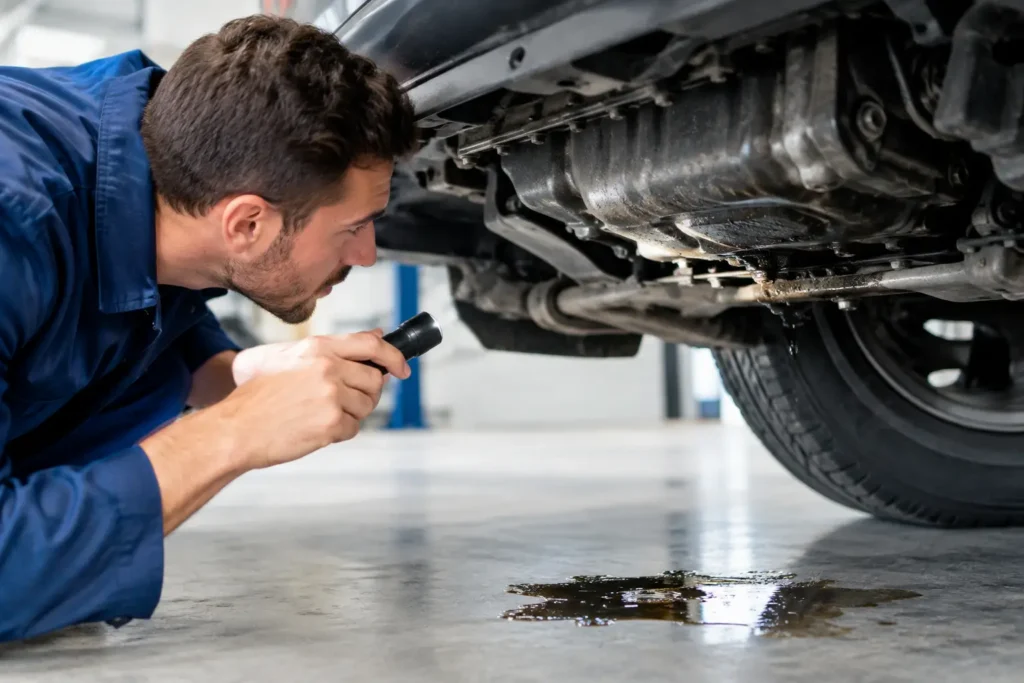
A few drops beneath your parked car may not look urgent, but engine oil is not meant to leave the engine. In Dubai, high temperatures, long commutes, and stop-and-go traffic can turn a minor seep into a more serious problem sooner than expected. Proper oil leak repair starts with identifying exactly where the oil is coming from, not simply replacing the first gasket that looks suspicious.
Oil protects moving engine components from friction and heat. When the level drops too low, the engine may lose that protection, increasing wear and raising the risk of expensive internal damage. Acting early usually means a simpler repair, less cleanup, and more control over the cost.
Why oil leaks need attention
An oil leak does not always mean the engine is about to fail. Older vehicles, high-mileage cars, and some German and American models commonly develop minor gasket seepage over time. The question is whether the leak is stable, getting worse, or reaching areas where it can create another problem.
Oil on a hot exhaust component can produce a burning smell or light smoke from under the hood. Oil on drive belts can cause slipping or premature belt wear. A leak around the transmission, suspension bushings, or electrical connectors can also make future maintenance more difficult. Even when the vehicle drives normally, low oil levels can put the engine at risk without giving you much warning.
There is also the practical side. Oil stains on your parking space, building driveway, or office lot are inconvenient and can lead to complaints. A clean, properly repaired engine is easier to inspect and gives you a clearer picture of your vehicle’s condition.
Signs you may need oil leak repair
The most obvious sign is fresh brown, amber, or black fluid under the vehicle after it has been parked. However, not every dark patch is engine oil. Transmission fluid, power steering fluid, coolant, and even air-conditioning condensation can appear in the same area. The location of the drip is useful, but it is not enough to confirm the source.
Pay attention to a burning-oil smell after driving, especially when stopped at a traffic light or after parking. You may also notice smoke from the engine bay, an oil warning light, a lower reading on the dipstick, or oily residue around the engine. On some cars, oil can collect on an undertray rather than drip directly onto the ground, hiding the leak until it becomes more significant.
Do not rely on the dashboard warning light as your first signal. On many vehicles, the red oil light indicates dangerously low oil pressure, not simply a small reduction in oil level. By the time it appears, the engine may already need immediate attention.
A quick check you can perform safely
Park on level ground, switch off the engine, and let it sit for several minutes before checking the dipstick. If the level is below the minimum mark, add the correct oil only if you know the required specification and can do so safely. This is a temporary safeguard, not a repair.
Then look for fresh fluid around the valve cover area, beneath the engine, and on the ground after the vehicle has been parked. Avoid reaching near hot components or placing yourself under a vehicle supported only by a jack. A professional inspection is the safer way to confirm the source.
Finding the real source of the leak
Oil leaks can travel. Airflow while driving can move oil across the underside of the engine, while gravity can carry it down from a high-mounted seal to a completely different area. That is why replacing parts based only on where the drip lands often leads to wasted money.
A proper diagnosis begins with checking the oil level, inspecting the engine bay and underside, and looking for fresh oil around likely failure points. The technician may clean affected areas, use UV dye if needed, and recheck the vehicle after a controlled drive. This process helps separate an active leak from old residue left by a previous repair or spilled oil during an oil change.
Common leak sources include valve cover gaskets, oil filter housings, oil pans, drain plugs, timing covers, crankshaft seals, camshaft seals, vacuum pump seals, and turbocharger oil lines. The correct repair depends on the vehicle design and the location of the failed seal or component.
On German vehicles, plastic housings and rubber seals can become brittle from repeated heat cycles. On American vehicles, valve cover gaskets, oil pans, and cooler lines may be common areas to inspect depending on the engine. The make matters, but diagnosis should always come before assumptions.
What a professional repair may involve
Some oil leak repairs are straightforward. A damaged drain plug washer or loose oil filter may be corrected during a service appointment. A valve cover gasket replacement can also be relatively direct on certain engines, although access may vary considerably between models.
Other repairs require more labor because parts must be removed to reach the leak. A front or rear crankshaft seal, timing cover gasket, or oil filter housing can involve significant disassembly. In these cases, the labor cost is often driven by access rather than the price of the seal itself.
A good workshop should explain the source of the leak, show you the affected area where possible, and distinguish between repairs that are urgent and those that can be monitored. If several seals show light seepage, it may not make financial sense to replace every one immediately. If a major component is already being removed for another repair, combining related seal work can reduce duplicate labor.
Oil leak repair should also include cleaning the affected area and checking that the oil level is correct. Depending on the repair, the technician may recommend a follow-up inspection to make sure the area remains dry after normal driving.
Why stop-leak additives are rarely the answer
Oil stop-leak products are often marketed as a fast fix for aging seals. They may soften certain rubber seals temporarily, but results are unpredictable. They cannot repair a cracked housing, damaged oil pan, loose filter, worn gasket surface, or seal that has failed mechanically.
On modern engines with tight oil specifications, variable valve timing systems, turbochargers, and sensitive oil passages, using an additive without professional advice can create more uncertainty than value. The better approach is to identify the leak, understand the repair options, and use the correct manufacturer-approved engine oil.
Managing cost without delaying necessary work
The cost of an oil leak repair can range from a simple service-related correction to a labor-intensive seal replacement. The key factors are the source of the leak, how accessible it is, whether other damaged parts are found, and the vehicle’s engine layout.
Ask for a clear explanation before authorizing work. You should know what is leaking, why the recommended repair is necessary, which parts will be replaced, and whether the repair requires additional work such as fresh oil, a filter, or related gaskets. Clear communication is especially valuable when a vehicle has more than one minor seepage point.
At HYATTS AUTO CARE, the focus is on dealership-level workmanship without dealership-level pricing, with practical recommendations and updates throughout the repair. For drivers in Al Quoz and across Dubai, that means addressing the fault that matters rather than selling unnecessary work.
When to book an inspection right away
Arrange an inspection promptly if the oil level is dropping between services, smoke is coming from the engine bay, the burning smell is strong, or you see a growing pool of oil beneath the vehicle. If the oil pressure warning light comes on while driving, stop safely as soon as possible and switch off the engine. Continuing to drive can cause severe damage.
A small, stable seep may allow time to plan the repair, but it should still be documented and monitored at each service. Check the oil level regularly, watch for changes in smell or drip size, and do not assume a leak will stay minor through another Dubai summer.
Your vehicle does not need vague diagnoses or surprise repair bills. A careful inspection gives you the facts, a clear repair path, and the confidence to make the right decision before a few drops become a much larger problem.