

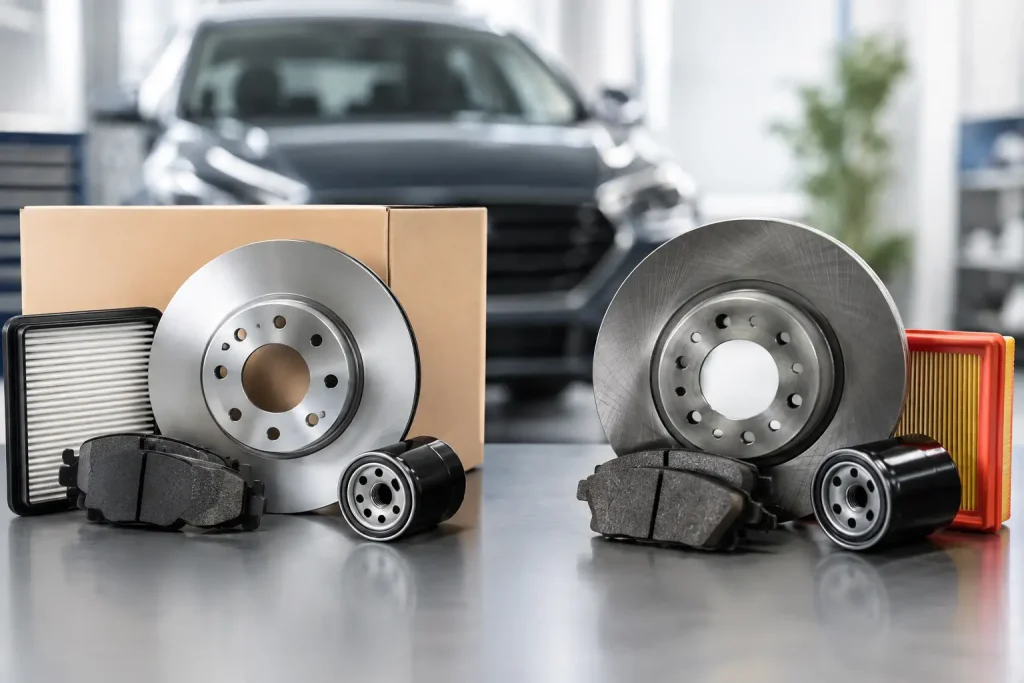
A warning light, worn brake pads, damaged bumper, or failed steering component can leave you with the same question at the service counter: should you pay for the original part, or choose an alternative? OEM versus aftermarket parts is not a simple good-or-bad decision. The right choice depends on what failed, how you use your vehicle, the quality of the available replacement, and where you want to spend your repair budget.
For Dubai drivers, the decision can carry extra weight. Heat, dust, heavy traffic, and high-speed highway driving put real strain on cooling systems, electrical components, suspension parts, brakes, and rubber seals. A cheaper part that does not fit correctly or cannot handle the operating conditions may turn a small repair into a repeat visit. At the same time, paying dealer pricing for every replacement part is not always necessary.
What OEM Parts Actually Mean
OEM stands for Original Equipment Manufacturer. In practical terms, an OEM part is made to the vehicle manufacturer’s original specification. It is designed for the exact make, model, engine, and production configuration of your car.
There are two terms that are often mixed together. A genuine part is usually supplied in the vehicle brand’s packaging, such as BMW, Mercedes-Benz, Ford, Jeep, or Chevrolet. An OEM part may be made by the same original supplier but sold under that supplier’s own name rather than the vehicle maker’s label. In some cases, the physical part can be very similar. In others, packaging claims can be misleading, so correct part-number matching still matters.
The main benefit of a genuine or verified OEM part is confidence in fitment. Sensors communicate properly with the vehicle’s control modules, body panels align as intended, and mechanical components are built around the original tolerances. This is particularly valuable for German vehicles with complex electronics, engine-management systems, adaptive suspension, and safety systems.
OEM parts are also often the safer choice when a replacement affects braking, steering, airbag systems, timing components, cooling, or electrical diagnostics. The part itself is only one part of a reliable repair, but starting with the correct specification removes a major variable.
Where Aftermarket Parts Can Make Sense
Aftermarket parts are produced by companies other than the vehicle manufacturer. This category is broad. It includes respected global suppliers that manufacture high-quality filters, brake components, suspension parts, batteries, and radiators. It also includes low-cost, unverified parts with inconsistent materials, poor fitment, and little meaningful warranty support.
That difference is why the phrase “aftermarket” does not tell you enough on its own. A reputable aftermarket brake pad set may deliver excellent performance and value. A very cheap imitation sensor may trigger another warning light within weeks. Both are aftermarket, but they are not comparable products.
A good aftermarket option can be sensible for routine wear items and non-critical repairs, especially when the manufacturer’s original part carries a large price premium. Filters, wiper blades, batteries, belts, bulbs, certain suspension bushings, and brake components may have strong alternatives from known suppliers.
For older vehicles, aftermarket availability can also keep a worthwhile car on the road without turning every repair into a dealership-sized bill. The key is to choose based on the component and its supplier, not simply on the lowest quoted price.
OEM Versus Aftermarket Parts: The Real Trade-Offs
Cost is the most obvious difference. OEM parts generally cost more because of brand packaging, distribution channels, manufacturer approvals, and the confidence of an exact-match component. Aftermarket alternatives can reduce the parts bill, sometimes significantly.
But the cheapest option is not always the least expensive repair. If a poorly made water pump leaks early, a low-quality engine mount creates vibration, or an incompatible electronic module causes repeat faults, you may pay twice for labor and lose more time without your vehicle.
Fitment is another practical consideration. OEM body parts, trim pieces, headlights, and sensors are generally designed to install without modification. Aftermarket body panels and lights can vary in alignment, finish, mounting points, and weather sealing. For cosmetic restoration after an accident, a well-made alternative may be appropriate in some cases, but the workshop should inspect the part before painting or installation.
Warranty deserves a closer look too. A part warranty is useful, but it does not always cover related labor, diagnostic time, or damage caused by a failed component. Ask what warranty applies to the exact part being fitted and whether the supplier is established enough to honor it. A transparent workshop should explain this before work begins.
When OEM Is Usually Worth the Extra Cost
Some repairs are not the right place to gamble on unknown-quality components. OEM or verified original-equipment parts are usually the stronger choice for safety-related systems, complex electronics, and internal engine work.
Consider OEM first when replacing airbags, sensors connected to critical safety functions, electronic steering components, fuel-system parts, timing-chain components, turbocharger control hardware, or modules that need vehicle-specific programming. The same applies when the vehicle is still under a manufacturer warranty or when maintaining a clear dealer-service history is important to you.
For premium German and American vehicles, the exact specification can matter more than many owners expect. A replacement battery may need correct capacity, technology, and registration to the vehicle. A suspension sensor or steering component may require calibration after installation. The visible part may look simple, but the system around it often is not.
If the repair is meant to solve a recurring electrical or drivability issue, correct diagnosis should come before a parts decision. Replacing a component based only on a fault code can waste money, whether the new part is OEM or aftermarket.
When a Quality Aftermarket Part Is a Smart Choice
A trusted aftermarket part can be an excellent decision when its performance and fitment are well proven. It may offer equal or better value for routine maintenance items, especially on vehicles outside their factory warranty period.
Brake pads and rotors are a good example. Some established suppliers provide options that match daily driving needs, while others offer low-dust or performance-focused compounds. The best choice depends on whether you prioritize quiet operation, long life, stopping feel, wheel cleanliness, or lower cost.
The same approach applies to filters, spark plugs, ignition components, batteries, and selected suspension parts. A workshop should be able to explain why it recommends a particular brand, not simply say it is “the same as OEM.” If there is no clear answer on origin, specification, or warranty, that is a reason to pause.
For cosmetic work, aftermarket parts can help control costs after minor damage. However, panel gaps, paint preparation, mounting quality, and the final finish matter just as much as the part itself. Saving money on a bumper cover is less helpful if it does not align properly with the headlights and fenders.
Questions to Ask Before Approving a Repair
You do not need to become a parts expert before booking your car in. You do need enough information to make a confident choice. Ask whether the quoted part is genuine, OEM, or aftermarket, and request the manufacturer name where possible.
Then ask why that option is recommended for your specific repair. Is it a safety-critical component? Does the vehicle need coding, calibration, or adaptation afterward? Is there a meaningful difference in warranty or expected service life? If there are two suitable options, ask for both prices and the practical reason behind the difference.
A clear estimate should separate diagnosis, parts, labor, and any additional work that may be required once the vehicle is inspected. This prevents a repair quote from sounding lower than it really is. It also gives you the chance to choose where OEM is worth the premium and where a quality aftermarket alternative makes better financial sense.
The Part Matters, but So Does the Repair
Even the best component can fail early if it is installed incorrectly, fitted without the required programming, or used to mask the actual cause of a fault. Good repair work starts with inspection and diagnosis, then matches the part choice to the vehicle’s condition and the owner’s priorities.
At HYATTS AUTO CARE, that means discussing the available options plainly before work proceeds, particularly for German and American vehicles with specialized mechanical and electrical requirements. The goal is not to push the most expensive part on every job. It is to fit a dependable part that makes sense for the repair, the vehicle, and your budget.
If you are weighing a repair quote, ask for the part details before approving it. A few direct questions now can help you avoid unnecessary cost, repeat repairs, and the uncertainty that comes from not knowing what was installed in your car.