

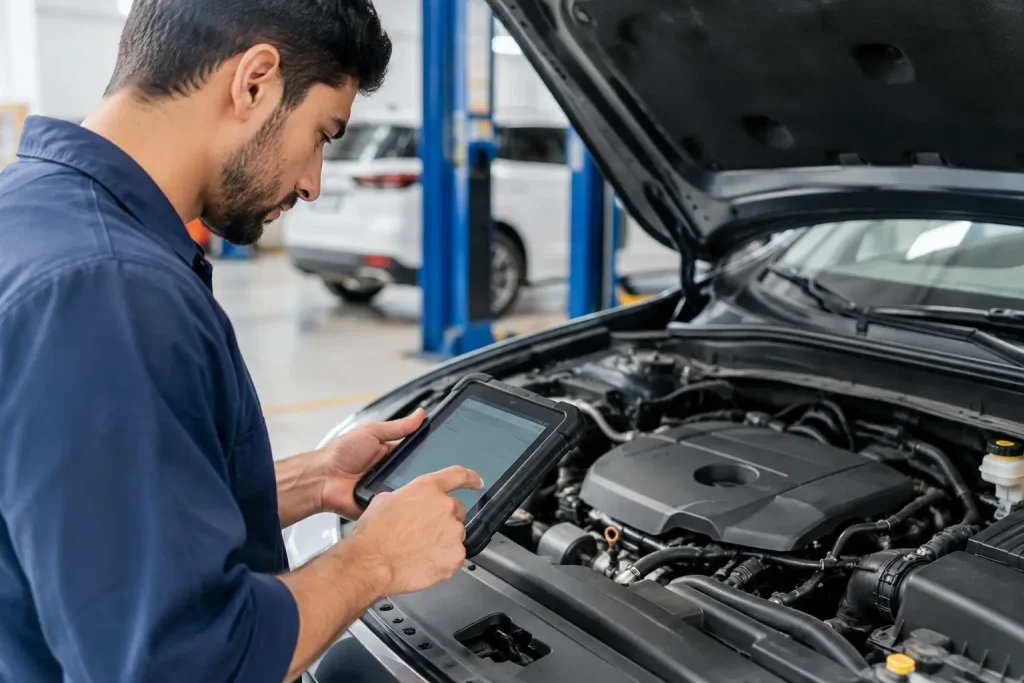
A warning light appearing on Sheikh Zayed Road or during the morning commute can turn a normal drive into a stressful one. A proper check engine light diagnosis Dubai service replaces guesswork with a clear answer: what the vehicle has detected, whether it is safe to drive, and what repair is actually needed.
The check engine light is connected to your car’s onboard diagnostic system. It monitors hundreds of readings from the engine, fuel system, exhaust system, ignition components, and emissions controls. When one of those readings falls outside its expected range, the system stores a fault code and turns on the warning light. That code is a useful starting point, but it is not a complete diagnosis.
What Your Check Engine Light Is Telling You
A solid check engine light usually means the car has detected a fault that needs attention soon. The vehicle may still drive normally, but postponing inspection can turn a smaller issue into a more expensive repair. For example, a minor ignition fault can eventually damage the catalytic converter, while an air leak can affect fuel economy and engine performance.
A flashing check engine light is more urgent. It often indicates an active engine misfire, which means fuel may be entering the exhaust unburned. Continuing to drive can overheat and damage expensive emissions components. If the light is flashing, reduce speed, avoid heavy acceleration, and arrange for the vehicle to be checked as soon as possible. If the engine is shaking, losing power, or producing a strong fuel smell, stopping safely and calling for assistance is the better decision.
Not every warning comes with obvious symptoms. Some cars continue to feel completely normal while the light is on. Others may show rough idling, slow acceleration, higher fuel consumption, hard starting, or a noticeable change in exhaust smell. These details help a technician narrow down the cause, so it is useful to mention when the light appeared and what you noticed before it did.
Common Reasons the Light Comes On in Dubai
Dubai driving conditions can expose small weaknesses quickly. High temperatures place extra demand on cooling systems, wiring, sensors, batteries, and ignition components. Stop-and-go traffic, short trips, dusty conditions, and long highway drives all affect how a vehicle runs and how its systems monitor performance.
A loose or damaged fuel cap is one possible cause, particularly after refueling. The fuel system checks for vapor leaks, and a cap that does not seal correctly can trigger a fault. It is simple to inspect, but the light may not switch off immediately after tightening it. The system often needs several normal driving cycles before it runs its checks again.
Other common causes include worn spark plugs or ignition coils, failing oxygen sensors, air intake leaks, fuel injector issues, weak batteries, sensor wiring faults, and problems in the evaporative emissions system. On German and American vehicles, the same dashboard light can also relate to manufacturer-specific systems that require the right scan equipment and experienced interpretation.
This is why replacing a part based only on a generic fault code can be costly. A code may identify an oxygen sensor reading, for example, but the underlying problem could be an exhaust leak, fuel pressure issue, wiring concern, or an engine running too rich or too lean. Replacing the sensor without testing the system may not solve the fault.
Check Engine Light Diagnosis in Dubai Should Go Beyond Code Reading
A basic scan tool can retrieve a code in minutes. A proper diagnosis takes the next step: confirming why the code was stored. This protects you from unnecessary parts replacement and gives you a realistic repair recommendation before work begins.
At a capable workshop, the process starts with a scan of stored, pending, and historical fault codes. Technicians then review live data from the relevant sensors, inspect visible components and wiring, and carry out targeted tests based on the fault. Depending on the issue, this may include checking ignition performance, testing battery and charging voltage, inspecting for vacuum leaks, measuring fuel pressure, or assessing exhaust and emissions readings.
For intermittent faults, the vehicle may need a road test or further monitoring. This can be frustrating when you want an immediate answer, but it is often the honest approach. A warning light that appears only under load, after the engine warms up, or during highway driving may not reveal its cause while the car is parked.
A transparent diagnosis should leave you knowing three things: the confirmed problem, the recommended repair, and the likely consequence of delaying it. If more testing is needed before a repair can be approved, that should be explained clearly rather than hidden inside a vague estimate.
Why Clearing the Light Is Not a Repair
Some drivers clear the warning light with a scan tool and wait to see if it returns. While this may temporarily remove the dashboard warning, it does not correct the fault that caused it. The code can return after one trip or after several days, depending on which monitoring test the vehicle needs to complete.
Clearing codes also removes useful diagnostic information. Freeze-frame data can show the engine conditions present when the fault occurred, such as speed, temperature, load, and fuel readings. That information can make diagnosis faster and more accurate.
There is one exception: after a confirmed repair, the codes may be cleared so the system can be checked again. The goal is not simply to turn the light off. It is to confirm that the vehicle completes its self-tests and that the warning does not return.
What to Do Before Bringing Your Car In
You do not need to diagnose the vehicle yourself, but a few observations can save time. Note whether the light is solid or flashing, whether the engine feels different, and whether it came on after refueling, a battery replacement, heavy rain, or a long drive. If you have recently had repairs or servicing completed, mention that as well.
Avoid disconnecting the battery in an attempt to reset the light. Modern vehicles can lose learned settings and stored fault information, making the issue harder to trace. It may also create additional warning messages that were not present before.
If the car is driving smoothly and the light is solid, it is generally reasonable to arrange an inspection promptly rather than panic. If the light flashes, the engine runs roughly, the temperature rises, or another serious warning appears, treat it as urgent. The correct next step depends on the symptoms, not just the color of the dashboard icon.
Choosing the Right Workshop for Engine Diagnostics
The best repair decision is based on evidence, not assumptions. Look for a workshop that can explain the difference between reading a code and diagnosing a fault, especially if you own a German or American vehicle with more complex electrical and engine management systems.
Equipment matters, but so does the technician using it. Dealer-level diagnostic capability should be paired with practical experience, careful testing, and straightforward communication. You should not feel pressured into approving a list of parts before the cause has been verified.
At HYATTS AUTO CARE in Al Quoz, diagnostic work is approached with that balance in mind: identify the fault properly, explain the findings clearly, and recommend only the work your vehicle needs. That means dealership-level workmanship without dealership-level pricing, with updates that keep you informed throughout the repair.
A check engine light does not always mean a major failure, but it should never be ignored for long. Arrange a professional inspection early, ask for a clear explanation of the findings, and give your car the attention it needs before a manageable fault becomes a larger repair.