

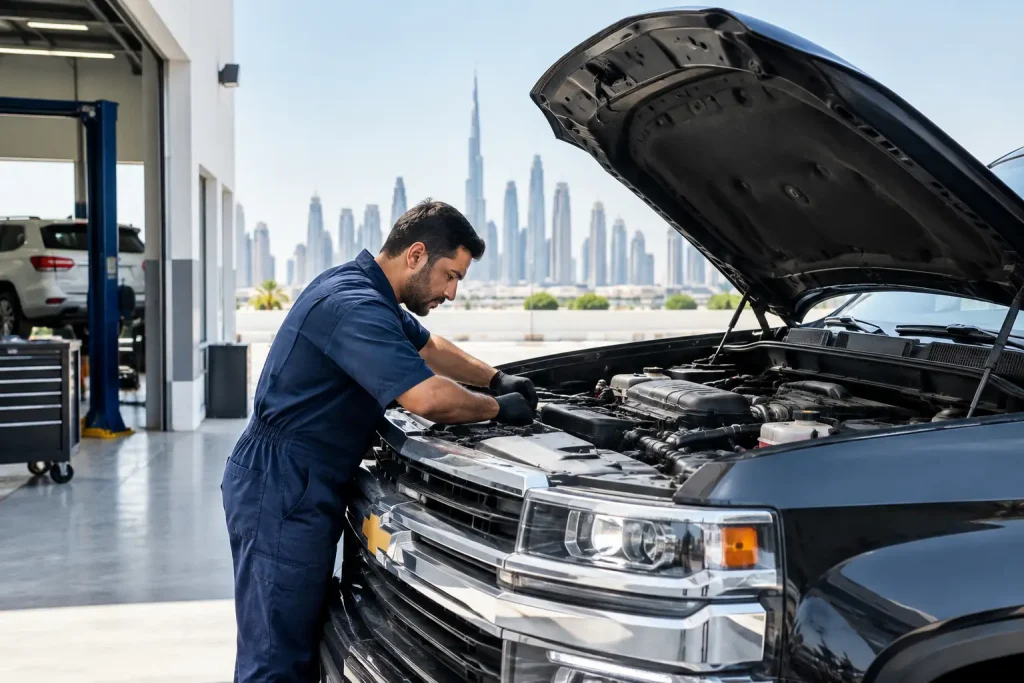
American vehicles are built differently, and Dubai’s heat, traffic, and long highway runs can expose problems quickly. Whether you drive a Chevrolet, Ford, Dodge, Jeep, GMC, Cadillac, or Chrysler, American car repair Dubai drivers rely on should begin with proper diagnosis, not guesswork or a list of expensive parts.
At HYATTS AUTO CARE, we see the concerns owners bring to an independent workshop every day: a warning light that keeps returning, uneven steering, an air-conditioning system that cannot keep up, a rough gear change, or an electrical issue no one has been able to explain clearly. The right repair process gives you answers, a fair estimate, and a realistic timeline before work begins.
Why American Cars Need Specialist Attention in Dubai
American cars share many basic service needs with every other vehicle, but their systems, parts availability, and common fault patterns can differ from European, Japanese, and Korean models. A workshop should understand the vehicle’s diagnostic software, electrical architecture, engine configuration, transmission behavior, and manufacturer service procedures before recommending a repair.
That matters because replacing components without confirming the cause can become costly very quickly. A check-engine light, for example, may point to an ignition fault, an air leak, a fuel-system issue, a sensor reading outside range, or a wiring problem. Reading a fault code is only the starting point. Proper diagnosis involves testing the system, checking live data, inspecting related components, and confirming the repair after the work is complete.
Dubai adds another layer. Extreme temperatures place extra pressure on cooling systems, batteries, alternators, air-conditioning components, hoses, seals, and fluids. Stop-start driving can also reveal transmission concerns and engine overheating issues that may not be obvious on a short test drive.
American Car Repair Dubai Owners Should Expect
A dependable workshop experience should feel straightforward. You explain the concern, the technician checks the vehicle properly, and you receive a clear explanation of what has been found. If there are options, such as repairing a component versus replacing it, those options should be discussed honestly.
Accurate Electrical Diagnostics
Electrical faults can be frustrating because they often appear intermittently. You may notice a warning light only after the car has been parked in the heat, lose power to a window or seat function, or find that the battery goes flat without an obvious reason.
Modern American vehicles rely on multiple control modules, sensors, wiring connections, and communication networks. A capable repairer will not assume the battery is at fault simply because the car will not start. They should test battery condition, charging output, voltage drops, grounds, fuses, wiring, and relevant modules before proposing a repair.
This approach is especially valuable for faults involving infotainment systems, parking sensors, cameras, lighting, power seats, electronic throttle controls, and dashboard warnings. Electrical problems are not always fast to trace, but clear updates make the process far less stressful.
Mechanical Repair and Routine Service
Routine maintenance is the best chance to spot a developing issue before it becomes a breakdown. Oil and filter changes, brake inspections, fluid checks, cooling-system checks, tire condition, suspension components, and belts should be reviewed according to your vehicle’s use and service history.
For a vehicle driven daily across Dubai, mileage alone is not the full story. A car used mainly for short urban trips may need attention differently from one that regularly covers highway distance. Towing, off-road use, frequent idling, and summer heat can also affect service requirements.
Mechanical repairs should be based on the actual condition of the vehicle. If brake pads are worn but the discs remain within specification, replacing every component may not be necessary. On the other hand, delaying a leaking water pump or worn suspension joint can lead to more extensive damage. Good advice explains the urgency, the risk of waiting, and the cost difference clearly.
Transmission, Steering, and Suspension Concerns
A hard shift, slipping transmission, delayed engagement, vibration, pulling under braking, or a steering wheel that feels loose should never be ignored. These symptoms can have several causes, and the repair depends on identifying the right one.
Some issues are relatively simple, such as a worn mount, low fluid level, damaged bushing, or wheel alignment concern. Others need deeper inspection, particularly when transmission fault codes, internal wear, power-steering problems, or active suspension systems are involved. It depends on the model, mileage, maintenance history, and how the symptom occurs.
Electric power steering deserves careful attention. A warning light or heavy steering can be caused by the steering motor, module, torque sensor, rack assembly, wiring, or low system voltage. Where refurbishment is appropriate, it can offer a more cost-conscious alternative to replacing a complete assembly. Where replacement is the safer option, your workshop should tell you why.
Cooling and Air-Conditioning Performance
In Dubai, weak air conditioning is more than an inconvenience. It can make every journey uncomfortable, especially during peak summer temperatures. However, adding refrigerant without finding a leak is usually a temporary fix.
A proper air-conditioning inspection can include pressure testing, leak checks, compressor operation, condenser condition, cabin filter inspection, cooling fan performance, and temperature readings. The engine cooling system should also be considered if the vehicle runs hot or loses coolant. These systems are different, but both depend on efficient heat management.
Parts Choices: Cost, Quality, and the Right Decision
There is no single correct answer for every American car repair. Original equipment parts may be the best choice for certain electronic modules, sensors, safety-related components, and vehicle-specific items. High-quality aftermarket parts can be a sensible option for other repairs, particularly when they meet the required specifications and offer reliable performance.
The important point is transparency. You should know what part is being fitted, why it was selected, and how it affects the estimate. The lowest-priced part is not always the best value if it fails early or causes another issue. Equally, the most expensive option is not always necessary for every repair.
Availability also affects turnaround time. Common service parts are often readily available, while model-specific body panels, trim, electronics, and specialized mechanical components may take longer to source. A workshop that communicates early helps you plan around that reality instead of leaving you waiting without answers.
Bodywork, Paint, and Restoration for American Vehicles
Mechanical condition comes first, but appearance matters too. A dented panel, scratched bumper, faded paint, damaged alloy wheel, or worn interior can reduce the enjoyment and value of your vehicle. Cosmetic work should match the vehicle’s condition and your goals, whether you need a small repair before selling, accident-related bodywork, or a complete facelift.
Paintwork is particularly dependent on preparation. A quick surface repair may look acceptable at first but can reveal poor blending, cracking, or color mismatch later. Quality denting and painting require correct panel preparation, careful color matching, and proper finishing. Ask to understand the scope of work rather than approving a vague description such as “full paint repair.”
For older American vehicles or cars with sentimental value, restoration decisions need even more care. A full restoration is rarely a quick job, and costs can vary widely depending on rust, parts condition, previous repairs, and the finish you expect. A staged plan can sometimes make more sense than trying to do everything at once.
How to Choose the Right Workshop
Before booking, focus on how the workshop communicates. Are they willing to discuss the symptoms before promising a solution? Will they provide an estimate before major work starts? Do they explain urgent repairs separately from items that can be monitored?
You should also ask whether they have experience with your specific make and model, what diagnostic process they use, and how they handle parts approval. A good independent garage does not need to sound complicated to be technically capable. Clear language is usually a sign that the team understands both the repair and the customer’s concern.
Keep your previous invoices and service records as well. They can help identify recurring faults, confirm what has already been replaced, and prevent unnecessary duplicate work. If a warning light returns soon after another repair, that history is useful diagnostic information.
When your American vehicle feels different, shows a warning, or simply needs its next service, do not wait for a minor issue to become a roadside problem. Choose a workshop that treats your car carefully, explains the work honestly, and keeps you informed every step of the way.